Tracking a prospect from their first ad click to a closed deal sounds straightforward until you're actually doing it. In practice, most marketing teams are juggling data from paid social, search, email, CRM, and web analytics, all living in separate platforms with no single view of how each touchpoint contributes to a conversion.
That fragmented picture leads to a real problem: misallocated budgets. When you can't see which funnel stages are leaking or which channels are actually driving revenue, you end up optimizing for the wrong things. Great funnel tracking software solves this by giving you multi-touch visibility, cross-platform integration, real-time data, and a clear line from top-of-funnel activity to bottom-of-funnel results.
The tools below were selected based on feature depth, integration ecosystem, ease of use, and pricing transparency. Whether you're a solo marketer, an agency, or an enterprise team, there's a solution here that fits your stack. If you're also thinking about how attribution connects to your broader marketing attribution strategy, or how to build a multi-touch attribution model that actually reflects reality, these tools are a strong starting point. Let's get into the list.
1. Cometly
Best for: Marketers who need full-funnel attribution connecting ad spend to CRM revenue.
Cometly is an AI-powered marketing attribution platform built to track the complete customer journey, from the first ad impression to a closed deal in your CRM.
 9 Best Marketing Funnel Tracking Software Tools in 2026
Where This Tool Shines
Most analytics tools tell you what happened on your website. Cometly tells you which specific ad, campaign, or channel actually drove revenue. It connects your ad platforms, website, and CRM into a single attribution view so you can stop guessing and start scaling what works.
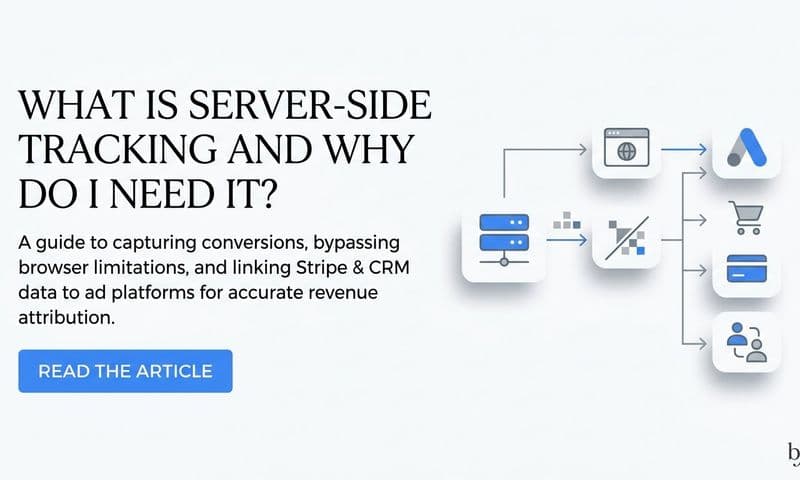
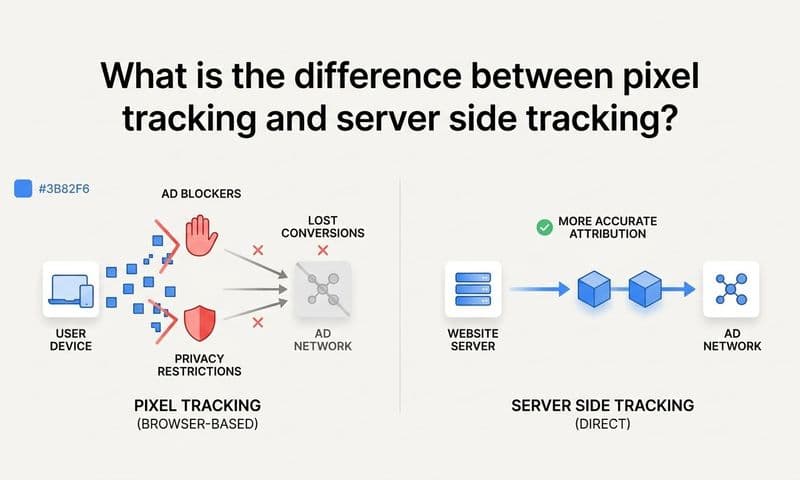
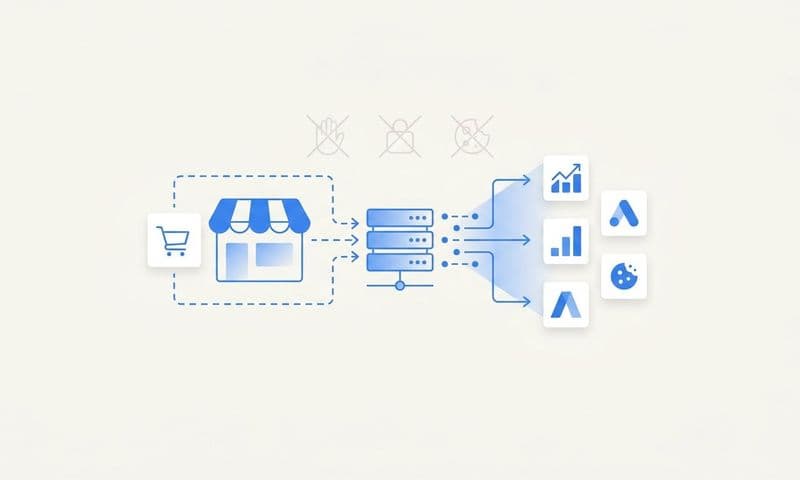
What sets Cometly apart is its combination of server-side tracking and conversion sync. Server-side tracking captures conversion data even when browser-level tracking fails due to iOS privacy restrictions or cookie limitations. Conversion sync then sends that enriched data back to Meta, Google, and other ad platforms, giving their algorithms better signals to optimize your campaigns. The result is a feedback loop that improves targeting accuracy over time.
Key Features
Multi-Touch Attribution: Tracks every touchpoint across all ad platforms and marketing channels, giving you a complete picture of how customers move through your funnel.
Server-Side Tracking: Captures conversion data at the server level, bypassing browser restrictions and cookie limitations that cause data loss in standard tracking setups.
AI-Powered Recommendations: Cometly's AI analyzes your funnel and campaign data to surface which ads and campaigns are performing best, with actionable recommendations for scaling.
Conversion Sync: Sends enriched, conversion-ready event data back to Meta, Google, and other ad platforms to improve their targeting and optimization algorithms.
AI Chat: Query your funnel and attribution data using natural language, so you can get answers without digging through dashboards or writing complex reports.
Best For
Digital marketers and agencies running paid campaigns across multiple platforms who need accurate attribution data connected to real revenue outcomes. Particularly valuable for teams dealing with iOS tracking gaps or teams that want to feed better conversion data back to ad platform algorithms.
Pricing
Custom pricing based on ad spend and features. A free demo is available at cometly.com to explore the platform before committing.
2. HubSpot Marketing Hub
Best for: Inbound marketing teams that want funnel tracking built into their CRM.
HubSpot Marketing Hub is an all-in-one marketing platform with native CRM integration, lifecycle stage tracking, and campaign analytics designed for inbound-focused teams.
 9 Best Attribution Software for B2B SaaS in 2026
Where This Tool Shines
HubSpot's biggest advantage is that your marketing data and CRM data live in the same system. You can track a contact from their first form fill through every email, page visit, and sales interaction without stitching together separate tools. Lifecycle stages and deal pipelines give you a clear view of where prospects are in the funnel at any given time.
The custom report builder makes it easy to create funnel reports without technical expertise. You can visualize how contacts move from subscriber to lead to customer, and connect those movements to specific campaigns or marketing activities.
Key Features
Native CRM Integration: Lifecycle stage and deal pipeline tracking is built directly into the platform, connecting marketing activity to sales outcomes without third-party integrations.
Campaign Attribution Reporting: Links contacts and conversions back to the specific campaigns, emails, and ads that influenced them.
Custom Funnel Reports: A drag-and-drop report builder lets you create tailored funnel visualizations based on your specific stages and data.
Unified Channel Tracking: Email, landing pages, and ad performance are all tracked in a single platform, reducing data fragmentation.
Best For
Marketing teams already using HubSpot CRM, or teams looking for an integrated solution that covers both marketing execution and funnel analytics without needing a separate attribution tool.
Pricing
Free tier available. Starter plans begin at $20/month. Professional plans start at $890/month, which is where the more advanced funnel and attribution reporting becomes available.
3. Funnelytics
Best for: Marketers and agencies who want to visually map and measure customer journeys.
Funnelytics is a visual funnel mapping and analytics platform that lets you design your customer journey on a canvas and overlay real performance data to see exactly where conversions happen and where people drop off.
 9 Best Marketing Funnel Tracking Software Tools in 2026
Where This Tool Shines
Funnelytics occupies a unique niche: it's as much a strategy and communication tool as it is an analytics platform. You can map out a funnel visually, share it with clients or stakeholders, and then overlay actual conversion data to show what's working and what isn't. That combination of planning and measurement in one place is genuinely useful for agencies managing multiple client funnels.
The visual canvas makes it easier to spot drop-off points at a glance without interpreting rows of data. When you can see that 60% of users are leaving a specific funnel step, the problem becomes immediately actionable.
Key Features
Visual Funnel Canvas: Drag-and-drop interface for mapping customer journeys, from ad click through to purchase, with full visual customization.
Real-Time Data Overlay: Performance metrics are displayed directly on the funnel map, so you can see conversion rates and drop-off points in context.
Conversion Tracking: Tracks conversions across funnel pages and steps, giving you step-by-step visibility into where your funnel is performing and where it's losing people.
Client-Facing Reporting: Built-in features for sharing funnel performance with clients in a clean, visual format that's easy to understand without a data background.
Best For
Marketing agencies and consultants who need to present funnel performance visually, as well as marketers who prefer a canvas-based approach to understanding their customer journey.
Pricing
A Starter plan is available. Performance plan pricing is available on request through the Funnelytics website.
4. Google Analytics 4
Best for: Teams that need free, flexible funnel analysis tied to their website and Google Ads.
Google Analytics 4 is Google's event-based analytics platform with built-in funnel exploration reports, path analysis, and cross-device tracking for web and app properties.
 11 Best Marketing Analytics Tools to Track and Optimize Campaign Performance in 2026
Where This Tool Shines
GA4's funnel exploration tool is surprisingly powerful for a free product. You can define custom funnel steps using any events you're already tracking, choose between open and closed funnel configurations, and segment users to understand how different audiences move through your conversion flow. The path exploration report adds another layer by showing you the actual navigation patterns users take before and after key events.
The native integration with Google Ads is a genuine advantage for teams running search and display campaigns. You can connect ad clicks directly to on-site funnel behavior without any additional setup, making it a solid starting point for teams building out their tracking infrastructure.
Key Features
Custom Funnel Exploration Reports: Build multi-step funnel reports using any tracked events, with both open and closed funnel configurations available.
Event-Based Data Model: Flexible event tracking lets you define funnel steps around any user action, not just page views.
Path Exploration: Visualizes the actual navigation paths users take, helping you understand how people move through your site before and after key funnel steps.
Google Ads Integration: Native connection to Google Ads and Search Console for tying ad performance to on-site funnel behavior.
Best For
Teams at any stage who need a free, capable funnel analysis tool, especially those running Google Ads campaigns and wanting to connect ad performance to website conversion data.
Pricing
Free for standard use. GA4 360, the enterprise version with higher data limits and advanced features, is available on request with custom pricing.
5. Mixpanel
Best for: SaaS and product-led growth teams analyzing in-product funnel behavior.
Mixpanel is a product analytics platform with advanced funnel analysis, user segmentation, and retention tracking built for teams that need to understand how users behave inside their product.
 9 Best AI Marketing Analytics Tools in 2026
Where This Tool Shines
Mixpanel's funnel analysis goes deeper than most tools when it comes to understanding conversion rates by user property. You can break down funnel performance by plan type, geography, acquisition channel, or any other attribute you're tracking, which makes it easy to identify which user segments are converting well and which are getting stuck.
The adjustable conversion windows are particularly useful for SaaS teams with longer consideration cycles. You can set the window to match your actual sales cycle and compare funnel performance across different time periods to spot trends.
Key Features
Multi-Step Funnel Analysis: Build detailed funnel reports with conversion rate breakdowns segmented by any user property or cohort.
Adjustable Conversion Windows: Set custom time windows for funnel completion and compare performance across different periods.
Cohort and Retention Tracking: Connect funnel completion to long-term retention behavior to understand which conversion paths lead to the most valuable users.
Real-Time Interactive Query Builder: Explore funnel data in real time with an interactive interface that doesn't require SQL or technical expertise.
Best For
SaaS companies and product-led growth teams that need granular funnel analysis tied to in-product behavior, user segmentation, and retention metrics.
Pricing
Free plan available for up to 20 million events per month. Growth plans start at $28/month with additional features and higher data limits.
6. Kissmetrics
Best for: Teams that need person-level funnel tracking tied to revenue and customer lifetime value.
Kissmetrics is a person-level analytics platform that tracks individual users across every funnel stage and connects marketing activity to revenue outcomes and customer lifetime value.
 9 Best Marketing Funnel Tracking Software Tools in 2026
Where This Tool Shines
Where most analytics tools show you aggregate funnel metrics, Kissmetrics lets you drill down to the individual user level. You can see exactly which marketing channels and campaigns influenced a specific person's journey through the funnel, which is invaluable when you're trying to understand the true ROI of your marketing spend.
The revenue reporting is tightly connected to marketing channels, so you can see not just which channels drive conversions but which channels drive the most valuable customers over time. That long-term view helps teams make smarter decisions about where to invest their budgets.
Key Features
Person-Level Tracking: Every funnel step is tied to individual user profiles, giving you a complete history of each person's journey through your marketing and product experience.
Revenue Attribution: Connects revenue outcomes directly to the marketing channels and campaigns that influenced each customer.
Funnel Drop-Off Analysis: Detailed reports showing where users exit the funnel at each step, with the ability to segment by user properties.
Population and A/B Test Reporting: Analyze how different user populations move through the funnel and measure the impact of experiments on conversion rates.
Best For
E-commerce and SaaS teams that need granular, person-level funnel data connected to revenue and customer lifetime value, particularly teams running A/B tests and wanting to measure their impact on funnel performance.
Pricing
Plans start at approximately $299/month. Custom enterprise pricing is available for larger teams with higher data volumes.
7. Adobe Analytics
Best for: Enterprise teams needing advanced segmentation and deep cross-channel funnel analysis.
Adobe Analytics is an enterprise-grade analytics platform with advanced segmentation, fallout visualizations, cross-device tracking, and deep integration with the Adobe Experience Cloud ecosystem.
Where This Tool Shines
Adobe Analytics is built for organizations that need to analyze funnel behavior at scale across complex, multi-channel environments. The fallout visualization is one of the most detailed in the industry, letting you see exactly where users drop out of a defined path and apply advanced segments to understand why different audiences behave differently.
The cross-device identity stitching is a significant advantage for enterprise teams. Adobe can connect a user's behavior across desktop, mobile, and app, giving you a more accurate picture of the full funnel rather than treating each device session as a separate user.
Key Features
Fallout and Flow Visualizations: Detailed funnel analysis tools that show drop-off at each step and the paths users take through your conversion flow.
Advanced Segmentation: Apply complex, multi-dimensional segments to funnel reports using both real-time and historical data.
Cross-Device Identity Stitching: Connects user behavior across devices and channels to build a unified view of the customer journey.
Adobe Experience Cloud Integration: Deep integration with Adobe Target, Campaign, and other Experience Cloud tools for a connected marketing and analytics ecosystem.
Best For
Large enterprise organizations with complex, multi-channel marketing operations that require advanced analytics capabilities and are already invested in the Adobe Experience Cloud ecosystem.
Pricing
Custom enterprise pricing. Contact Adobe directly for a quote based on your data volume and feature requirements.
8. Heap
Best for: Teams that want to analyze funnels retroactively without pre-configuring event tracking.
Heap is an autocapture analytics platform that records every user interaction automatically, enabling teams to build and analyze funnels on historical data without needing to define events in advance.
Where This Tool Shines
Heap's autocapture approach solves one of the most frustrating problems in analytics: realizing you need data that you didn't think to track. Because Heap captures every click, page view, and form submission from the moment it's installed, you can go back and build funnel reports on events that happened before you knew you needed them. That retroactive capability is a genuine competitive advantage.
The session replay integration tied to funnel drop-off points adds qualitative context to quantitative data. When you see that users are dropping off at a specific funnel step, you can watch actual session recordings to understand the friction they're experiencing.
Key Features
Autocapture Technology: Automatically records all user interactions without manual event tagging, ensuring no data is ever missed due to tracking gaps.
Retroactive Funnel Analysis: Build funnel reports on historically captured data, even for events you didn't define as important at the time of collection.
Session Replay Integration: Connect funnel drop-off points to session recordings to understand the qualitative reasons behind quantitative drop-off data.
Data Science Layer: Algorithmic analysis that helps identify friction points and conversion barriers in your funnel without requiring manual exploration.
Best For
Product and growth teams that want comprehensive funnel coverage without the overhead of manual event instrumentation, particularly teams that frequently need to analyze user behavior they didn't anticipate tracking.
Pricing
Free plan available with core features. Growth and Pro plans are available with custom pricing based on session volume and feature requirements.
9. ClickFunnels
Best for: Marketers who build and track sales funnels natively within a single platform.
ClickFunnels is a funnel building platform with native analytics that tracks page-level conversion rates, opt-in rates, and sales performance within the funnels you build on the platform.
Where This Tool Shines
ClickFunnels is designed for marketers who want to build and measure funnels in one place without integrating separate tools. If your funnel lives on ClickFunnels, the analytics are already connected. You can see how each page in your funnel is converting, where people are dropping off, and which variations are winning your A/B tests, all from a single dashboard.
The built-in email and automation workflows tied to funnel events make it easier to follow up with people who reach specific funnel stages without needing a separate email platform. For direct response marketers and course creators, that tight integration between funnel building and analytics is a significant time saver.
Key Features
Built-In Funnel Analytics: Tracks conversion rates, opt-in rates, and sales at every step of funnels built within the platform.
A/B Split Testing: Run split tests on funnel pages with built-in conversion tracking to identify which variations drive better results.
Email and Automation Workflows: Connect email sequences and automation to funnel events, enabling follow-up based on where users are in the conversion flow.
Per-Funnel and Per-Page Dashboard: View performance metrics at both the individual page level and the overall funnel level for granular visibility.
Best For
Direct response marketers, course creators, and small business owners who build their sales funnels on ClickFunnels and want native analytics without managing a separate tracking stack.
Pricing
Startup plan at $97/month. Pro plan at $297/month with additional funnels, contacts, and features.
Which Tool Is the Right Fit for You?
The best funnel tracking software depends on where your biggest data gaps are and what you're trying to connect. Here's a quick guide to help you choose.
If your primary challenge is connecting paid ad spend across multiple platforms to actual revenue, Cometly is the strongest choice. Its combination of multi-touch attribution, server-side tracking, and conversion sync addresses the core problem most performance marketers face: inaccurate data caused by browser restrictions and fragmented reporting across ad platforms. The AI-powered recommendations add a layer that goes beyond reporting into actionable optimization.
If you're an inbound marketing team already using HubSpot CRM, HubSpot Marketing Hub is the natural fit. If you need visual funnel mapping for client presentations, Funnelytics is worth a look. For free website funnel analysis tied to Google Ads, Google Analytics 4 is the obvious starting point. SaaS and product teams will find Mixpanel or Heap more suited to their needs, with Heap's autocapture being especially useful for teams that want retroactive analysis. Enterprise organizations with complex cross-channel operations should evaluate Adobe Analytics. And if you build your sales funnels directly on ClickFunnels, its native analytics are the most practical option for that specific workflow.
The common thread across all of these tools is that better funnel visibility leads to better decisions. The more clearly you can see where prospects are converting and where they're dropping off, the more precisely you can allocate your budget and improve your results. If you're ready to connect every touchpoint to real revenue and let AI surface what's actually working, Get your free demo of Cometly and see the full customer journey in one place.