
If you run paid ads, the way you track conversions directly shapes every decision you make about budget, creative, and channel mix. For years, browser-based pixel tracking was the default. A snippet of JavaScript fires when someone lands on a page, that event gets sent to your ad platform, and the data flows in. Simple, fast, and widely adopted.
But the tracking landscape has shifted significantly. Browser privacy restrictions, ad blockers, and the deprecation of third-party cookies have eroded pixel reliability in ways that are hard to ignore. Server side tracking emerged as a more durable alternative, sending conversion data directly from your server to ad platforms rather than relying on the browser. The result is cleaner data, fewer gaps, and better signal quality for ad platform algorithms.
Choosing between these two approaches, or knowing how to combine them effectively, is not always straightforward. This article breaks down seven practical strategies to help B2B SaaS marketers understand the core differences, identify where their current setup is leaking data, and build a tracking architecture that holds up in a privacy-first world.
Whether you are just getting started with server side tracking or looking to audit an existing setup, these strategies give you a clear path forward.
1. Understand the Core Mechanics Before Choosing a Tracking Method
The Challenge It Solves
Many B2B SaaS marketers implement tracking tools without fully understanding where and how conversion events are generated. That gap in understanding leads to poor configuration choices, missed data, and attribution reports that do not reflect reality. Before you can fix your tracking, you need to understand what each method actually does.
The Strategy Explained
Browser pixel tracking works by loading a JavaScript snippet in the user's browser. When a visitor completes an action, such as submitting a form or reaching a thank-you page, the script fires and sends an event directly from the browser to the ad platform. The entire process happens client-side, which means it is subject to anything that interferes with the browser environment.
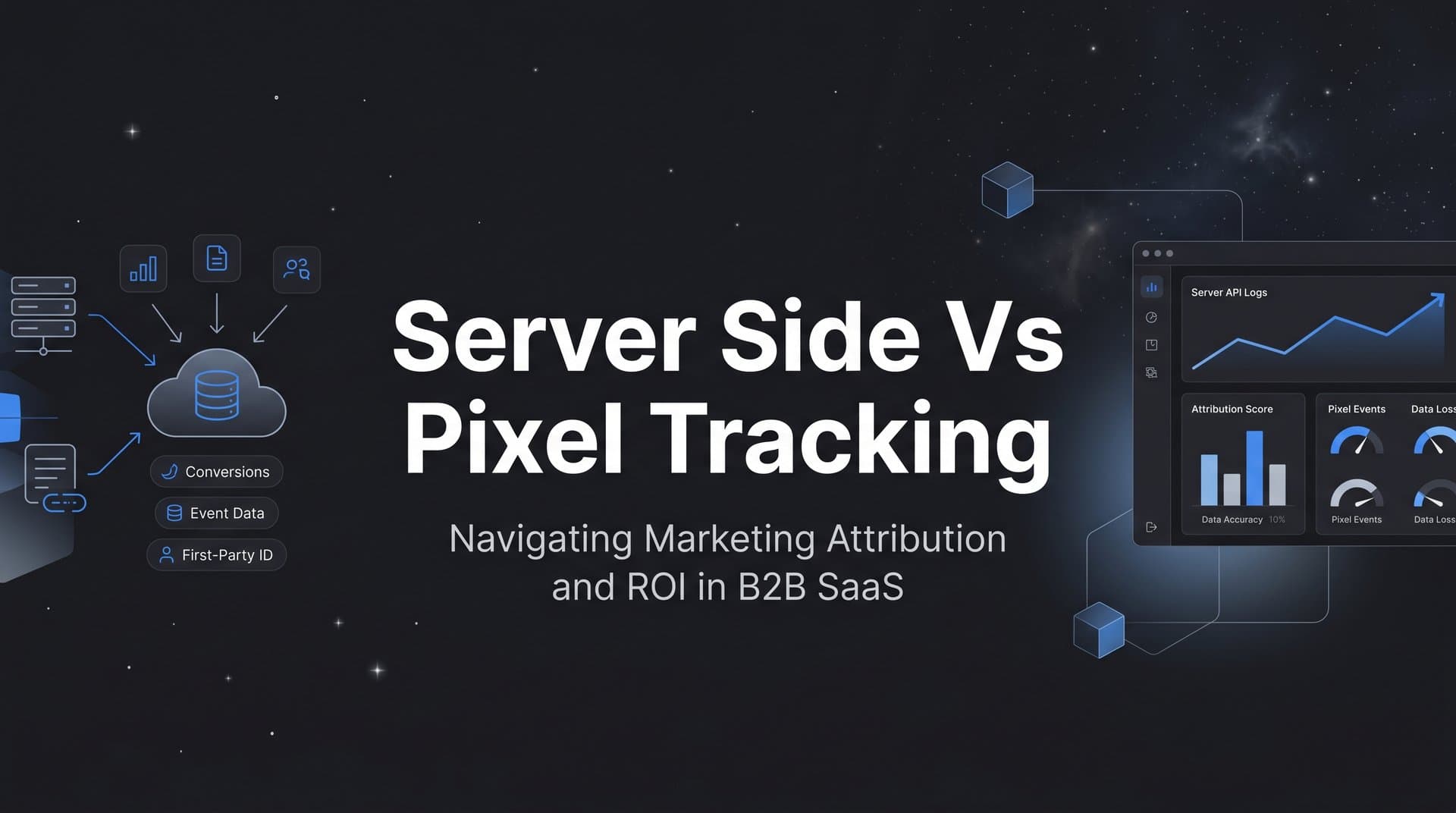
Server side tracking flips this model. Instead of the browser sending the event, your server captures the conversion and sends it to the ad platform via an API. Because the event originates on your infrastructure, it bypasses browser restrictions entirely. Ad blockers cannot intercept it. Safari's Intelligent Tracking Prevention cannot block it. iOS privacy settings do not affect it.
The other key difference is data richness. A browser pixel can only access what the browser exposes. Server side events can carry first-party identifiers like hashed email addresses, CRM IDs, and deal values that a pixel simply cannot reliably access.
Implementation Steps
1. Map out your current conversion events and identify which ones fire from the browser versus from your server or CRM.
2. Document the data fields each event currently sends, such as email, page URL, and event type, and note any gaps.
3. Identify which conversion events are highest priority for your ad campaigns, typically demo requests, trial signups, and qualified leads.
4. Decide which of those events would benefit most from server side delivery based on where data loss is most likely occurring.
Pro Tips
Think of pixel tracking and server side tracking as two layers of the same system, not competing alternatives. Most mature B2B SaaS tracking setups use both in parallel. Understanding the mechanics of each method is what lets you configure them correctly together, rather than accidentally creating gaps or duplicate data.
2. Audit Your Current Pixel Setup to Identify Data Loss
The Challenge It Solves
Most marketing teams assume their pixel is working because it was set up correctly at some point. But pixel reliability degrades over time as browser environments change, ad blocker adoption grows, and privacy-focused browsers tighten their defaults. You cannot fix a data problem you have not measured.
The Strategy Explained
A pixel audit is the process of comparing what your pixel reports against what your server or CRM actually recorded. If your CRM shows 200 demo requests in a given month but your ad platform pixel only captured 140 of them, you have a 30 percent data gap. That gap is not neutral. It means your ad platform is optimizing campaigns on incomplete information, your ROAS figures are understated, and your budget decisions are based on a distorted view of performance.
Common failure points include ad blockers, which are widely used among the professional audiences that B2B SaaS companies target. Safari's Intelligent Tracking Prevention limits first-party cookie lifespans and blocks certain tracking scripts. Firefox Enhanced Tracking Protection operates similarly. And for any traffic coming from mobile devices running recent iOS versions, Apple's App Tracking Transparency framework has significantly reduced the signal available to browser-based pixels.
Implementation Steps
1. Pull a conversion report from your ad platform for a defined time period, such as the last 30 to 90 days.
2. Pull the equivalent conversion data from your CRM or backend system for the same period.
3. Compare the two numbers. A meaningful gap between CRM-recorded conversions and pixel-reported conversions signals data loss.
4. Use browser developer tools or a tag auditing tool to test whether your pixel fires correctly across different browsers and with ad blockers enabled.
5. Check your pixel's match rate in Meta Events Manager or Google's conversion diagnostics to see how many events are being matched to users.
Pro Tips
Pay particular attention to your match rate. A low match rate means your pixel is firing but the ad platform cannot connect those events to the users who triggered them. This is often a sign that you need to enrich your events with first-party identifiers, which server side tracking makes much easier to do reliably.
3. Use the Conversion API to Send Server Side Events to Meta and Google
The Challenge It Solves
Once you have identified data loss in your pixel setup, the next step is to route conversion events through a channel that does not depend on the browser. Both Meta and Google have built official server side solutions specifically for this purpose, and configuring them correctly is one of the highest-leverage moves a B2B SaaS marketing team can make.
The Strategy Explained
Meta's Conversion API, commonly referred to as CAPI, allows you to send web events, app events, and offline conversions directly from your server to Meta's data infrastructure. Because the event originates on your server, it is not affected by browser-level interference. You can include richer customer data with each event, such as hashed email addresses and phone numbers, which significantly improves Meta's ability to match events to users and optimize your campaigns.
Google Enhanced Conversions work on a similar principle. You supplement your existing Google Ads conversion tags with hashed first-party data sent server side. This improves match rates and gives Google's algorithm more accurate signal to work with when optimizing for conversions.
Both platforms officially recommend running their server side solutions alongside browser pixels in a redundant configuration. The pixel captures what it can from the browser, and the server side event fills in the gaps. Together, they provide more complete coverage than either method alone.
Implementation Steps
1. Set up Meta's Conversion API through your server or through a supported partner integration. Meta provides detailed documentation for direct API access as well as partner integrations.
2. Configure Google Enhanced Conversions in your Google Ads account by enabling the feature and implementing the required code changes to pass hashed customer data.
3. Send the same conversion events through both the browser pixel and the server side API to create redundancy.
4. Verify that events are being received correctly in Meta Events Manager and Google Ads conversion diagnostics.
Pro Tips
When configuring CAPI, prioritize sending hashed email addresses with every event. Email is the strongest matching signal available and directly improves your event match score. A higher match score means more of your conversions get attributed, which gives the ad platform better data to optimize your campaigns. Platforms like Cometly handle Conversion API integration natively, simplifying this configuration significantly.
4. Implement Event Deduplication to Prevent Double-Counting
The Challenge It Solves
Running both a browser pixel and a server side event for the same conversion is the right approach for data completeness. But without deduplication, your ad platform will count that single conversion twice, once from the pixel and once from the server. The result is inflated conversion numbers, overstated ROAS, and budget decisions made on data that does not reflect reality.
The Strategy Explained
Deduplication is the process of telling ad platforms that two events, one from the browser and one from the server, represent the same conversion and should only be counted once. Both Meta and Google have built deduplication mechanisms into their systems, but you have to configure them correctly for deduplication to work.
Meta uses an event_id parameter for this purpose. When you send a pixel event and a CAPI event for the same conversion, both events need to carry the same unique event_id. Meta matches events with identical IDs and counts them as a single conversion rather than two. If the event IDs do not match, or if you are not passing them at all, Meta has no way to know that the two events represent the same action.
Google uses transaction IDs for the same purpose within its conversion tracking system. The logic is identical: a unique identifier ties the browser-side event and the server side event together so that only one conversion is recorded.
Implementation Steps
1. Generate a unique event ID for each conversion event at the moment it occurs. This ID should be consistent across both the pixel and the server side event for that specific conversion.
2. Pass the event_id parameter in your Meta pixel event and include the same event_id in the corresponding CAPI event payload.
3. For Google, configure transaction IDs in your conversion tags and ensure the same ID is passed through your Enhanced Conversions implementation.
4. Test deduplication by checking Meta Events Manager for duplicate event warnings and reviewing Google Ads diagnostics for conversion discrepancies.
Pro Tips
Deduplication is one of the most commonly skipped steps when teams first implement server side tracking, and it causes significant reporting problems. Before trusting any conversion data from a dual-tracking setup, verify that deduplication is working correctly. If your conversion volume appears to have doubled after adding server side tracking, deduplication is almost certainly not configured properly.
5. Enrich Server Side Events with First-Party CRM Data
The Challenge It Solves
For B2B SaaS companies, a form submission is rarely the conversion that matters most. What matters is whether that lead became a qualified opportunity, a trial user, or a paying customer. Browser pixels cannot capture those downstream events because they happen inside your CRM, not on your website. Server side tracking changes that by enabling you to send pipeline and revenue signals back to ad platforms as offline conversions.
The Strategy Explained
When you connect your CRM to your server side tracking setup, you can send conversion events that reflect real business outcomes rather than just top-of-funnel actions. For example, instead of only telling Meta that someone submitted a demo request form, you can send a follow-up event when that lead becomes a sales-qualified opportunity, and another when they become a closed-won customer.
This type of first-party data enrichment has a direct impact on ad platform optimization. When Meta or Google receives signals that certain leads convert into revenue at higher rates, their algorithms can adjust targeting to find more of those high-value users. You shift from optimizing for form fills to optimizing for actual pipeline and revenue. The data you attach to each event also matters. Hashed email addresses, phone numbers, company names, and deal values all improve the ad platform's ability to match events to users and understand which audiences are most valuable. Cometly connects your CRM data directly to server side events, making it straightforward to send enriched offline conversions to Meta and Google without complex custom development.
Implementation Steps
1. Identify the CRM events that represent meaningful business outcomes for your funnel, such as SQL creation, opportunity stage changes, and closed-won deals.
2. Map each CRM event to a corresponding offline conversion event in Meta and Google, with appropriate event names and values.
3. Configure your server side tracking to pull the relevant data fields from your CRM when each event fires, including hashed customer identifiers and deal values.
4. Set up offline conversion imports in Meta Events Manager and Google Ads to receive these enriched events.
5. Monitor event match rates to confirm that your CRM data is successfully matching to ad platform user profiles.
Pro Tips
Assign monetary values to your offline conversion events wherever possible. When you pass a deal value alongside a closed-won event, ad platforms can calculate true ROAS at the revenue level rather than the lead level. This gives you a fundamentally more accurate picture of which campaigns are generating real business outcomes.
6. Match the Right Attribution Model to Your Server Side Data
The Challenge It Solves
Server side tracking gives you more complete conversion data. But if you apply the wrong attribution model to that data, you can still draw misleading conclusions about which channels and campaigns are actually driving results. Attribution model selection is not a set-it-and-forget-it decision, and it becomes more consequential as your data quality improves.
The Strategy Explained
Attribution models determine how credit for a conversion is distributed across the touchpoints in a customer's journey. Last-touch attribution gives all credit to the final interaction before conversion. First-touch attribution credits only the first interaction. Linear attribution distributes credit equally across all touchpoints. Time-decay models give more credit to touchpoints closer to the conversion. Data-driven models use statistical analysis to assign credit based on which touchpoints actually correlate with conversion.
With pixel-only tracking, large portions of the B2B customer journey are often invisible. If your pixel is missing 20 to 30 percent of touchpoints due to browser restrictions and ad blockers, any attribution model you apply is working with incomplete data. The model may tell you that paid search is your top channel simply because those touchpoints were captured more reliably than others.
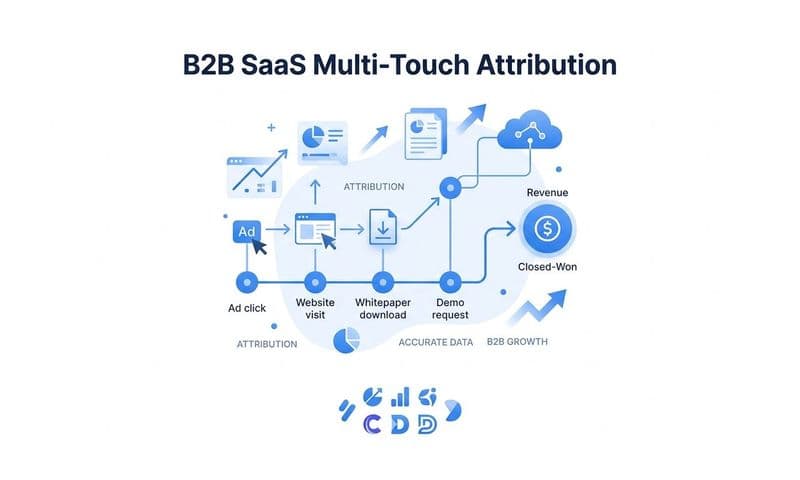
Server side tracking, when implemented correctly with proper deduplication and CRM enrichment, captures a more complete picture of the customer journey. That completeness is what makes multi-touch attribution reliable. You can explore how Cometly's multi-touch attribution capabilities work once your server side data foundation is in place.
Implementation Steps
1. Review your average sales cycle length. B2B SaaS funnels with longer cycles typically benefit from multi-touch models that credit multiple interactions rather than just the first or last touch.
2. Assess how many touchpoints your average buyer has before converting. More touchpoints generally favor linear or time-decay models over single-touch models.
3. Confirm that your server side tracking is capturing touchpoints across all major channels before committing to a multi-touch model, since incomplete data makes multi-touch attribution less reliable.
4. Compare attribution model outputs side by side in your analytics platform to understand how channel credit shifts between models before making budget decisions based on any single model.
Pro Tips
Avoid making permanent budget decisions based on a single attribution model. Use multiple models as lenses that reveal different aspects of your funnel. Last-touch tells you what closed the deal. First-touch tells you what created awareness. Multi-touch tells you what sustained the journey. Server side data with full-funnel coverage gives you the foundation to use all three perspectives meaningfully.
7. Build a Unified Tracking Architecture That Combines Both Methods
The Challenge It Solves
Individual tracking improvements, whether adding CAPI, enriching events with CRM data, or fixing deduplication, are valuable in isolation. But without a unified architecture that ties all of these components together, you end up with a fragmented setup that is difficult to audit, maintain, and scale. The goal is a single, coherent tracking system that provides complete coverage and a reliable single source of truth.
The Strategy Explained
A hybrid tracking architecture uses both browser pixels and server side events in a complementary structure. The pixel captures real-time behavioral data from the browser, providing immediacy and broad event coverage. Server side events fill the gaps left by browser restrictions, carry richer first-party data, and connect downstream CRM signals to ad platform attribution. Together, they create redundancy that protects your data quality even as browser environments continue to evolve.
The critical piece that most teams overlook is centralization. When your pixel data lives in Meta, your CAPI events go to Meta and Google separately, your CRM data sits in Salesforce or HubSpot, and your attribution reports are pulled from multiple dashboards, you do not have a single source of truth. You have a collection of partial views that require manual reconciliation.
This is the problem that Cometly is built to solve. It connects your ad platforms, CRM, and website into a single attribution platform that tracks every event in real time. Server side conversion tracking and Conversion API integration are built in, so you do not need to stitch together separate tools to send enriched events to Meta and Google. Your team gets one dashboard that shows attribution across every channel, from first ad click to closed-won revenue, with the deduplication and data enrichment handled automatically.
Implementation Steps
1. Audit your current tracking stack and list every tool, pixel, and integration that touches conversion data. Identify redundancies and gaps.
2. Define your canonical list of conversion events, from top-of-funnel actions like ad clicks and form submissions to bottom-of-funnel events like demo completions and closed deals.
3. Implement browser pixels for real-time behavioral tracking and configure server side events for each canonical conversion, ensuring deduplication is in place.
4. Connect your CRM to your server side tracking layer so that pipeline and revenue events flow back to ad platforms as offline conversions.
5. Centralize all attribution data into a single platform so your team can analyze channel performance, compare attribution models, and make budget decisions from one consistent data source.
Pro Tips
Treat your tracking architecture as a living system, not a one-time implementation. Browser environments, ad platform APIs, and CRM integrations change over time. Schedule quarterly reviews to verify that your pixel is still firing correctly, your server side events are being received, your deduplication is working, and your match rates are at an acceptable level. A unified platform like Cometly makes these audits significantly faster because all of your data is in one place.
Putting It All Together
Tracking accuracy is not a technical detail. It is the foundation of every budget decision, channel comparison, and creative test your team runs. Pixel tracking alone is no longer sufficient for B2B SaaS companies operating in a privacy-first environment.
Server side tracking fills the gaps, but only when implemented correctly with proper deduplication, first-party data enrichment, and the right attribution model applied on top. The most effective approach combines both methods in a unified architecture that captures every touchpoint across the full customer journey.
Start by auditing your current pixel setup to understand where data is leaking. Then layer in server side events through the Conversion API, enrich those events with CRM data, and apply a multi-touch attribution model that reflects how your buyers actually move through the funnel.
Cometly is built specifically for this workflow. It connects your ad platforms, CRM, and website to track every event in real time, sends enriched conversion data back to Meta and Google to improve ad algorithm performance, and gives your team a single dashboard to analyze attribution across every channel. From first ad click to closed-won revenue, every touchpoint is captured and accounted for.
If you want accurate data driving your ad spend decisions, the strategies in this article give you the roadmap to get there. Get your free demo today and start capturing every touchpoint to maximize your conversions.