
Shopify conversion tracking problems are more common than most marketers realize, and they are quietly draining ad budgets every day. When your tracking breaks down, your ad platforms receive incomplete or inaccurate data, your attribution models produce misleading results, and your optimization decisions are based on fiction rather than fact.
The result is wasted spend, poor targeting, and campaigns that underperform for no obvious reason. You increase your budget, tweak your creative, adjust your audiences, and still the numbers do not add up. Often, the problem is not your ads. It is your tracking.
This guide walks you through exactly how to diagnose and fix the most common Shopify conversion tracking problems, from duplicate events and missing pixels to broken server-side connections and misattributed revenue. Whether you are running paid ads on Meta, Google, or TikTok, accurate conversion data is the foundation of every smart campaign decision.
By the end of this guide, you will have a working, reliable tracking setup that captures every purchase, lead, and touchpoint so your ad platforms can optimize properly and your team can trust the numbers. Each step builds on the last, so follow them in order for the best results.
Step 1: Audit Your Current Tracking Setup
Before you fix anything, you need to know exactly what is running. Most Shopify stores accumulate tracking scripts over time as new apps are installed, integrations are added, and team members make changes without documenting them. The result is often a tangled mix of pixels, tags, and scripts that conflict with each other.
Start by installing browser-based diagnostic tools. Meta Pixel Helper (a Chrome extension) and Google Tag Assistant will show you exactly which pixels and tags are firing on any page of your store. Open your Shopify storefront, activate these tools, and navigate through your key pages: homepage, product pages, cart, checkout, and the order confirmation page.
What you are looking for at this stage is a clear picture of everything that is active. Document every tracking script you find:
Meta Pixel: Note the pixel ID and whether it is firing on the pages you expect.
Google Ads Conversion Tag: Check whether it is present and whether it is tied to a specific conversion action.
Google Analytics 4: Confirm your GA4 measurement ID and whether it is sending events correctly.
TikTok Pixel: Verify the pixel ID and event configuration.
Third-party attribution tools: Note any additional scripts from platforms like Cometly or other analytics tools.
Next, go to your Shopify admin and navigate to Online Store, then Preferences. Check what pixels are configured there. Then open your theme code and search for any manually embedded pixel snippets. It is common to find the same pixel installed in two places, once through a native Shopify integration and once hardcoded into the theme.
Also check your Google Tag Manager container if one is active. GTM can fire tags independently of what Shopify's native integrations are doing, which creates a second layer of potential duplication.
The clearest sign of a problem is seeing the same event fire twice in the Pixel Helper or Tag Assistant. A single page view triggering two Meta Pixel events is a red flag. A purchase event firing twice means your reported conversions are inflated and your ad platform's algorithm is learning from bad data. Understanding the most common pitfalls of Shopify tracking before you begin your audit will help you know exactly what to look for.
By the end of this step, you should have a written inventory of every active tracking script on your store, where each one is installed, and any duplicates or conflicts you have identified. This document becomes your reference point for everything that follows.
Step 2: Fix Duplicate Events and Pixel Conflicts
Duplicate events are one of the most damaging Shopify conversion tracking problems because they are invisible to most marketers. Your campaigns look like they are converting well, but the data is inflated. Your ad platform optimizes toward ghost conversions, your cost per acquisition looks artificially low, and your actual business results do not match what the dashboard shows.
The most common cause of duplicates is installing the same pixel through multiple methods simultaneously. For example, a merchant might use Shopify's native Meta Sales Channel integration, which automatically places the Meta Pixel on the store, and also have the pixel manually added to their theme code from a previous setup. Both fire independently, doubling every event count.
Here is how to resolve this systematically:
1. Choose one installation method per platform and remove all others. If you are using Shopify's native Meta integration, remove any manually added pixel code from your theme files and from any GTM containers. If you prefer GTM for control and flexibility, disable the native Shopify integration for that platform.
2. For Google Ads, confirm you are not firing the purchase conversion tag through both Shopify's built-in Google channel and a separate GTM container at the same time. Pick one path and disable the other completely.
3. If you are running both browser-side pixels and server-side Conversion API events simultaneously, which you should be for accuracy, you must implement event deduplication. This means passing a unique event ID with every browser-side pixel event and sending that exact same event ID with the corresponding server-side CAPI event. When the ad platform receives both, it recognizes them as the same conversion and counts it only once.
Without deduplication, adding server-side tracking on top of existing browser-side tracking will make your over-reporting worse, not better. This is a critical detail that many guides skip over. Inaccurate conversion tracking caused by duplicate events is one of the most common reasons ad campaigns underperform despite healthy-looking dashboards.
After making each change, test before moving on. Use Meta's Test Events tool in Events Manager to place a test purchase and confirm only one purchase event fires. Use Google Ads Tag Diagnostics to verify your conversion tag is not duplicating. The goal is to see a single, clean event for each user action.
One important caution: removing the wrong pixel instance can kill your tracking entirely. Always document exactly what you are removing and from where. Verify with a real test before considering this step complete.
Step 3: Verify Your Purchase Event Is Firing Correctly
Even when your pixels are installed correctly with no duplicates, the purchase event itself can be misconfigured. This is a quieter problem because your dashboard shows conversions, but the data attached to those conversions is wrong. Wrong values, missing order IDs, or incorrect currency codes all degrade your attribution accuracy and make it harder to trust your reporting.
The purchase event fires on Shopify's order confirmation page, also called the thank you page or order status page. This page is only accessible after a completed transaction, which makes it slightly harder to test than other pages. Here is how to do it properly.
Use Meta's Test Events tool in Events Manager. Set your pixel to test mode, then complete a real test purchase on your store using a test payment method. The Test Events tool will show you the exact payload sent with the purchase event, including every parameter.
Check each of the following parameters carefully:
Value: Confirm the order value being sent matches the actual transaction total. Watch for discounts, which sometimes cause the reported value to differ from the checkout total if the pixel is pulling the pre-discount price.
Currency: Verify the currency code is correct and consistent. If your store operates in multiple currencies, confirm the pixel is sending the transaction currency, not your store's base currency.
Order ID: This should be a unique identifier for each transaction. It is essential for deduplication and for matching browser-side and server-side events.
Content IDs: These should match the product IDs in your Shopify catalog, which matters for dynamic product ads.
For Google Ads, verify that your conversion value is being pulled dynamically from the transaction rather than using a static placeholder value. A static value means every purchase reports the same revenue figure, which makes your ROAS data meaningless for optimization. Follow a detailed Google Ads conversion tracking setup for Shopify to ensure your dynamic values are configured correctly from the start.
Also confirm that your order confirmation page is not being blocked by browser extensions during testing. Ad blockers can suppress the pixel from firing, which would give you a false negative. Test in a clean browser profile without extensions to get an accurate result.
Your success indicator here is straightforward: a test purchase should produce a single purchase event in your testing tool with the correct value, currency, and order ID attached. If any of those are wrong or missing, trace back through your pixel configuration to find the source of the error.
Step 4: Implement Server-Side Tracking via Conversion API
If you are relying entirely on browser-side pixels, you are missing a meaningful portion of your actual conversions. This is not a hypothetical concern. Apple's App Tracking Transparency framework, the growth of ad blockers, and increasingly strict browser privacy settings all limit what a browser-side pixel can see and report.
Server-side tracking solves this by sending conversion data directly from your server to the ad platform, bypassing the browser entirely. The pixel fires from your infrastructure, not the user's device, which means ad blockers and privacy restrictions cannot intercept it. Understanding why server-side tracking is more accurate than browser-based methods is essential context before you begin this configuration.
For Meta, this is called the Conversions API, or CAPI. You can set it up through Shopify's native Meta integration, which has a built-in CAPI connection, or through a dedicated server-side solution. When configured correctly, CAPI sends purchase events directly from your server to Meta's API, supplementing or replacing browser-side data.
For Google, the equivalent is Enhanced Conversions. This feature passes hashed customer data, such as email addresses and phone numbers, alongside your conversion events. Google uses this data to match conversions to signed-in users, improving attribution accuracy even when cookies are unavailable.
The critical rule when running both browser-side and server-side simultaneously: always pass a matching event ID in both payloads. This is the deduplication mechanism mentioned in Step 2. Without it, you will count every conversion twice and create worse data than if you had only one tracking method.
After setting up CAPI, check your Meta Events Manager and look at the event match quality score for your purchase events. This score, rated from 1 to 10, reflects how well Meta can match your conversion data to actual user profiles. Server-side tracking with hashed customer data like email and phone number typically improves this score. Aim for a score of 6 or higher for reliable attribution and optimization performance. For a step-by-step walkthrough, the Conversion API implementation tutorial covers the full process of recovering lost attribution data through server-side events.
Platforms like Cometly handle server-side event forwarding automatically. Rather than manually configuring API connections for each ad platform, Cometly sends enriched, conversion-ready events back to Meta and Google on your behalf. This improves targeting and ad optimization without requiring you to manage the technical API configuration yourself.
Your success indicator for this step is seeing both browser and server events appearing in Events Manager with deduplication working correctly, a strong event match quality score, and no unexpected spike in reported conversions that would suggest double counting.
Step 5: Align Attribution Windows and Models Across Platforms
Here is something that confuses almost every marketer working across multiple ad platforms: the same purchase will often appear in Meta's reports, Google's reports, and Shopify's analytics simultaneously. Each platform claims credit. Each is technically correct by its own rules. And the total reported conversions across all platforms will almost always exceed your actual Shopify order count.
This is not a bug. It is a structural feature of how attribution works. But if you do not understand it, you will make poor budget decisions based on inflated or misleading numbers.
Each platform uses its own default attribution window and model. Meta defaults to a 7-day click and 1-day view window, meaning it will claim credit for any purchase that happens within 7 days of a click or 1 day of a view impression. Google Ads uses data-driven attribution by default for eligible accounts. Shopify's built-in analytics uses last-click. These different rules mean the same customer journey gets interpreted differently depending on which platform's lens you are looking through. Learning more about conversion window attribution will help you understand why these discrepancies occur and how to account for them.
To address this, start by reviewing your attribution settings in each platform:
Meta Ads Manager: Check your attribution setting at the campaign or account level. Consider whether your sales cycle aligns with the default 7-day click window or whether a shorter or longer window is more appropriate for your store.
Google Ads: Go to Tools, then Conversions, and review the lookback window for each conversion action. Confirm it reflects realistic customer decision timelines for your product category.
Shopify Analytics: Understand that Shopify's built-in attribution is last-click only, which means it gives all credit to the final touchpoint before purchase and ignores every earlier interaction.
The real solution to this problem is a centralized attribution platform that sits above all of these individual tools. Rather than trying to reconcile conflicting numbers from Meta, Google, and Shopify separately, a tool like Cometly connects your ad platforms, CRM, and Shopify store to provide cross-channel Shopify marketing attribution. You can see which touchpoints actually contributed to each conversion rather than relying on each platform's self-reported data, which is inherently biased toward claiming as much credit as possible.
Your success indicator here is not that all platforms agree on the same number. They never will. The goal is that you understand why the discrepancies exist and have a reliable single source of truth that you use for actual budget decisions.
Step 6: Track the Full Customer Journey Beyond the Purchase Event
Fixing your purchase event tracking is essential, but it is only half the picture. Many Shopify tracking setups are so focused on the bottom-funnel conversion that they neglect the events happening earlier in the customer journey. This is a problem because ad platform algorithms need signal throughout the funnel to optimize effectively, not just at the moment of purchase.
Think of it this way: if your ad platform only receives purchase events, it has limited data to work with, especially in the early stages of a campaign when purchase volume is low. When it also receives add-to-cart, initiate checkout, and view content events, it has far more signal to build audiences and identify users who are likely to convert. This translates directly into better targeting and more efficient spend. Reviewing best practices for tracking conversions accurately will help you configure each funnel stage correctly.
Enable standard funnel events in your Meta and Google setups across these key stages:
ViewContent: Fires when a user views a product page. This is your top-of-funnel signal.
AddToCart: Fires when a user adds a product to their cart. This indicates purchase intent.
InitiateCheckout: Fires when a user begins the checkout process. This is a high-intent signal that is especially valuable for retargeting.
Purchase: The bottom-funnel event you have already configured in previous steps.
For stores with longer consideration cycles or B2B purchasing dynamics, also consider tracking micro-conversions like email signups, account creations, and repeat product page views as custom conversion events. These give your attribution model additional data points to work with.
Connecting your Shopify data to your CRM adds another layer of value. When you can track what happens after the first purchase, including repeat purchases, average order value over time, and customer lifetime value, your attribution model becomes far more powerful. You move from optimizing for single transactions to optimizing for long-term revenue.
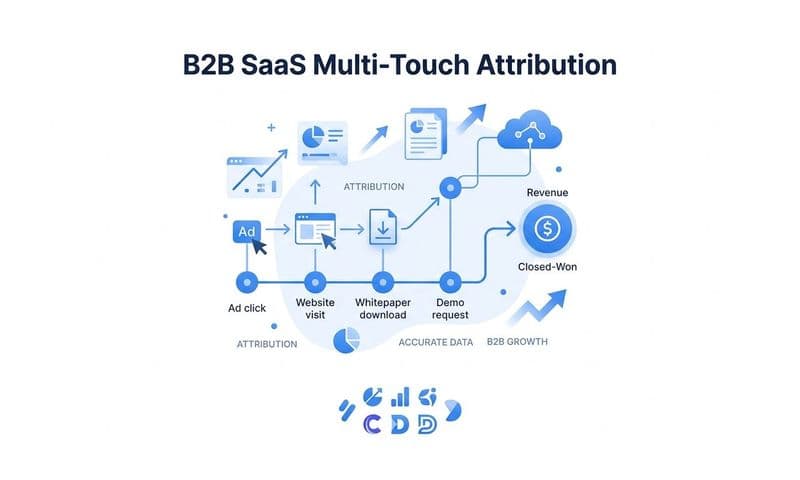
Cometly captures every touchpoint from the first ad click through to revenue, giving its AI a complete and enriched view of every customer journey. This means you can identify which campaigns are driving long-term customer value, not just initial purchases, and allocate budget accordingly.
Do not overlook abandoned cart tracking in Shopify either. Understanding where users drop off in your funnel helps you optimize both your ads and your on-site experience. If a large portion of users add to cart but never reach checkout, that is a funnel problem worth addressing separately from your tracking configuration.
Your success indicator for this step is that your ad platforms are receiving a full set of funnel events, not just purchases, and your attribution reports reflect the complete customer journey from first touch to final conversion.
Putting It All Together: Your Conversion Tracking Checklist
Here is a quick-reference summary of everything covered in this guide. Use this checklist to audit any Shopify store or to verify your own setup is working correctly.
Audit your tracking setup: Use Pixel Helper and Tag Assistant to document every active script. Identify duplicates and conflicts before making any changes.
Fix duplicate events: Choose one installation method per platform and remove all others. Implement event deduplication when running both browser-side and server-side tracking simultaneously.
Verify your purchase event: Confirm the event fires on the order confirmation page with correct value, currency, order ID, and content IDs. Use test events tools to validate.
Implement server-side tracking: Set up Meta CAPI and Google Enhanced Conversions to capture conversions that browser-side pixels miss. Aim for an event match quality score of 6 or higher.
Align attribution windows: Review and adjust attribution settings in each platform. Use a centralized attribution tool to get a single source of truth across all channels.
Track the full funnel: Enable ViewContent, AddToCart, InitiateCheckout, and Purchase events. Connect Shopify to your CRM for post-purchase visibility.
One important mindset shift: accurate conversion tracking is not a one-time setup. Platforms update their requirements, Shopify releases new features, and your own tech stack evolves. Build a habit of auditing your tracking quarterly to catch issues before they compound into significant data problems.
Cometly brings all of this together in one place. It captures every touchpoint, connects your ad spend directly to pipeline and revenue, and feeds enriched conversion data back to Meta and Google to improve targeting and optimization. Rather than managing separate tracking configurations for each platform, you get a single, accurate view of what is actually driving results.
The best place to start is where this guide started: the audit. Work through each step systematically, verify before moving forward, and do not try to overhaul everything at once. Fixing Shopify conversion tracking problems is entirely achievable with a methodical approach, and the payoff in ad efficiency and reporting accuracy is significant.
Ready to elevate your marketing game with precision and confidence? Discover how Cometly's AI-driven recommendations can transform your ad strategy. Get your free demo today and start capturing every touchpoint to maximize your conversions.