Picture this: you're reviewing your ad campaigns on a Monday morning, and one of your Facebook campaigns looks like it's bleeding money. The cost per conversion is through the roof, the ROAS is dismal, and the obvious call is to pause it. So you do. Two weeks later, your sales team is asking why pipeline has dried up — and after some digging, you realize that campaign was quietly driving a significant chunk of your leads. The conversions just weren't showing up in your dashboard.
This scenario plays out constantly across marketing teams of every size. Incomplete conversion tracking isn't a niche technical problem reserved for complex enterprise setups. It's one of the most widespread and costly issues in digital advertising today, and it's getting worse as the web becomes more privacy-focused.
Here's the important thing to understand: this isn't usually a case of someone forgetting to add a pixel. The reasons your conversion data is incomplete are structural. They involve browser-level privacy protections, Apple's mobile tracking restrictions, technical implementation issues, and fundamental gaps in how attribution credit gets assigned. Each one operates independently, but together they create a measurement environment where a meaningful portion of your actual conversions simply disappear from your reporting.
This article breaks down each of those causes clearly and directly. By the time you finish reading, you'll know exactly why you can't track all your conversions, and more importantly, what a properly built tracking setup looks like so you can start making decisions based on what's actually happening in your business.
The Tracking Gap Is Bigger Than You Think
Every marketer has noticed discrepancies in their data. A conversion count in Meta Ads that doesn't match Google Analytics. Revenue reported in your CRM that doesn't reconcile with what your ad platforms claim. Most teams chalk this up to normal platform differences and move on.
That instinct is understandable, but it's costing you. The difference between the conversions that actually happened and the conversions your tools recorded isn't just a rounding error. In many cases, it's large enough to completely distort your understanding of which campaigns are working and which aren't.
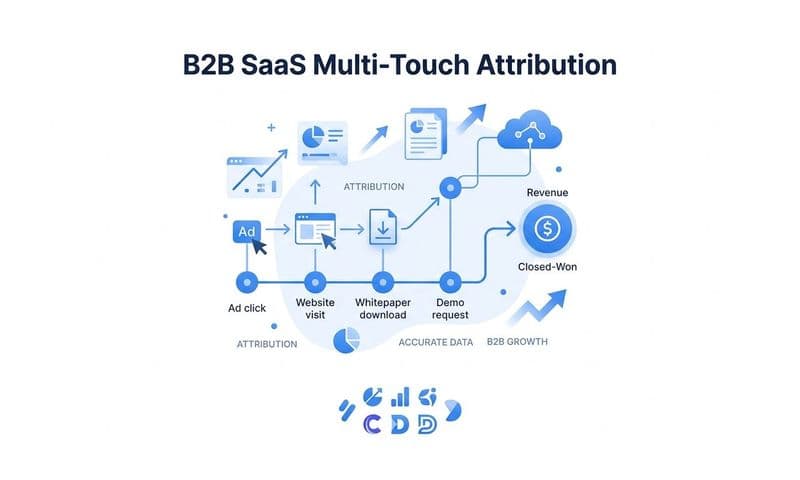
Think about what happens when a single conversion touches multiple platforms. A user sees a Facebook ad, doesn't convert. Three days later, they click a Google search ad, still don't convert. A week after that, they type your URL directly into their browser and buy. Facebook may claim partial or full credit through its attribution window. Google may claim credit for the search click. Your analytics tool might record only a direct visit. And if any tracking scripts failed to fire along the way, one or more of those touchpoints might not be recorded at all.
The result is a data environment where underreporting and double-counting are happening simultaneously. You're missing real conversions in some places while inflating counts in others. This isn't a single problem with a single fix. It's the combined output of several distinct forces working against your measurement setup at the same time. Understanding these common attribution challenges in marketing is the first step toward building a more reliable measurement foundation.
Understanding why you can't track all your conversions requires looking at each of these forces separately. Browser privacy changes, mobile tracking restrictions, implementation errors, and attribution model limitations all contribute in different ways. The rest of this article walks through each one so you can see exactly where your data is leaking and what can be done about it.
Browser Privacy Changes and Cookie Restrictions
For most of the history of digital advertising, third-party cookies were the invisible infrastructure that made conversion tracking work. When a user clicked your ad, a cookie was dropped in their browser. When they later completed a purchase, that cookie was read, the conversion was matched back to the original click, and the data flowed back to your ad platform. Simple, reliable, and almost entirely invisible to the user.
That system has been dismantled piece by piece over the past several years.
Safari's Intelligent Tracking Prevention (ITP) has been progressively restricting cross-site tracking since 2017. In its current form, ITP limits cookie lifespans dramatically and blocks many third-party cookies entirely. Firefox's Enhanced Tracking Protection (ETP) operates on similar principles. The practical effect is that a user who clicks your ad in Safari on a Tuesday and converts the following Monday may generate a conversion that your pixel simply cannot connect back to the original click, because the cookie that would have made that connection has already expired or was never set.
It helps to understand the difference between first-party and third-party cookies here. A first-party cookie is set by the website you're actually visiting. A third-party cookie is set by a different domain, typically an ad platform or analytics provider running a script on that page. Browsers have become increasingly hostile to third-party cookies because they're the mechanism used to track users across the web without their explicit knowledge. When those cookies are blocked or shortened, cross-session and cross-site attribution breaks down.
Google has been navigating its own version of this challenge. After years of signaling that Chrome would deprecate third-party cookies, Google reversed course on full deprecation but introduced privacy-preserving alternatives that still change how tracking works at the browser level. The direction of travel across the entire industry is clear: browser-based tracking is becoming less reliable, not more.
Ad blockers add another layer of friction. A significant portion of users, particularly in B2B and tech-oriented audiences, run browser extensions that actively prevent tracking scripts from loading. When a pixel can't fire because it's been blocked, the conversion event never gets recorded, regardless of how well your implementation is configured.
The compounding effect here is real. Every conversion that happens on Safari, every user running an ad blocker, and every session where a cookie expired before the purchase was completed represents a gap in your data. Multiply that across your traffic volume and you start to see why incomplete conversion tracking is a structural problem, not an occasional anomaly.
iOS Privacy Updates and Mobile Tracking Blind Spots
Apple's App Tracking Transparency (ATT) framework, which launched with iOS 14.5 in April 2021, changed mobile advertising measurement in a way that many teams still haven't fully accounted for.
ATT requires apps to explicitly ask users for permission before tracking them across other companies' apps and websites. The prompt is straightforward: allow tracking or ask the app not to track. Industry sources have consistently reported that opt-in rates have been significantly below 50%, though the exact figures vary depending on the app category and audience. What that means in practice is that a large portion of your iOS users have opted out, making their post-click behavior invisible to platforms like Meta and Google. Understanding how to prepare for iOS link tracking restrictions has become an essential part of any modern attribution strategy.
The impact on Meta was particularly sharp. Facebook's advertising model had historically relied on a dense web of cross-app and cross-site signals to understand user behavior and attribute conversions. When ATT removed access to those signals for opted-out users, Meta lost visibility into a substantial portion of the conversion activity its ads were driving. Campaigns that were working well suddenly looked like they weren't, because the measurement infrastructure underneath them had been fundamentally disrupted.
The downstream effect goes beyond just underreporting. When Meta's algorithm doesn't receive conversion signals, it loses the feedback loop it needs to optimize ad delivery. The platform uses conversion data to understand which users are most likely to take valuable actions and to adjust who sees your ads. Fewer signals means worse optimization, which means campaigns that are already being measured inaccurately are also being delivered less efficiently. The measurement problem and the performance problem reinforce each other.
Mobile web conversions present their own challenges separate from in-app tracking. Even outside of ATT, mobile browsers have shorter cookie lifespans, more aggressive tracking prevention, and more frequent session interruptions than desktop browsers. A user who clicks an ad on their phone, switches to a different app, and returns to complete a purchase later is more likely to have their conversion go unattributed than a desktop user completing the same journey in a single browser session.
If your traffic skews mobile, and for most businesses it does, your tracking loss is likely higher than you realize. Mobile is where the combination of browser restrictions, ATT opt-outs, and session fragmentation converges most severely.
Pixel Misfires, Tag Errors, and Implementation Problems
Even setting aside privacy-related tracking loss, a meaningful portion of conversion data is lost simply because of how tracking is implemented. This is the technical layer of the problem, and it's more common than most teams want to admit.
Pixels that fire on the wrong pages are a classic issue. A purchase confirmation event that triggers on a page users can visit multiple times, rather than only on a unique order confirmation URL, will inflate your conversion counts. A lead form pixel that fires when the form loads rather than when it's successfully submitted records intent rather than action. These errors don't just create gaps in your data. They create misleading data, which in some ways is worse. Learning what a tracking pixel is and how it works is foundational to diagnosing these kinds of misfires.
Tag loading failures are subtler but equally damaging. If your tracking pixel is loaded via a tag manager that fires after a slow page load, or if a JavaScript conflict prevents the script from executing, the conversion event never gets sent. Page speed issues, particularly on mobile, mean that users who complete a purchase and immediately close the tab may do so before the tracking script has had a chance to fire.
Single-page applications (SPAs) built on frameworks like React, Vue, or Angular create a specific and well-documented tracking challenge. Traditional tracking setups rely on page load events to fire pixels and record sessions. SPAs navigate between views without triggering full page loads, which means that standard implementations miss most of the user's journey. A SaaS product built on React where users move through a multi-step signup flow, or an ecommerce site with a dynamic cart, requires explicit configuration to track these virtual page views and conversion events correctly.
Cross-domain journeys are another frequent source of tracking breaks. Many businesses have a marketing site on one domain and a checkout or booking system on a separate subdomain or third-party platform. When a user moves between these domains, standard pixel and analytics setups lose the session. The conversion gets recorded, but it's disconnected from the original ad click that drove it. Without specific cross-channel tracking implementation, that attribution data is simply gone.
These implementation problems are fixable, but they require deliberate auditing. Most teams set up their pixels once and assume they're working correctly. A systematic review of your tag firing rules, conversion event triggers, and cross-domain setup will almost always surface issues that have been quietly distorting your data.
Why Server-Side Tracking Changes the Equation
The common thread running through browser restrictions, ad blockers, and iOS privacy changes is that they all operate at the client side. They interfere with tracking scripts running in the user's browser. The logical response to that problem is to move the tracking off the browser entirely.
That's what server-side tracking does. Instead of relying on a pixel in the user's browser to fire a conversion event, server-side tracking sends that event directly from your server to the ad platform. The user's browser settings, ad blockers, and cookie restrictions are irrelevant because the data never passes through the browser at all. The benefits of server-side tracking extend well beyond simply recovering lost conversions.
Meta's Conversions API (CAPI) and Google's Enhanced Conversions are the most widely adopted implementations of this approach. Meta officially recommends using CAPI alongside the browser pixel for redundancy, so that conversions that the pixel misses are captured server-side. Google's Enhanced Conversions supplements existing conversion tags by sending hashed first-party customer data to improve match accuracy. Both are documented features with clear implementation paths.
The improvement server-side tracking delivers isn't just about recovering lost conversion volume. It also improves data quality in ways that matter for campaign performance. When you send server-side events, you can include richer customer data: hashed email addresses, phone numbers, and other identifiers that help the ad platform match the conversion event to the right user in their system. Meta measures this with an Event Match Quality (EMQ) score, which reflects how well your conversion events are being matched to Meta users. Higher EMQ scores mean better optimization signals, which translates to better ad delivery.
Think of it this way: the ad platform's algorithm is constantly learning which users are most likely to convert based on the signals you send it. When those signals are incomplete or noisy because of browser-side tracking loss, the algorithm is working with bad information. Server-side tracking restores the quality of that feedback loop, which means you're not just fixing your reporting. You're actively improving your campaign performance by giving the algorithm what it needs to optimize correctly. Reviewing the top server-side tracking tools available today can help you identify the right solution for your stack.
Server-side tracking is not a plug-and-play solution. It requires technical implementation and ongoing maintenance. But for any business running meaningful ad spend, it's no longer optional. It's the foundation of a tracking setup that can survive the current privacy landscape.
Multi-Touch Attribution: Seeing the Full Conversion Path
Here's a scenario that probably sounds familiar. Your Google Ads dashboard shows strong performance. Your Meta Ads dashboard also shows strong performance. But when you look at total revenue, the numbers don't add up to the combined attribution both platforms are claiming. Everyone is taking credit, and the math doesn't work.
This is the attribution problem, and it's distinct from the tracking loss problems covered above. Even when conversion events are being tracked correctly, most marketers are still missing the full picture because of how credit gets assigned.
Last-click attribution, which remains the default in many platforms and analytics tools, gives 100% of the conversion credit to the final touchpoint before the conversion. Every interaction that came before it gets nothing. In a world where a typical conversion journey might involve a TikTok video ad that created initial awareness, a retargeting ad on Meta that brought the user back, an organic Google search that answered a product question, and then a direct visit to complete the purchase, last-click attribution credits only that direct visit. Every upstream channel looks ineffective, even though each one played a role in driving the outcome.
The practical consequence is that marketers running on last-click attribution consistently undervalue top-of-funnel and mid-funnel activity. Awareness campaigns get cut because they don't show direct conversions. Retargeting gets over-credited because it sits close to the purchase. Budget decisions get made based on a distorted picture of what's actually working. These are well-documented attribution challenges in marketing analytics that affect teams across every industry.
Multi-touch attribution distributes credit across all the touchpoints in a conversion path. Different models do this in different ways: linear attribution splits credit equally across all touches, time-decay attribution gives more weight to recent interactions, and data-driven attribution uses machine learning to assign credit based on the actual influence of each touchpoint. Each model has tradeoffs, but all of them give you a more complete view than last-click alone.
The challenge is that multi-touch attribution requires a unified data layer. You need to connect ad platform data, CRM data, and website behavior into a single view of the customer journey. Native ad platform reporting can't do this because each platform only sees its own slice of the journey. A dedicated attribution platform is what makes it possible to see the full path and make smarter decisions about where to allocate budget.
Building a Tracking Setup That Actually Works
At this point, the picture should be clear. Incomplete conversion tracking is not caused by one thing. It's caused by several things operating simultaneously: browser cookie restrictions, iOS privacy opt-outs, pixel implementation errors, and attribution models that don't reflect how customers actually make decisions.
The solution is equally layered. No single fix addresses all of it. What works is building a tracking infrastructure where each layer compensates for the weaknesses of the others.
Server-side event tracking is the foundation. It bypasses browser-based restrictions and delivers cleaner, richer conversion signals to your ad platforms. First-party data collection, capturing customer identifiers like email and phone at the point of conversion, strengthens the match quality of those server-side events. A properly configured pixel remains valuable as a secondary layer for capturing behavioral data and supporting server-side events with additional signal.
Feeding enriched conversion data back to ad platforms through CAPI sync, Google Enhanced Conversions, and equivalent integrations does two things at once. It fixes your reporting by recovering conversions that would otherwise be lost. And it actively improves campaign performance by giving platform algorithms the high-quality signals they need to optimize delivery toward your best customers. Following best practices for tracking conversions accurately ensures that each layer of your setup is working as intended.
The final layer is a unified attribution platform that stitches together data from your ad platforms, CRM, and website into a single view of the customer journey. This is where multi-touch attribution becomes actionable, because you can see not just which conversions happened but which touchpoints across which channels contributed to each one.
This is exactly what Cometly is built to do. Cometly captures every touchpoint from the initial ad click through to CRM events, giving you a complete and enriched view of every customer journey. Its AI-driven analysis identifies which ads and campaigns are actually driving revenue across every channel, not just the ones that get last-click credit. And it syncs that enriched conversion data back to Meta, Google, and other platforms, so your ad algorithms are working with the best possible signals.
Instead of making budget decisions based on incomplete dashboards, you get a clear, accurate picture of what's working and the confidence to act on it.
Putting It All Together
Incomplete conversion tracking is not evidence that your campaigns are failing. It's evidence that your measurement infrastructure hasn't kept pace with a privacy-first web. The gap between what actually happened and what your tools recorded is real, it's often significant, and it has concrete causes that each have concrete solutions.
Browser restrictions and shortened cookie lifespans are eroding client-side tracking. iOS privacy changes have created a large blind spot in mobile attribution. Pixel implementation errors and cross-domain breaks introduce technical gaps that compound everything else. And last-click attribution ensures that even the conversions you do capture are being credited in ways that distort your understanding of what's driving growth.
The path forward is a layered tracking setup built on server-side events, first-party data, and a unified attribution platform that connects all your data sources. Each piece addresses a different failure mode. Together, they give you the visibility you need to make confident, accurate decisions about where to invest your ad budget.
If you've been wondering why you can't track all your conversions, now you know. And the next step is doing something about it. Get your free demo of Cometly today and see how a complete attribution setup can close the gap between what your campaigns are actually delivering and what your dashboards are showing you.