You've just wrapped up a monthly ad review. The numbers in your Meta dashboard look solid. Conversions are up, cost per acquisition seems reasonable, and the algorithm appears to be doing its job. Then you open your CRM. The revenue data tells a completely different story. Fewer deals closed than the platform reported. Attribution is pointing to campaigns that your sales team barely recognizes. The gap between what your pixels are telling you and what actually happened keeps widening every month.
This is not a budgeting error or a reporting glitch. It is a structural problem baked into how pixel-based tracking was designed. Tracking pixels were once the backbone of digital advertising measurement, and for a long time they worked well enough. But the internet has changed dramatically around them. Browser restrictions have tightened, privacy regulations have reshaped user consent, and the way people move across devices and sessions has made single-pixel attribution increasingly unreliable.
In 2026, marketers who still rely exclusively on pixel data are making decisions based on an incomplete picture. Some conversions go unreported. Some campaigns get credit they do not deserve. And ad platform algorithms, fed incomplete signals, optimize toward the wrong outcomes. Understanding the specific limitations of ad tracking pixels is the first step toward building a measurement strategy that actually reflects reality. Let's break down exactly what those limitations are, why they matter, and what you can do about them.
How Tracking Pixels Actually Work (And Where They Fall Short)
A tracking pixel is a small snippet of JavaScript code embedded on a webpage or within an ad. When a user visits a page or completes an action, such as making a purchase or submitting a lead form, the pixel fires. It sends a signal back to the ad platform, typically via the user's browser, along with cookie data that helps identify who the user is and which ad they interacted with. This is the foundation of how platforms like Meta, Google, and TikTok have historically measured ad performance.
The mechanics sound straightforward, but there is a critical dependency built into this system: everything relies on the user's browser to execute the code and transmit the data. This is called client-side tracking, and it is where the vulnerabilities begin. If anything interrupts the browser's ability to run the pixel, whether that is an ad blocker, a cookie restriction, a slow page load, or the user simply closing the tab too quickly, the conversion event is never recorded.
This architecture made sense when it was designed. In the early days of digital advertising, most users browsed on desktop computers, third-party cookies flowed freely, and the idea of widespread ad blocking was not yet a mainstream concern. Pixels were a clever, lightweight solution to a relatively simple problem: how do you know which ad led to which conversion?
The problem is that the internet has evolved significantly, and pixel architecture has not kept pace. Users now switch between multiple devices throughout a single purchase journey. Privacy-focused browsers have become the default for millions of people. Regulatory frameworks have reshaped what data can be collected and how. The client-side model that once worked reliably now has gaps everywhere you look.
Think of a pixel like a relay runner who can only pass the baton if they are standing in exactly the right spot. The moment the conditions change, the chain breaks. And in today's browsing environment, the conditions are changing constantly.
The Privacy Landscape That Reshaped Pixel Reliability
The most significant blow to pixel-based tracking came from Apple. When iOS 14 launched App Tracking Transparency (ATT), it required apps to explicitly ask users for permission before tracking their activity across other apps and websites. The opt-out rates were substantial. For platforms like Meta, which had built their entire attribution model around cross-app tracking, this was a fundamental disruption. Suddenly, a large portion of mobile conversions became invisible to the pixel.
The impact was not limited to app-based tracking. Because many users browse the web through Safari on their iPhones, Apple's browser-level privacy features compounded the problem. Safari's Intelligent Tracking Prevention (ITP) limits the lifespan of first-party cookies, in some cases down to 24 hours for cookies set via JavaScript. For any purchase or conversion that happens more than a day after the initial ad click, the attribution chain is broken. Understanding these pixel tracking problems on iOS is critical for any marketer running mobile campaigns.
Firefox has taken a similar stance with Enhanced Tracking Protection (ETP), which blocks known third-party tracking cookies by default. Chrome, which holds the largest share of browser usage globally, has been moving toward restricting third-party cookies as well, though its timeline has shifted multiple times. Regardless of Chrome's exact path, the direction across the browser industry is clear: third-party cookies are being phased out, and pixels that depend on them are losing their effectiveness.
These changes do not just reduce the volume of data your pixel collects. They distort it. When some conversions are tracked and others are not, the data that does come through is not a representative sample. It is a skewed subset that can make certain campaigns look better or worse than they actually are. Your pixel might be capturing conversions from desktop Chrome users reliably while missing most of your mobile Safari audience entirely. If you are making budget decisions based on that data, you are optimizing for a fraction of your actual customer base.
The regulatory environment has added another layer of complexity. Privacy laws in various regions have introduced consent requirements that further reduce the percentage of users whose data can be collected via traditional pixel methods. Marketers increasingly need a cookieless tracking solution to maintain measurement accuracy in this new landscape.
Five Critical Blind Spots in Pixel-Based Attribution
Beyond the privacy landscape, there are specific scenarios where pixel tracking fails in ways that directly affect your ability to measure and optimize campaigns. These blind spots are not edge cases. They are common patterns in how modern customers actually behave.
Cross-device journeys: A user sees your ad on their phone during their commute, clicks through to your site, but does not convert. Later that evening, they return on their laptop and complete the purchase. Without a cookie linking both sessions to the same person, your pixel sees two separate, disconnected events. The mobile click goes unattributed, and the desktop conversion either gets credited to a different source or is counted as direct traffic. Proper cross-channel tracking implementation is essential for capturing these journeys accurately.
Ad blockers and browser extensions: Tools like uBlock Origin and browser-native blockers prevent pixels from loading entirely. The user completes an action, but from the pixel's perspective, nothing happened. This creates a category of lost data that is completely invisible to you. You cannot see what you are missing because the measurement tool itself was blocked. Ad blocker usage has grown consistently across the industry, particularly among tech-savvy audiences who are often high-value customers.
Long sales cycles and cookie expiration: For B2B companies and higher-consideration purchases, the gap between first ad exposure and final conversion can span weeks or months. Cookie windows on most platforms expire well before that conversion occurs. By the time a prospect becomes a customer, the original touchpoint that started their journey has been forgotten by the tracking system entirely. The pixel fires at conversion, but it has no memory of how that customer found you.
Page load failures and technical interruptions: Pixels depend on the page loading correctly and the JavaScript executing without errors. Slow connections, page errors, or script conflicts can all prevent a pixel from firing. If you are experiencing these issues, a guide on tracking pixel firing issues can help you diagnose and resolve them.
Incognito browsing and cookie clearing: Users who browse in private mode or regularly clear their cookies are invisible to pixel-based tracking across sessions. Any multi-session journey that includes even one private browsing session will have a broken attribution chain.
How Inaccurate Pixel Data Hurts Your Ad Spend
The consequences of pixel limitations go well beyond reporting inaccuracies. When the data feeding your ad platform's algorithm is incomplete, the algorithm makes poor decisions on your behalf, and you pay for those decisions with real budget.
Ad platforms like Meta and Google use machine learning to optimize campaign delivery. They learn which users are most likely to convert based on the conversion signals you send them. If your pixel is only capturing a portion of your actual conversions, the algorithm is learning from an incomplete and potentially misleading dataset. Understanding how to fix data loss and train Meta's AI correctly is essential for getting the most out of your ad spend.
New to the concept? Start with our explainer on what is cost per lead form completion.
This leads directly to budget misallocation. A campaign targeting mobile users might be driving significant revenue, but if your pixel is missing most of those mobile conversions due to iOS restrictions, the data suggests the campaign is underperforming. You scale it down or pause it entirely. The campaign that was actually working stops running, and you reallocate budget to something that looks better in the dashboard but may be generating less real revenue.
The compounding effect is particularly damaging for retargeting and lookalike audiences. Retargeting lists built from pixel data only include users the pixel successfully identified. Your actual pool of engaged prospects is larger, but you can only reach the visible subset. Lookalike models built on incomplete conversion data will generate audiences that resemble your tracked converters, not your actual customer base. Over time, you are optimizing and scaling based on a shadow version of your real performance.
This is why many marketers notice a persistent gap between ad platform reported revenue and their actual CRM or payment processor data. The platform is not lying to you. It is reporting what it can see. The problem is that what it can see has become a smaller and smaller fraction of what is actually happening. Actively fixing conversion tracking gaps is the only way to close this discrepancy.
Moving Beyond Pixels: Server-Side Tracking and Multi-Touch Attribution
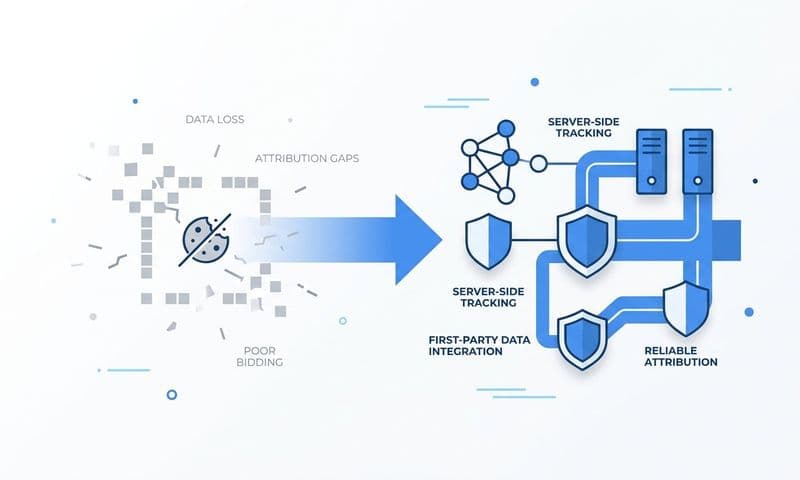
The good news is that the limitations of client-side pixels are not the end of the story. Server-side tracking offers a fundamentally different approach that addresses many of these vulnerabilities at the architectural level.
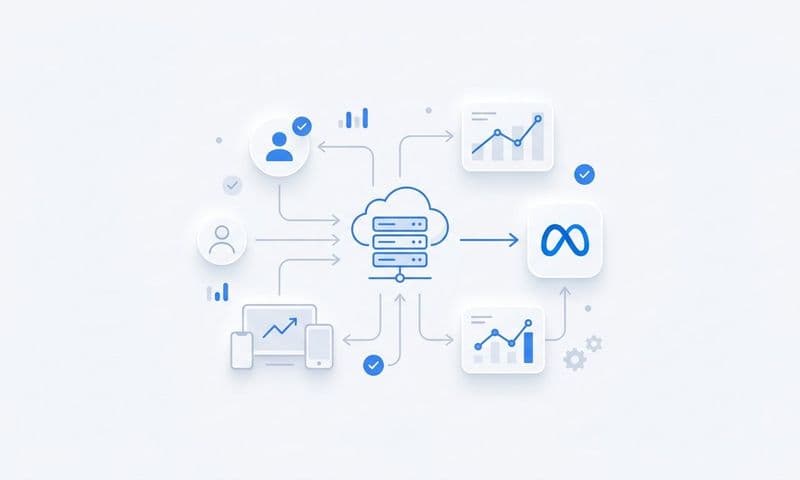
Instead of relying on the user's browser to fire a pixel and transmit data, server-side tracking sends conversion events directly from your server to the ad platform's API. The user's browser is removed from the equation entirely. Ad blockers cannot intercept a server-to-server call. Cookie restrictions do not apply. Page load issues become irrelevant. The conversion data travels through a controlled, reliable channel that you own and operate.
This approach is significantly more resilient. When a purchase is completed or a lead form is submitted, your server captures that event and sends it directly to Meta's Conversions API, Google's Enhanced Conversions, or whichever platform you are using. The signal arrives regardless of what browser the user was on, whether they had an ad blocker installed, or what their cookie settings were.
Server-side tracking also allows you to enrich the conversion data you send. Rather than passing a basic event, you can include first-party identifiers like hashed email addresses or phone numbers that help the platform match the conversion to a real user with much higher accuracy. This enriched data feeds the platform's algorithm more useful signals, which improves targeting and optimization over time.
Multi-touch attribution complements server-side tracking by addressing the question of which touchpoints across a customer journey deserve credit for a conversion. Rather than relying on a single pixel fire at the moment of conversion, multi-touch attribution stitches together the full sequence of interactions: the first ad that introduced the brand, the retargeting ad that brought the user back, the organic search that preceded the final purchase. The best marketing attribution platforms for revenue tracking give you this complete view of campaign performance.
For longer sales cycles, this is especially valuable. You can see that a prospect first encountered your brand through a LinkedIn ad three months ago, engaged with a retargeting campaign on Meta two months later, and finally converted after a Google search. Each touchpoint contributed. Multi-touch attribution lets you see and value that contribution rather than crediting only the last click.
Building a Tracking Strategy That Outlasts Pixel Decay
Addressing ad tracking pixel limitations requires more than adding a server-side tag alongside your existing pixel. It requires rethinking your measurement foundation from the ground up, starting with first-party data.
First-party data is information your business collects directly from users through your own channels: email sign-ups, account registrations, purchase records, and CRM data. Unlike third-party cookie data, first-party data is not subject to browser restrictions or platform policy changes. It belongs to you, and it can be used to build a more stable marketing tracking system that persists even as the privacy landscape continues to evolve.
The practical steps to building this foundation start with an audit. Compare what your pixels are reporting to what your CRM and payment processor actually show. The gap between those two numbers is your measurement problem. It represents real revenue that your tracking system cannot see, and it is the baseline you need to understand before you can fix anything.
From there, layering in server-side event tracking closes the most significant gaps. Implement server-side tracking for your highest-value conversion events first: purchases, qualified lead submissions, trial sign-ups. These are the events that most directly feed your ad platform's optimization algorithm, and getting them right has the most immediate impact on campaign performance.
Next, connect your ad data to your actual revenue outcomes. This means integrating your ad platforms with your CRM so you can see which campaigns and touchpoints are generating not just conversions but actual closed revenue. Surface-level metrics like click-through rates and cost per lead are useful, but they become genuinely powerful when connected to downstream closed-won revenue data.
The future of ad measurement is not about finding a better pixel. It is about building a system where ad clicks connect to real customer journeys and real revenue outcomes. That system relies on first-party data, server-side event transmission, and attribution models that reflect how customers actually move through your funnel rather than how a browser cookie happened to capture their behavior.
Putting It All Together
Tracking pixels are not obsolete, but they cannot be your only measurement strategy in 2026. The combination of browser privacy features, iOS restrictions, ad blocker growth, and cross-device behavior has created too many gaps for pixel-only attribution to be reliable on its own. Marketers who continue to trust pixel data exclusively are making budget decisions based on a partial view of reality, and the consequences show up in wasted spend, misallocated budgets, and algorithms optimizing toward the wrong outcomes.
The path forward is to layer server-side tracking, multi-touch attribution, and first-party data collection into a unified measurement system. Each layer compensates for the weaknesses of the others. Server-side tracking captures what pixels miss. Multi-touch attribution reveals the full customer journey. First-party data creates a stable foundation that privacy changes cannot erode.
This is exactly the challenge that Cometly is built to solve. Cometly connects your ad platforms, CRM, and website to track the entire customer journey in real time, giving you accurate attribution that goes beyond what pixels can see. With server-side tracking, multi-touch attribution models, and AI-powered recommendations, Cometly helps you identify which campaigns are actually driving revenue, feed better conversion data back to Meta and Google to improve their algorithms, and make confident scaling decisions based on complete data.
If your pixel reports and CRM data are telling different stories, that gap is costing you money. Take the first step toward closing it. Get your free demo and see how Cometly can give you the complete, accurate picture of your ad performance that pixels alone can never provide.