Every click costs money, but not every click converts. For digital marketers managing campaigns across multiple platforms, the gap between ad spend and actual revenue often feels like a black hole. You're tracking impressions, clicks, and basic conversions—but when it comes to understanding which specific ads, channels, or touchpoints actually drive revenue, the picture gets murky fast.
The problem isn't a lack of data. It's knowing which data actually matters for improving conversions.
Conversion optimization analytics bridges this gap by revealing exactly where prospects drop off, which touchpoints drive action, and how to allocate budget for maximum impact. It transforms scattered metrics into a clear roadmap for scaling what works and cutting what doesn't.
This guide breaks down seven actionable strategies that transform raw analytics into conversion-boosting insights. Whether you're struggling with iOS tracking limitations, juggling attribution across platforms, or simply trying to prove which ads actually generate revenue, these approaches will help you move from guessing to knowing.
1. Implement Full-Funnel Touchpoint Tracking
The Challenge It Solves
Most marketing analytics platforms show you the first click or the last click before conversion—but they miss everything in between. When a customer interacts with your brand across email, social ads, search campaigns, and your website before finally converting, traditional tracking tools create blind spots. You end up crediting the wrong channel, making budget decisions based on incomplete data, and wondering why your "best performing" campaigns don't actually scale profitably.
The Strategy Explained
Full-funnel touchpoint tracking means connecting every system where customer interactions happen: your ad platforms, website analytics, CRM, and any other tools in your marketing stack. This creates a unified view of each prospect's journey from awareness to conversion.
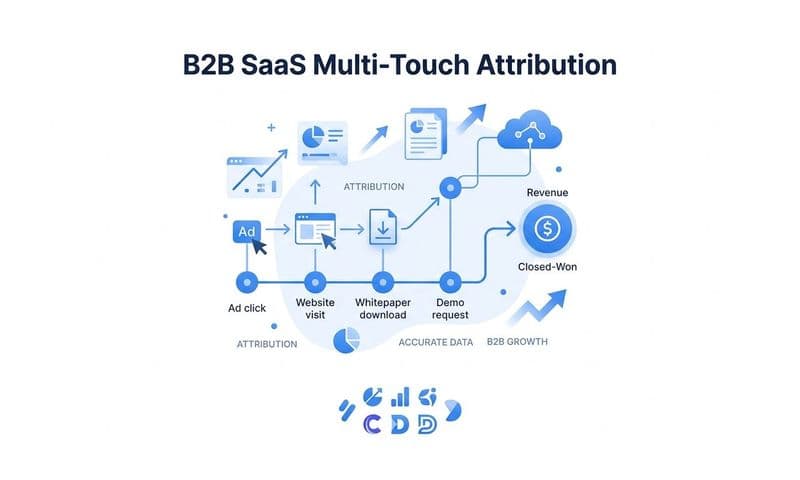
Instead of seeing isolated events, you see the complete story. A prospect clicks a Facebook ad, visits your pricing page, receives an email, clicks a Google ad three days later, and finally converts. Full-funnel tracking captures all of it and links these touchpoints to a single customer profile.
The key is implementing server-side tracking alongside traditional browser-based tracking. Browser privacy changes and iOS limitations have made pixel-based tracking less reliable. Server-side tracking captures conversion events directly from your backend systems, giving you more accurate data even when browser tracking fails.
Implementation Steps
1. Audit every platform where customer interactions occur: ad platforms, website, CRM, email tools, and any other touchpoints in your funnel.
2. Implement a tracking solution that connects these systems and assigns a unique identifier to each visitor across all touchpoints.
3. Set up server-side tracking for critical conversion events to bypass browser limitations and capture accurate data regardless of cookie restrictions.
4. Verify that touchpoints from different platforms are correctly linking to the same customer profiles by testing a few known conversion paths.
Pro Tips
Start with your highest-value conversion events first—purchases, qualified leads, or demo requests. Once those are tracking accurately across the full funnel, expand to micro-conversions like content downloads or email signups. This prioritization ensures you're optimizing for revenue impact from day one.
2. Compare Attribution Models to Find Revenue Drivers
The Challenge It Solves
When you rely on a single attribution model, you're making budget decisions through a narrow lens. Last-click attribution gives all credit to the final touchpoint before conversion, ignoring the awareness channels that introduced the customer to your brand. First-click attribution does the opposite, crediting discovery channels while overlooking the campaigns that actually closed the deal. Neither tells the complete story, and both can lead you to cut channels that are actually essential to your conversion funnel.
The Strategy Explained
Multi-touch attribution analysis means viewing your conversion data through multiple attribution lenses simultaneously. You compare how different models—first-click, last-click, linear, time decay, and position-based—assign credit to your marketing touchpoints.
This comparative approach reveals patterns. If a channel gets significant credit in first-click attribution but minimal credit in last-click, it's likely driving awareness but not closing deals. If a channel scores high across all models, it's genuinely valuable throughout the customer journey. Understanding these nuances is essential for mastering Google Analytics attribution and making informed decisions.
The goal isn't to pick the "right" attribution model. It's to understand how each channel contributes at different stages and make informed decisions about where to allocate budget based on your specific business goals.
Implementation Steps
1. Set up reporting that shows the same conversion data across at least three attribution models: first-click, last-click, and a multi-touch model like linear or time decay.
2. Analyze channels that show dramatic differences between models—these are your awareness drivers or your closers, and both deserve strategic budget allocation.
3. Identify channels that perform consistently well across all attribution models, as these are your true all-star campaigns worth scaling.
4. Adjust your optimization strategy based on channel roles: awareness channels should be judged on assisted conversions, while closing channels should be evaluated on direct conversions.
Pro Tips
Don't just compare models in aggregate. Segment your attribution analysis by customer value tiers or product lines. A channel might look mediocre overall but could be driving your highest-value customers. Following attribution analytics best practices transforms attribution from an academic exercise into a revenue-driving strategy.
3. Build Conversion Path Analysis Reports
The Challenge It Solves
You know your conversion rate, but do you know why some prospects convert while others drop off? Generic funnel reports show you that 80% of visitors leave before converting, but they don't explain what those visitors did before leaving or what successful converters did differently. Without understanding the specific sequences of touchpoints that lead to conversions versus drop-offs, you're optimizing in the dark.
The Strategy Explained
Conversion path analysis maps the actual sequences of interactions that lead to conversions. Instead of looking at isolated touchpoints, you analyze the patterns: Do most converters interact with three touchpoints before purchasing? Do they typically visit your pricing page twice? Does email engagement between ad clicks significantly increase conversion likelihood?
This strategy reveals the hidden structure of your customer journey. You might discover that prospects who engage with both paid search and social ads convert at three times the rate of single-channel visitors. Leveraging enterprise conversion path analytics tools can help you uncover these insights at scale.
These insights tell you exactly where to focus your optimization efforts and which touchpoint combinations to encourage through your marketing strategy.
Implementation Steps
1. Create reports that show the most common sequences of touchpoints leading to conversions, ranked by frequency and conversion rate.
2. Identify the average number of touchpoints before conversion and analyze how conversion rates change based on touchpoint count.
3. Map out the specific page visits, ad interactions, and engagement events that appear most frequently in high-converting paths.
4. Compare successful conversion paths against drop-off paths to identify the critical moments where prospects either commit or abandon.
Pro Tips
Look for "accelerator touchpoints"—specific interactions that dramatically shorten the path to conversion when they occur early in the journey. These might be product comparison pages, calculator tools, or specific ad creatives. Once identified, you can strategically promote these accelerators to move prospects through your funnel faster.
4. Feed Enriched Conversion Data Back to Ad Platforms
The Challenge It Solves
Ad platform algorithms optimize based on the conversion data they receive. When that data is incomplete or inaccurate due to browser tracking limitations, the algorithms make suboptimal decisions about who to target and which ads to show. You end up with ad platforms optimizing for conversions that never actually happened or missing real conversions that occurred outside the attribution window. The result is wasted spend on poor-quality traffic and missed opportunities to scale what's working.
The Strategy Explained
Conversion APIs and server-side event tracking let you send verified conversion data directly from your backend systems to ad platforms like Meta and Google. This enriched data includes conversions that browser-based tracking missed, along with additional context like purchase value, product categories, and customer lifetime value.
When ad platforms receive more complete and accurate conversion data, their algorithms can better identify patterns in converting users. They optimize targeting to find more people who match your actual customer profiles, not just the incomplete picture that browser tracking provides. This approach directly addresses common Google Ads conversion tracking problems that plague many advertisers.
This creates a feedback loop: better data leads to better targeting, which leads to higher-quality traffic, which leads to more conversions to feed back into the system.
Implementation Steps
1. Implement server-side conversion tracking that captures conversion events from your backend systems, including events that occur after the initial session or across different devices.
2. Set up conversion APIs for your primary ad platforms to send this enriched conversion data directly to their systems.
3. Include additional parameters with each conversion event: purchase value, product categories, customer type, or any other data that helps ad algorithms understand what makes a valuable conversion.
4. Monitor the match rate between your server-side conversions and the conversions ad platforms attribute to themselves, then optimize your implementation to improve accuracy.
Pro Tips
Prioritize sending high-value conversion events first. If you can only implement one conversion API integration, start with your primary revenue-driving platform and your most valuable conversion type. The quality of data matters more than the quantity of events you're tracking.
5. Segment Analytics by Customer Value Tiers
The Challenge It Solves
Optimizing for conversion volume sounds logical until you realize that not all conversions are created equal. A campaign that drives 100 conversions worth $50 each is less valuable than one that drives 20 conversions worth $500 each—but if you're only looking at conversion count, you might scale the wrong campaign. When you treat all conversions equally, you end up optimizing for quantity over quality, potentially scaling campaigns that attract low-value customers while starving campaigns that bring in your most profitable accounts.
The Strategy Explained
Customer value segmentation means analyzing your conversion data through the lens of actual revenue impact. You create tiers based on purchase value, customer lifetime value, or whatever metric matters most to your business, then evaluate campaign performance separately for each tier.
This reveals which channels and campaigns are actually driving your most valuable customers. You might discover that Instagram ads have a lower overall conversion rate than Google Search, but Instagram converters spend twice as much on average. Implementing a solid conversion optimization strategy requires this level of granular analysis.
Armed with these insights, you can make strategic decisions about where to allocate budget based on revenue impact rather than vanity metrics.
Implementation Steps
1. Define your customer value tiers based on metrics that matter to your business: purchase value, lifetime value, product tier, or contract size.
2. Tag all conversion events with the appropriate value tier so you can segment your analytics by customer quality.
3. Create separate performance reports for each value tier, analyzing which channels, campaigns, and ad creatives drive conversions in each segment.
4. Adjust your bidding strategies and budget allocation to prioritize channels that drive high-value conversions, even if their total conversion volume is lower.
Pro Tips
Don't just segment by initial purchase value. If you have data on customer lifetime value or repeat purchase rates, segment by those metrics too. A channel that drives customers with high retention rates might be more valuable than one that drives larger one-time purchases, even if the immediate revenue looks similar.
6. Use AI-Powered Pattern Recognition for Optimization
The Challenge It Solves
As your marketing stack grows more complex, the number of variables you need to analyze grows exponentially. You're running dozens of campaigns across multiple platforms, each with different ad creatives, audiences, and bidding strategies. Manually analyzing which combinations of variables drive the best results becomes impossible at scale. You might spot obvious winners and losers, but the subtle patterns that could unlock significant performance gains remain hidden in the noise.
The Strategy Explained
AI-powered analytics tools analyze your conversion data at scale to identify patterns that would be nearly impossible to spot manually. They process thousands of data points across campaigns, audiences, creatives, and touchpoints to surface insights like which specific combinations of ad creative and audience segments drive the highest conversion rates, or which sequences of touchpoints most reliably lead to high-value conversions.
These systems can identify emerging trends before they become obvious in your manual reports. They might flag that a specific ad creative is underperforming with one audience but crushing it with another, or that conversions from a particular channel spike on certain days of the week. Understanding how data analytics can improve marketing strategy is fundamental to leveraging these capabilities.
The key advantage is speed and scale. AI can analyze relationships across hundreds of variables simultaneously and deliver actionable recommendations based on statistical patterns you'd never have time to uncover manually.
Implementation Steps
1. Implement an analytics platform with AI-powered pattern recognition capabilities that can process data across all your marketing channels.
2. Feed the system comprehensive data including campaign performance, conversion events, customer value metrics, and any other relevant business data.
3. Review AI-generated recommendations regularly, focusing on patterns that appear across multiple campaigns or channels rather than one-off anomalies.
4. Test the highest-confidence recommendations first, implementing changes to budget allocation, audience targeting, or creative strategy based on AI insights.
Pro Tips
Use AI recommendations as a starting point for optimization, not gospel truth. The best approach combines AI pattern recognition with your strategic understanding of your business and customers. When AI surfaces an insight, ask why that pattern might exist and whether it aligns with what you know about your market before making major budget shifts.
7. Establish Cross-Platform Conversion Benchmarks
The Challenge It Solves
Each ad platform reports conversions differently. Meta counts view-through conversions within a 1-day window, Google Ads uses a 30-day click attribution window, and LinkedIn has its own methodology. When you try to compare performance across platforms, you're comparing apples to oranges. This makes it nearly impossible to make informed decisions about where to shift budget or which platforms are genuinely driving the best results for your business.
The Strategy Explained
Cross-platform conversion benchmarking means creating a unified measurement framework that normalizes conversion data across all your advertising channels. Instead of relying on each platform's self-reported attribution, you establish a single source of truth based on your own tracking data.
This approach uses your server-side tracking or attribution platform to measure conversions consistently across all channels. You define what counts as a conversion, how long the attribution window should be, and which touchpoints receive credit—then apply these rules uniformly whether the conversion came from Meta, Google, TikTok, or any other platform. Many marketers struggle with Google Analytics attribution limitations when trying to achieve this unified view.
The result is an accurate, apples-to-apples comparison that shows you which platforms are truly driving results based on your business's definition of success, not each platform's optimistic self-reporting.
Implementation Steps
1. Define your standard conversion metrics and attribution rules: what counts as a conversion, how long your attribution window should be, and which attribution model you'll use for cross-platform comparison.
2. Implement unified tracking that measures conversions from all platforms using your standardized methodology, separate from each platform's native reporting.
3. Create a cross-platform performance dashboard that shows all channels side-by-side using your unified metrics, including cost per acquisition, return on ad spend, and conversion rates.
4. Compare your unified metrics against each platform's self-reported numbers to understand where discrepancies exist and adjust your optimization strategy accordingly.
Pro Tips
Don't completely ignore platform-reported metrics. They're useful for understanding how each platform's algorithm sees performance, which matters for optimization within that platform. The key is using your unified benchmarks for budget allocation decisions while still leveraging platform metrics for campaign-level optimization.
Moving Forward with Conversion Optimization Analytics
Conversion optimization analytics isn't about collecting more data. It's about connecting the right data to make confident decisions.
Start with full-funnel tracking to capture the complete customer journey. Without accurate conversion tracking analytics, all your other optimization efforts are built on shaky ground. Once you have comprehensive tracking in place, layer in multi-touch attribution to understand which channels truly drive revenue at each stage of the funnel.
As you mature, focus on feeding better data back to ad platforms and segmenting by customer value. These strategies create compounding returns: better data improves ad targeting, which brings in higher-quality traffic, which generates more valuable conversions to feed back into your optimization loop.
The marketers who win aren't those with the biggest budgets. They're the ones who know exactly where their conversions come from and can prove it with data.
Pick one strategy from this list and implement it this week. If your tracking foundation is weak, start there. If you're already capturing touchpoints but struggling to make sense of them, focus on attribution model comparison or conversion path analysis. If you're further along, prioritize AI-powered pattern recognition or customer value segmentation to unlock the next level of performance.
Ready to elevate your marketing game with precision and confidence? Discover how Cometly's AI-driven recommendations can transform your ad strategy. Get your free demo today and start capturing every touchpoint to maximize your conversions.