Most B2B SaaS buyers don't convert the first time they encounter your brand. They click an ad, read a blog post, ignore a retargeting banner, attend a webinar three weeks later, search your brand name, and then finally book a demo. By the time they show up in your CRM, they've left a trail of touchpoints across half a dozen channels. The problem is that most marketing teams only see the last step.
This disconnect creates a dangerous illusion. Metrics like click-through rates and impressions look clean and reportable, but they tell you almost nothing about what actually moved a buyer toward a decision. Teams optimizing on surface-level data end up cutting channels that quietly contribute to pipeline and doubling down on channels that just happen to appear at the end of the journey.
Customer journey enhancement is the discipline of fixing that. It's about building the infrastructure and analytical frameworks to see every stage of the buyer path clearly, identify where friction exists, and make deliberate improvements that connect marketing activity to revenue outcomes. For B2B SaaS companies in particular, where the gap between first touchpoint and closed deal can span weeks or months, this visibility isn't optional. It's a competitive requirement.
This guide is written for marketing and growth teams who are ready to move beyond fragmented reporting and build a connected, revenue-tied view of how their buyers actually move through the funnel. We'll cover the full journey, what attribution data reveals, how server-side tracking closes the gaps, and how to turn all of it into a practical optimization framework.
Why the B2B Buyer Path Is More Complex Than Most Teams Realize
There's a persistent myth in B2B marketing that buyers follow a tidy, linear path: they see an ad, visit your site, request a demo, and sign a contract. In reality, the journey looks more like a web than a funnel. Buyers loop back, go quiet for weeks, re-engage through a different channel, involve new stakeholders, and revisit comparison pages multiple times before anyone picks up the phone.
This complexity is structural, not accidental. B2B purchase decisions often involve multiple people across different roles, each doing their own research at different times. A technical evaluator might read your documentation while a budget owner is still reading thought leadership content. A champion inside the company might be actively selling your solution internally while your marketing team has no visibility into that process at all.
The practical consequence for marketing teams is that single-touch attribution thinking becomes obsolete almost immediately. If you're crediting the last ad click or the last channel before a form submission, you're ignoring everything that built awareness, established trust, and kept the buyer engaged during the evaluation period. Those earlier touchpoints didn't close the deal by themselves, but they made the close possible.
The time gap makes this worse. In B2B SaaS, the window between a buyer's first interaction with your brand and a signed contract can easily span several months. Platform-native reporting tools aren't designed for that kind of attribution window. They're optimized for shorter cycles and tend to default to last-click or 7-day attribution models that simply cannot capture the full picture. Teams relying on these reports end up with a distorted view of which channels are working.
This distortion has real budget consequences. Channels that perform well at the awareness stage, like paid social or content marketing, rarely get credit under last-click models. They look expensive and underperforming on paper, even when they're consistently generating the first touchpoints that start pipeline conversations. Teams that cut these channels based on incomplete data often see pipeline dry up weeks or months later, and they struggle to trace the cause because the data was never connected in the first place.
Understanding buyer path complexity is the starting point for any serious customer journey enhancement effort. You can't improve what you can't see, and most teams are only seeing a fraction of what's actually happening.
The Core Stages of a B2B Customer Journey
Breaking the journey into stages isn't just a conceptual exercise. Each stage has distinct buyer behavior patterns, different channels that tend to appear, and different types of data signals that indicate progress. Understanding what happens at each stage is what allows you to optimize intelligently rather than reactively.
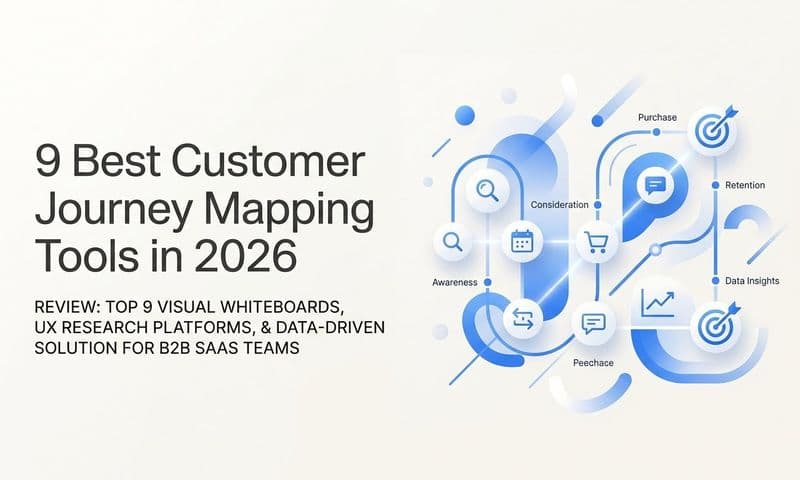
Awareness: At this stage, the buyer is typically recognizing a problem or exploring a category. They might encounter a paid social ad, a search result for a broad informational query, or a piece of thought leadership content. They're not ready to evaluate vendors. The goal here is to make a strong first impression and give them a reason to come back. Touchpoints at this stage rarely convert directly, but they plant the seed for everything that follows.
Consideration: The buyer is now actively researching solutions. They're reading comparison articles, watching product demos, visiting review sites, and engaging with retargeting ads. Organic search plays a significant role here, as does direct traffic from buyers who already know your brand name. Email nurture sequences often enter the picture if the buyer has previously submitted a form or signed up for content.
Evaluation: This is where the buyer gets serious. They're requesting demos, starting free trials, talking to sales, and comparing your product against specific alternatives. CRM events start accumulating: form submissions, meeting bookings, product qualified lead signals, and sales activity notes. This stage is where many marketing teams lose visibility because the data lives in the CRM and doesn't automatically connect back to the ad touchpoints that started the journey.
Decision: The buyer is finalizing their choice. They may revisit your pricing page, search your brand name directly, or respond to a follow-up email. This is the stage that last-click attribution almost always captures, which is why branded search and direct traffic tend to look disproportionately powerful in platform-native reports. They appear at the moment of conversion, but they didn't create the intent.
What makes this framework actionable is recognizing that touchpoints accumulate across all four stages, and each one carries attribution weight depending on the model you use. Connecting ad spend data to CRM events, form submissions, and eventually closed revenue is what allows you to understand which channels are contributing at which stages. Without server-side data connections to bridge the gap between your ad platforms and your CRM, the evaluation and decision stages remain largely invisible to your marketing data.
What Customer Journey Enhancement Actually Means in Practice
The phrase "customer journey enhancement" gets used loosely, so it's worth being precise about what it actually involves. At its core, it's the process of identifying friction points, attribution gaps, and underperforming touchpoints across the buyer path, and then making deliberate, data-informed changes to improve conversion rates and revenue outcomes.
That definition matters because it separates genuine enhancement from cosmetic improvement. Redesigning a landing page is a cosmetic improvement. It might help, but if you're measuring its impact with broken conversion tracking, you'll never know whether it actually moved the needle. Fixing the tracking is a structural improvement. It changes the quality of every decision you make afterward.
This distinction plays out constantly in B2B SaaS marketing. Teams spend significant effort A/B testing ad creative, refining messaging, and optimizing landing pages while their attribution data has gaps that make the results of those tests unreliable. They're essentially running experiments without accurate measurement, which means the conclusions they draw may be leading them in the wrong direction.
True customer journey enhancement starts with data infrastructure. Before you can identify which touchpoints are underperforming, you need confidence that you're seeing all of them. Before you can determine that a particular channel isn't contributing to pipeline, you need to know that your tracking is capturing the full conversion path, not just the last click before a form submission.
Once the data foundation is solid, enhancement becomes a much more tractable problem. You can look at where buyers are dropping off between stages. You can identify which awareness channels are generating leads that eventually close versus leads that stall. You can see whether your retargeting campaigns are reaching buyers during the consideration phase or simply burning budget on people who already converted.
The teams that do this well treat customer journey enhancement as an ongoing discipline rather than a one-time project. The buyer path evolves as channels change, as competitive dynamics shift, and as your product and pricing evolve. The infrastructure and analytical habits you build need to keep pace with that change, which means continuous measurement and continuous refinement rather than periodic audits.
How Attribution Data Fuels Smarter Journey Optimization
Attribution is the analytical engine that makes customer journey enhancement possible. Without it, you're looking at channel-level metrics in isolation: this campaign got these clicks, this ad got these impressions. With it, you can see how channels work together across the full path from first touch to closed revenue.
Multi-touch attribution is the foundation here. Rather than assigning all credit for a conversion to a single touchpoint, multi-touch models distribute credit across every interaction in the buyer's path. This gives you a much more accurate picture of which channels are influencing conversion at different stages, rather than which channel happened to be present at the moment someone clicked "submit."
Different attribution models tell different stories, and understanding those differences is part of the analytical work. First-touch attribution tends to favor awareness channels like paid social or display advertising, because it credits the very first interaction a buyer had with your brand. Last-click attribution favors bottom-funnel channels like branded search or direct traffic, because it credits the final interaction before conversion. Linear attribution distributes credit equally across all touchpoints. Data-driven attribution uses machine learning to weight touchpoints based on their observed correlation with conversion outcomes.
None of these models is universally correct. The value comes from comparing them. When you look at the same set of conversions through multiple attribution lenses, patterns emerge. You might find that paid social consistently appears as a first-touch channel but never gets last-click credit, which explains why it looks underperforming in platform-native reports. You might find that a particular content channel drives a high volume of first touches but very few of those leads ever progress to pipeline, which suggests a quality or fit problem rather than a volume problem.
The most powerful shift happens when you connect attribution data directly to pipeline and closed revenue rather than stopping at form submissions or demo requests. A lead that submits a form is not the same as a lead that becomes a paying customer. When you can trace which ad campaigns, which channels, and which touchpoints are generating leads that actually close, you move from marketing analytics into revenue strategy. Budget decisions become grounded in actual revenue contribution rather than proxy metrics.
This is where platforms like Cometly create a meaningful advantage for B2B SaaS teams. By connecting ad spend data to CRM events and revenue outcomes, Cometly gives marketing teams a single view of which touchpoints across the entire journey are actually driving closed-won revenue, not just clicks or form fills.
Server-Side Tracking and First-Party Data: The Infrastructure Behind Accurate Journey Mapping
Even the most sophisticated attribution strategy is only as good as the data feeding it. And for many B2B SaaS marketing teams, the data has significant gaps that they may not even be aware of.
Browser-based pixel tracking, the traditional approach used by most ad platforms, works by placing a small piece of JavaScript code on your website that fires when a user takes a specific action. The problem is that this approach is increasingly unreliable. Ad blockers prevent pixels from loading. Browser-level privacy restrictions limit what data can be collected and how long it persists. iOS privacy changes have significantly reduced the signal available from mobile users. Cross-device behavior creates additional gaps when a buyer starts their journey on a mobile device and converts on a desktop.
The result is that a meaningful portion of conversion events simply go unrecorded. Marketing teams looking at their platform dashboards see fewer conversions than actually occurred, and the conversions they do see are skewed toward users who haven't taken any privacy-protective steps. This creates a distorted baseline that makes accurate journey mapping impossible.
Server-side tracking addresses this directly. Rather than relying on a browser-based pixel to fire correctly, server-side tracking sends conversion data directly from your server to the ad platform's API. Because the data transmission happens server-to-server rather than through the user's browser, it isn't affected by ad blockers, cookie restrictions, or browser privacy settings. The result is a more complete and accurate record of conversion events across the full buyer journey.
Meta's Conversion API and Google's Enhanced Conversions are the two most widely used implementations of this approach. Both are designed to supplement or replace browser-based pixel data with server-side events that are more reliable and more complete. As documented in Meta and Google's own developer resources, these tools are specifically designed to address the signal loss that browser-based tracking increasingly produces.
First-party data enrichment takes this a step further. When you send conversion events back to ad platforms enriched with first-party data like hashed email addresses or customer identifiers, the platform's machine learning models have better information to work with. This improves their ability to match conversion events to users, optimize bidding toward high-value outcomes, and target similar audiences. The downstream effect is better campaign performance because the ad platform's AI is working with accurate, complete data rather than a degraded signal.
Cometly's server-side tracking and Conversion API integration are built specifically to solve this problem for B2B SaaS teams, ensuring that the conversion events flowing into your attribution models and back to your ad platforms are as complete and accurate as possible.
Turning Journey Insights Into Revenue: A Framework for Growth Teams
Understanding the theory of customer journey enhancement is one thing. Translating it into a repeatable process that actually improves revenue outcomes is another. Here's a practical framework that growth teams can use to move from insight to action.
Start with a tracking audit: Before optimizing anything, confirm that your current tracking setup is capturing the events that matter. Are your server-side conversion events firing correctly? Are CRM milestones like demo requests, trial signups, and closed-won deals connected to the original ad touchpoints? Are you seeing conversion volumes that align with what your CRM reports, or are there significant discrepancies? Gaps identified here are your highest-priority fixes because everything downstream depends on data quality.
Map touchpoints to revenue outcomes: Once your tracking is reliable, pull attribution data that connects ad touchpoints to actual closed revenue, not just lead volume. Look at which channels, campaigns, and specific ads are generating leads that progress through the pipeline and convert to paying customers. You'll often find that the channels generating the highest volume of leads are not the same as the channels generating the highest quality leads. This mapping exercise alone frequently changes budget allocation decisions.
Compare attribution models to surface hidden contributors: Run the same conversion set through multiple attribution models and look for channels that perform very differently depending on which model you use. Channels that look weak under last-click but strong under first-touch or linear models are likely contributing meaningfully to pipeline without getting credit. These are candidates for increased investment, not cuts.
Use AI-driven recommendations to accelerate pattern recognition: Manually analyzing journey data across dozens of campaigns, channels, and touchpoints is time-intensive. AI-driven tools can surface patterns in the data much faster, identifying which ad creative combinations are consistently appearing in the journeys of buyers who eventually close, or which channels tend to appear together in high-converting paths. Cometly's AI recommendations are designed specifically for this, helping growth teams identify high-performing campaigns across every channel and scale what's working with confidence.
Reallocate budget based on revenue contribution: With accurate attribution data and AI-surfaced insights in hand, budget reallocation becomes a data-driven decision rather than a gut-feel exercise. Move spend toward channels and campaigns that demonstrably contribute to closed revenue. Reduce investment in channels that generate lead volume without pipeline progression. Track the impact of these changes using the same attribution framework so you can measure whether the reallocation is producing the expected revenue improvement.
The measurable outcomes of this approach are lower cost per pipeline opportunity, higher return on ad spend, and more confident budget decisions across channels. More importantly, the discipline of connecting ad data to revenue outcomes creates a feedback loop that compounds over time. Each optimization cycle produces better data, which enables better decisions, which produces better results.
Building a Revenue-Connected Marketing Operation
Customer journey enhancement isn't a campaign tactic or a quarterly initiative. It's a fundamental shift in how marketing teams relate to data, attribution, and revenue accountability. The teams that do it well build an ongoing discipline around accurate tracking, multi-touch attribution, and revenue-connected analysis that gets sharper with every cycle.
The path starts with infrastructure. Fixing tracking gaps, implementing server-side conversion events, and connecting your ad platforms to your CRM creates the foundation that everything else depends on. Without it, even the most sophisticated strategy is built on incomplete information.
From there, it's about building the analytical habits: regularly auditing attribution data, comparing models to surface hidden channel contributions, and connecting marketing activity to the revenue outcomes that actually matter to the business. These habits transform marketing from a cost center into a measurable growth engine.
Cometly is built specifically for this purpose. It connects your ad platforms, CRM data, and website behavior into a single source of truth, giving B2B SaaS marketing teams the complete, accurate view of the customer journey they need to make confident decisions. From multi-touch attribution and server-side tracking to AI-driven recommendations and Stripe revenue integration, it's designed to take you from fragmented data to revenue-tied clarity.
If you're ready to see exactly which ads and channels are driving your pipeline and revenue, Get your free demo and start building the attribution foundation your growth strategy deserves.