Conversion tracking is the foundation of every data-driven marketing decision. When it breaks, you lose visibility into which ads are driving leads, which campaigns are generating revenue, and where your budget is actually working.
For B2B SaaS marketing teams, broken or inaccurate conversion tracking is not just an analytics problem. It is a revenue problem. You end up optimizing campaigns based on incomplete data, scaling the wrong channels, and misattributing wins to the wrong sources. The result is wasted ad spend and missed growth opportunities.
This guide walks you through a clear, sequential process to diagnose and fix conversion tracking issues across your ad platforms, website, and CRM. Whether you are dealing with missing conversions in Google Ads, underreporting in Meta, or gaps between your CRM and ad data, each step builds on the last to help you restore accurate, reliable tracking.
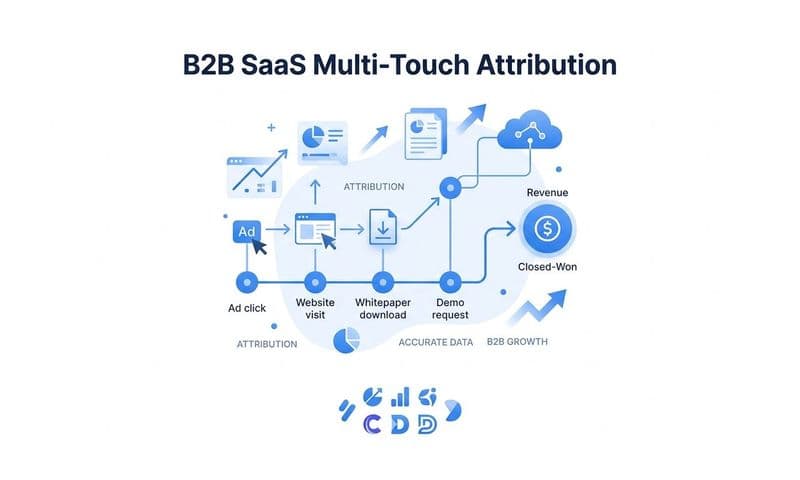
By the end, you will have a systematic framework for identifying where your tracking breaks down, validating your event data, and setting up a more resilient tracking infrastructure that captures every touchpoint from the first ad click to closed-won revenue.
This is the process that growth teams at B2B SaaS companies use to move from guesswork to confidence in their marketing data. Let's get into it.
Step 1: Audit Your Current Tracking Setup
Before you can fix anything, you need to know exactly what you are working with. Most tracking problems exist because nobody has a complete picture of what is being tracked, where events originate, or how they are configured. An audit changes that.
Start by mapping every conversion event you are currently tracking across all platforms: Google Ads, Meta, LinkedIn, and any other paid channels you are running. List each event by name, the platform it lives in, and the action it is supposed to capture. This sounds basic, but many teams discover events they forgot were active, or events that were set up by a previous team member and never properly documented.
Next, identify how each event is being tracked. Is it firing on the client side through a browser pixel? Or is it sent server side through a Conversion API or server-to-server integration? This distinction matters enormously when you start diagnosing gaps, because client-side and server-side events fail in completely different ways.
While you are auditing, look specifically for duplicate conversion events. Running both a pixel and a Conversion API without proper deduplication logic will inflate your reported numbers and send misleading optimization signals to platform algorithms. A campaign that looks like it is generating twice the conversions it actually is will receive budget it does not deserve.
Document where each event originates. Is it triggered by a website pixel? A CRM workflow? A form submission confirmation page? A manual import? Each origin point carries its own failure risk, and you need to know which mechanism is responsible for each conversion before you can troubleshoot it.
Finally, flag any events that have not fired in the past seven days as immediate investigation priorities. A silent event is a broken event until proven otherwise.
Success indicator: You have a complete map of every active conversion event, its source, and its tracking method. Nothing is undocumented.
Step 2: Diagnose the Root Cause of Missing or Inaccurate Conversions
With your audit complete, you now have enough context to start diagnosing. The goal of this step is to move from "our tracking seems off" to a specific, actionable diagnosis. That distinction matters because broken tracking and inaccurate tracking require different fixes.
Broken tracking means zero data is coming through. Inaccurate tracking means data is arriving but it is partial, inflated, or inconsistent. Each has its own set of likely causes.
For broken tracking, start with browser developer tools. Open the network tab and walk through the conversion flow on your website while watching for pixel requests. If the pixel fires on your homepage but not on your thank-you page, you have a missing pixel installation. If it fires but returns an error, you have a configuration issue. Platform diagnostic tools like Meta Events Manager and Google Tag Assistant can surface these problems quickly without requiring deep technical knowledge.
One of the most common failure points for B2B SaaS companies is the thank-you page redirect. Many form tools or landing page builders redirect users to a confirmation URL after submission, but if that redirect happens before the pixel fires, the conversion event is never recorded. Check every form submission flow end to end to confirm the pixel fires before any redirect occurs. For a deeper look at these failure modes, the guide on tracking pixel firing issues covers each scenario in detail.
Single-page applications present a different challenge. Standard pixel implementations rely on page-load events to fire, but single-page apps do not reload the page when users navigate between views. If your product or marketing site uses a framework like React or Vue, your pixel may be firing only once on initial load and missing every subsequent user action.
For inaccurate tracking, the most common culprits are iOS privacy restrictions and browser-level ad blocking. Apple's App Tracking Transparency framework and Safari's Intelligent Tracking Prevention limit what client-side pixels can observe, which means a meaningful portion of your conversions may simply not be visible to your pixel. This is not a configuration error you can fix by adjusting your tag. It requires a structural change to how you send data.
Look for discrepancies between what your ad platforms report and what your CRM or backend systems record. If Meta says you had 40 form submissions last week but your CRM only shows 28 new leads, that gap tells you something. Either platform is overcounting due to duplicates, or your CRM is undercounting due to integration gaps. Learning how to fix attribution discrepancies in data can help you systematically close that gap.
Success indicator: You can pinpoint whether the issue is a missing pixel, a firing error, a deduplication problem, or a privacy-driven data loss. Each of these has a different solution path.
Step 3: Implement Server-Side Tracking to Fill the Gaps
Here is the reality of modern conversion tracking: client-side pixels alone are no longer sufficient. Browser restrictions, ad blockers, iOS privacy changes, and the ongoing deprecation of third-party cookies have collectively eroded the reliability of pixel-only tracking. If your conversion data depends entirely on a browser pixel firing correctly, you are working with an incomplete picture by default.
Server-side tracking solves this by sending event data directly from your server to ad platforms, bypassing client-side restrictions entirely. The two most important implementations for B2B SaaS companies are Meta's Conversion API and Google's Enhanced Conversions. Both are designed to receive event data that your server sends after a conversion occurs, independent of what the user's browser allows. Understanding why server-side tracking is more accurate helps make the case for this infrastructure investment internally.
Setting up server-side tracking requires access to your backend or a tag management solution that supports server-side containers. The core concept is straightforward: when a user completes a conversion action on your site, your server sends an event to the platform's API with the relevant data attached. This happens regardless of whether the user has an ad blocker installed or whether their browser has restricted third-party cookies.
The quality of your server-side events depends heavily on the first-party data you attach to them. Platforms use customer identifiers like hashed email addresses and phone numbers to match your server-side events to user profiles. Higher match quality scores mean better attribution and better algorithmic optimization. If your CRM captures email addresses at the point of conversion, that data should flow directly into your server-side event payloads.
Event deduplication is critical when you run both a browser pixel and a Conversion API simultaneously. Without it, the same conversion will be counted twice: once by the pixel and once by the server-side event. Both Meta and Google use event ID parameters to deduplicate. You assign a unique ID to each conversion event, and the platform uses that ID to recognize and discard the duplicate. For a practical walkthrough, the Conversion API implementation tutorial covers deduplication setup step by step.
After implementation, validate that your server-side events are arriving in the platform event managers and review the match quality scores. Low match rates suggest your customer identifier data is incomplete or not being passed correctly. Healthy match rates confirm that your server-side setup is working as intended.
Success indicator: Your server-side events are firing, deduplication is active, and match quality scores have improved compared to pixel-only tracking. Platform event managers show healthy event volumes with no significant gaps.
Step 4: Align Conversion Events Across Platforms and Your CRM
Fixing your pixel and server-side tracking is necessary, but it is not enough on its own. The next challenge is ensuring that the conversion events you track in your ad platforms actually reflect meaningful business milestones rather than surface-level actions that look good in dashboards but do not correlate with revenue.
For B2B SaaS companies, the most valuable conversions are rarely the ones that happen on your website. They happen later: when a lead becomes sales-qualified, when a demo request converts to an opportunity, when a trial user activates a paid plan, or when a deal closes. If your ad platforms are only optimizing toward form fills, you are training their algorithms on the wrong signal.
This is where offline conversion imports become essential. Most major ad platforms support the ability to import conversion events that occurred in your CRM after the initial ad click. By passing back sales-qualified leads, opportunities, and closed-won deals with the original click ID attached, you give the platform's algorithm a much richer signal to optimize against. The result is campaigns that attract leads more likely to convert downstream, not just leads that fill out forms.
Standardizing event naming conventions across platforms is a step that teams often skip but consistently regret. When your "demo request" event is called "DemoRequest" in Google Ads, "Demo_Request" in Meta, and "Demo Request Form Submit" in your CRM, cross-channel analysis becomes unnecessarily complicated. Agree on a naming convention before you build out your event library and apply it consistently everywhere.
Conversion window settings deserve careful attention as well. Platform defaults are often set to 30 days or less, which may be far shorter than your actual sales cycle. If a prospect clicks your ad, spends three weeks evaluating your product, and then converts, a 30-day window might capture that. But a 7-day window would not. Review your average time-to-conversion in your CRM and set your conversion windows to match your actual buying cycle length.
Finally, review the attribution model settings in each platform and confirm they align with how your team measures marketing impact. Last-click attribution tells a very different story than data-driven attribution, and using different models across platforms makes cross-channel comparison unreliable.
Success indicator: Conversion data in your ad platforms reflects the same pipeline milestones tracked in your CRM with no major discrepancies between what the platforms report and what your sales team sees.
Step 5: Validate Your Tracking Data With a Testing Protocol
Implementation without validation is incomplete. Before you trust your tracking data to drive budget decisions, you need to confirm that every fix you have made is actually working end to end. This step is about building a repeatable testing protocol, not just running a one-time check.
Start with an end-to-end conversion test. Click your own ad, complete the conversion action you are tracking, and then verify that the conversion registers in the platform event manager within the expected timeframe. This sounds obvious, but many teams skip it and only discover problems when they notice anomalies in their weekly reports. Testing your own conversion flows catches issues that no dashboard alert will surface.
Use platform-native diagnostic tools to confirm that events are firing with the correct parameters. Meta Events Manager's Test Events feature lets you trigger events and see exactly what data is being received in real time. Google Tag Assistant provides similar visibility into what your tags are sending and whether there are any configuration errors. Following best practices for tracking conversions accurately ensures your parameter-level setup holds up under scrutiny.
For any purchase or revenue events, pay specific attention to whether value, currency, and order ID parameters are passing correctly. Missing or incorrect value data undermines your ability to calculate return on ad spend accurately, and a missing order ID means deduplication cannot function as intended.
After your fixes are in place, compare conversion volume across a consistent time period before and after the changes. You should see improvement in reported conversion numbers if you have addressed underreporting caused by pixel gaps or privacy restrictions. A significant drop in conversions after your changes, on the other hand, may indicate that you inadvertently removed a duplicate that was masking a real tracking gap.
Set up ongoing monitoring alerts in your analytics platform to notify you when conversion volume drops unexpectedly. Tracking breaks more often than most teams realize, and the longer it goes undetected, the more campaign decisions get made on bad data. An alert that fires when weekly conversions drop below a threshold gives you an early warning system that catches future issues before they compound.
Success indicator: Test conversions appear in platform dashboards within minutes, all parameters are populated correctly, and historical data shows measurable improvement in conversion volume or match quality after your fixes.
Step 6: Centralize Attribution Data for a Single Source of Truth
Even after completing every step above, you will still face a fundamental limitation: each ad platform reports conversions from its own perspective, and each one takes as much credit as it can. Google Ads will attribute a conversion to your search campaign. Meta will attribute the same conversion to your retargeting ad. LinkedIn may claim it too. Add up all the platform-reported conversions and you will often arrive at a number that exceeds your actual leads or revenue by a wide margin.
This is not a bug. It is how platform-native reporting works. Every platform uses its own attribution model, its own lookback window, and its own definition of a conversion. Relying on individual platform reporting to make cross-channel budget decisions is like asking each department to grade its own performance review.
The solution is a neutral, third-party marketing attribution platform that pulls data from all your ad channels, your CRM, and your website into a single unified view. Instead of seeing how each platform describes its own contribution, you see how the full customer journey actually unfolded, from the first touchpoint to the final conversion.
Multi-touch attribution models are particularly valuable for B2B SaaS companies with longer sales cycles. A prospect may encounter your brand through a LinkedIn post, click a Google search ad two weeks later, and then convert after seeing a Meta retargeting ad. Last-click attribution gives all the credit to Meta. Multi-touch attribution distributes credit across all three touchpoints based on their actual contribution to the conversion. Implementing cross-channel tracking is what makes this level of visibility possible.
Connecting ad spend data to pipeline and revenue data takes this further. When you can see not just which campaigns generated leads but which campaigns generated revenue, your budget allocation decisions become dramatically more accurate. You stop optimizing for cost per lead and start optimizing for cost per closed deal.
AI-driven insights add another layer of value by surfacing patterns that are difficult to detect manually. Which ad creatives consistently attract leads that convert to qualified opportunities? Which channels generate high-volume leads that rarely close? These are questions that require connecting data across the entire funnel, and they are exactly the kind of insights that separate efficient growth teams from those burning budget on the wrong signals.
Cometly is built specifically for this use case. It connects your ad platforms, CRM, and website tracking to give B2B SaaS marketing teams a real-time, unified view of what is driving revenue. With Cometly, you can track every touchpoint from the first ad click to closed-won revenue, apply multi-touch attribution models, and use AI-driven recommendations to identify which campaigns and creatives are generating the highest-quality conversions. No manual data reconciliation. No spreadsheet exports. Just a single source of truth that tells you where to invest and where to cut.
Success indicator: You have a single dashboard showing attributed pipeline and revenue by channel, campaign, and ad. Every team member is working from the same data, and budget decisions are made on unified attribution rather than siloed platform reports.
Putting It All Together
Fixing conversion tracking is not a one-time task. It is an ongoing discipline that separates marketing teams who scale efficiently from those who waste budget on guesswork.
Here is a quick checklist to confirm you have completed each step:
Audit complete: Every conversion event is mapped, documented, and assigned to a tracking method and source.
Root cause identified: You know whether the issue is a missing pixel, a firing error, a deduplication problem, or privacy-driven data loss.
Server-side tracking live: Conversion APIs are implemented, deduplication is active, and match quality scores have improved.
CRM aligned: Offline conversions are synced to your ad platforms, event naming is standardized, and conversion windows reflect your actual sales cycle.
Testing validated: End-to-end tests confirm events fire correctly with all parameters populated, and monitoring alerts are in place.
Attribution centralized: All channel, CRM, and website data flows into a single attribution view with no manual reconciliation required.
Once your tracking is accurate, the clarity it creates is immediate. You know which campaigns drive qualified leads. You know which channels generate pipeline. You know where to invest more and where to cut. Every marketing decision gets sharper because it is grounded in real data rather than platform-reported estimates.
For B2B SaaS marketing teams ready to move beyond broken pixels and siloed platform reports, the path forward starts with building the right attribution infrastructure. Get your free demo and see how Cometly connects every touchpoint to revenue so you can scale with confidence.