
Your outbound team is running sequences, your paid campaigns are generating clicks, and your pipeline numbers look healthy on paper. Then a deal closes, and nobody can tell you which campaign, which ad, or which outreach sequence actually started that conversation. The revenue is real, but the attribution is a mystery.
This is one of the most common and costly problems in B2B SaaS go-to-market today. Teams invest in cold outreach, LinkedIn ads, SDR sequences, and paid prospecting, then watch that pipeline disappear into a CRM where the original source data becomes impossible to trace. By the time a deal closes, the connection between the outbound activity that created it and the revenue it generated has been completely severed.
The result is a reporting environment where marketing leaders can tell you how many emails were sent, how many calls were booked, and how many MQLs were generated, but cannot tell you which of those activities actually produced revenue. Budget decisions get made on incomplete information. High-performing channels get cut. Underperforming ones get more spend because they look active.
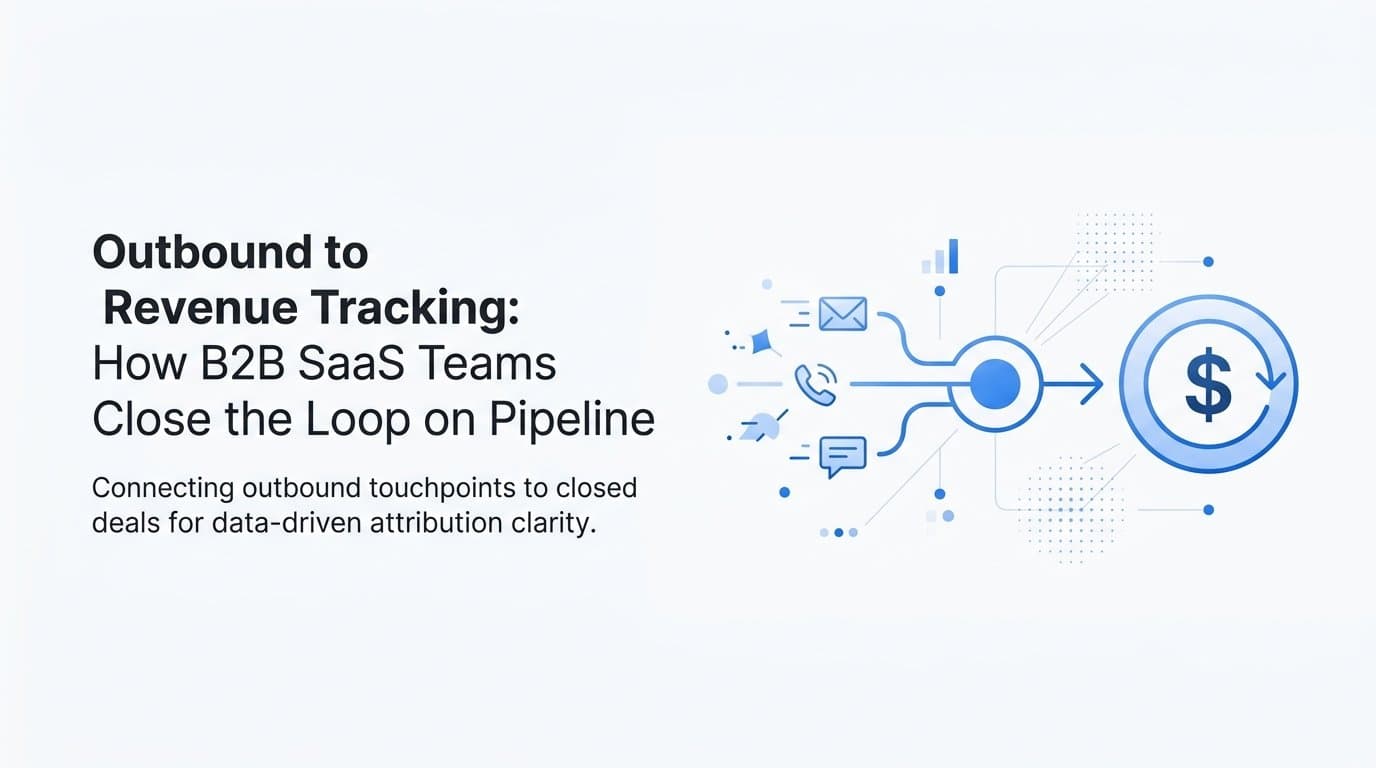
Outbound to revenue tracking solves this. It is a framework for connecting every outbound touchpoint, from the first ad impression to the last sales call, to its downstream revenue outcome. When it works, you can see exactly which channels source pipeline, which campaigns close deals, and where your outbound investment is actually generating returns.
This article walks through why the disconnect happens, what a proper tracking framework actually measures, where most setups break down, and how to build an architecture that follows the deal from first touch to closed-won revenue. If you are tired of reporting on activity and want to report on outcomes, this is where to start.
The Gap Between Outbound Activity and Revenue Visibility
The typical outbound motion in B2B SaaS involves multiple channels operating in parallel. SDRs run email sequences targeting specific personas. Paid campaigns on LinkedIn or Google serve ads to the same audience segments. Retargeting campaigns follow up with anyone who has visited key pages. In theory, all of these channels are working together toward the same goal: generating qualified pipeline.
In practice, each of these channels operates in its own reporting silo. The email sequencing tool tracks opens, replies, and meetings booked. The ad platform tracks clicks, impressions, and form fills. The CRM tracks deal stage progression and rep activity. None of these systems are designed to talk to each other in a way that preserves the full story of how a prospect moved from first contact to closed deal.
The handoff from marketing or SDR activity to the sales cycle is where visibility breaks down most severely. When a prospect responds to a cold email and books a demo, that lead enters the CRM as a new contact. The rep who works the deal sees the prospect's name, company, and maybe a note about the outreach that started the conversation. What they almost never see is which LinkedIn ad that prospect had already clicked three times before the SDR email landed, or which piece of content they read before booking the demo.
This matters because the sales cycle in B2B SaaS is rarely a straight line from outreach to close. Deals involve multiple stakeholders, extended evaluation periods, and multiple interactions across different channels before a buying decision is made. A prospect might see a LinkedIn ad, ignore it, receive a cold email a week later, visit the pricing page, and then respond to a follow-up sequence. Each of those touchpoints contributed to the eventual conversion, but without a tracking framework that captures all of them, only one gets credit.
Outbound to revenue tracking bridges this gap by creating a continuous data thread from the first outbound touchpoint through every subsequent interaction to the final revenue event. Instead of asking "how many leads did outbound generate," it asks the more valuable question: "which outbound activities produced revenue, and how much?"
That shift in framing changes how teams allocate budget, evaluate channel performance, and make decisions about where to invest next. It is the difference between managing an outbound program by activity metrics and managing it by revenue outcomes.
What the Framework Actually Measures
Outbound to revenue tracking is not a single metric. It is a set of connected data points that together tell the story of how outbound investment converts into closed revenue. Understanding what the framework captures is the first step to building it correctly.
The core data points include first touch source, which identifies the channel or campaign that first brought a prospect into the funnel. This could be a LinkedIn ad, a cold email, a paid search click, or a direct outbound call. First touch is critical for understanding which channels initiate relationships with net-new prospects.
Outbound channel and campaign variant: Beyond knowing which channel sourced a lead, teams need to know which specific campaign, ad creative, or sequence variant triggered the first meaningful engagement. This level of granularity is what allows you to compare performance across different messaging approaches, not just across channels.
Pipeline stage progression: Tracking how leads from different outbound sources move through the pipeline reveals which channels produce deals that actually advance versus which ones generate leads that stall at the discovery stage and never convert.
Deal velocity: How long does it take for a lead from a specific outbound channel to move from first contact to closed-won? Channels that produce faster-closing deals often represent higher-quality audience targeting, even if their raw lead volume is lower.
Closed-won revenue tied to originating campaign: This is the final and most important data point. Which specific campaign, ad, or sequence can be credited with initiating the deal that eventually closed? This is where outbound activity connects directly to business outcomes.
The distinction between tracking outbound activity and tracking outbound impact is worth emphasizing here. Most teams measure activity: emails sent, calls made, sequences enrolled, meetings booked. These metrics are useful for managing SDR performance, but they tell you nothing about revenue impact. A sequence that books 50 meetings is not necessarily better than one that books 20 if those 20 meetings produce twice the closed revenue.
Multi-touch attribution adds another layer of complexity that is essential in the outbound context. A prospect's journey to becoming a customer rarely involves a single touchpoint. They might see a LinkedIn ad, receive a cold email, attend a webinar, and then convert through a retargeting campaign. Each of those interactions influenced the outcome. A tracking framework that only credits the first or last touch misrepresents how the deal actually came together and leads to budget decisions that reward one channel at the expense of others that were equally important.
The goal is to capture the full journey and distribute revenue credit in a way that reflects actual influence, not just the touchpoint that happened to be first or last in the sequence.
Why Most B2B Tracking Setups Break at the CRM Handoff
Here is where it gets interesting: most B2B SaaS teams have some version of tracking in place. They use UTM parameters on ad links, they have pixels firing on key pages, and they have a CRM that captures lead source. The problem is not that they have no tracking. The problem is that their tracking breaks at the exact moment it matters most.
UTM parameters are the most common example. When a prospect clicks a LinkedIn ad with UTM parameters attached, the parameters are captured by the landing page and passed to an analytics tool. If the prospect fills out a form on that page, the UTM data may be appended to the form submission. But once that lead is imported into a CRM as a new contact, the UTM data typically does not follow. The CRM records the lead, but the originating campaign information is lost unless there is a deliberate integration mapping that data from the form submission to a CRM field.
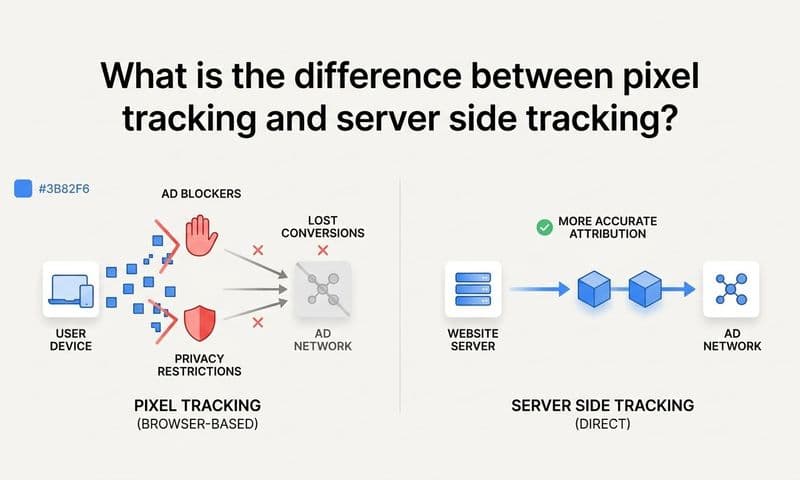
Pixel-based tracking creates a different set of problems. Browser pixels are subject to ad blockers, cookie restrictions, and device switching. A prospect who sees an ad on their work laptop, clicks through on their phone, and then books a demo from a different browser represents three separate sessions that pixel-based tracking treats as three unrelated events. The connection between the ad impression and the eventual conversion is invisible to the ad platform.
Ad platform attribution compounds the issue further. Meta and Google both report conversions based on their own attribution windows and methodologies. A conversion that Meta claims credit for may also be claimed by Google, and neither platform's reported number aligns with what the CRM shows as the actual lead source. Teams end up with three different numbers for the same conversion event, and no clear way to determine which one is accurate.
The downstream effect on budget decisions is significant. When revenue cannot be traced back to specific outbound campaigns, teams default to optimizing for the metrics they can measure: click-through rates, cost per lead, and MQL volume. Channels that generate high volumes of cheap leads look like winners in the reporting dashboard, even if those leads rarely convert to revenue. Meanwhile, channels that generate fewer but higher-quality leads that close at higher rates appear underperforming because their contribution to revenue is invisible.
This creates a compounding problem over time. Budget shifts toward channels that look active but do not close. Channels that are actually driving high-value pipeline get cut or underfunded. The outbound program becomes less effective not because the strategy is wrong, but because the measurement framework is rewarding the wrong behaviors.
Fixing this requires addressing the root cause: the broken connection between ad platform data, form submission data, CRM records, and revenue events. That is a technical problem that requires a technical solution.
Building a Tracking Architecture That Follows the Deal
Closing the loop on outbound to revenue tracking requires more than adding UTM parameters to your ad links. It requires a tracking architecture that is designed from the start to preserve data continuity across every system a prospect touches on their way to becoming a customer.
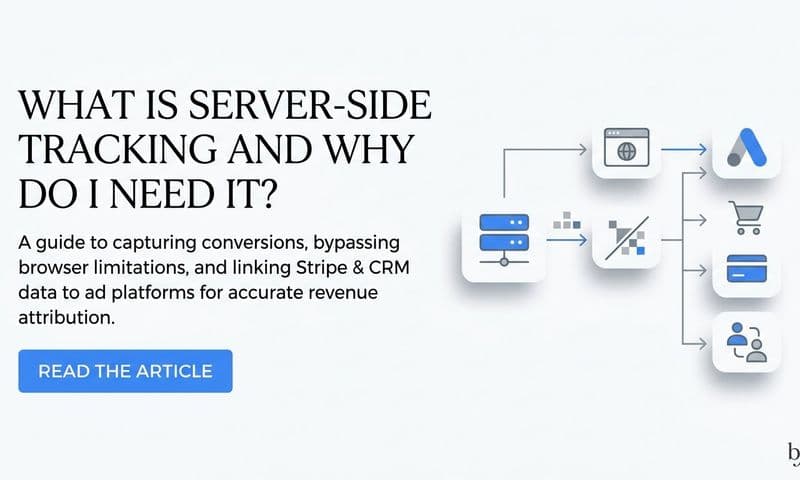
The foundation of this architecture is server-side tracking and Conversion API integration. Unlike browser-based pixels, server-side tracking sends conversion events directly from your server to ad platforms. This bypasses the browser entirely, which means ad blockers, cookie restrictions, and device switching do not interrupt the data flow. When a prospect fills out a form, the event is captured server-side and sent to Meta, Google, or any other ad platform with full accuracy, regardless of the prospect's browser settings.
Conversion API integration also allows you to send richer data with each event. Instead of just reporting that a conversion happened, you can include first-party identifiers like email address or phone number that allow ad platforms to match the conversion to a specific user in their system. This improves attribution accuracy and feeds better data back to the ad platform's optimization algorithms, which improves targeting over time.
The next layer is unique identifier stitching. To connect ad platform data, CRM records, and revenue events into a single customer journey view, each prospect needs a persistent identifier that travels with them across systems. This might be a lead ID generated at form submission, a contact token assigned by the CRM, or a first-party cookie value captured at the first ad click. The key is that this identifier is passed from the ad click through the form fill, into the CRM record, and eventually into the revenue event when the deal closes.
When this is implemented correctly, you can look at a closed-won deal in your CRM and trace it back to the specific ad campaign, ad creative, and even the specific sequence variant that initiated the relationship. That is the data thread that makes outbound to revenue tracking possible.
Pipeline and revenue attribution complete the picture. This involves mapping CRM pipeline stage updates and deal closure events back to the originating outbound campaign. When a deal moves from discovery to proposal, that stage progression gets attributed to the campaign that sourced the lead. When the deal closes, the closed-won revenue value is attributed to that same campaign, giving you a true cost per acquired customer by channel.
This architecture does not have to be built from scratch. Modern attribution platforms are designed to handle exactly this kind of cross-system data stitching, connecting ad platforms, CRM systems, and payment processors into a unified view of the customer journey. The important thing is that the architecture is intentional. Every system in the stack needs to be configured to pass the right identifiers at the right moments, and there needs to be a single place where all of that data comes together for reporting.
The Metrics That Actually Tell You If Outbound Is Working
Once the tracking architecture is in place, the metrics you report on should change fundamentally. The goal is to move from activity-based reporting to revenue-based reporting, which means measuring outcomes rather than inputs.
Pipeline sourced by channel: How much pipeline value did each outbound channel generate in a given period? This is the first revenue-level metric that matters. It tells you which channels are creating opportunities, not just generating leads.
Pipeline-to-close rate by outbound source: Of the pipeline generated by each channel, what percentage actually closes? This metric reveals quality differences that lead volume metrics completely obscure. A channel that generates half the pipeline but closes at twice the rate is significantly more valuable than its raw numbers suggest.
Average deal size by campaign: Different outbound campaigns often attract different audience segments, and those segments may have very different average contract values. Knowing which campaigns produce larger deals helps prioritize where to invest for maximum revenue impact.
Revenue attributed to specific ad creative or sequence: This is the most granular and most valuable metric in the framework. When you can see that a specific LinkedIn ad creative or a specific email sequence variant is consistently associated with deals that close, you have actionable intelligence for scaling what works.
Contrast these with the vanity metrics that dominate most outbound reporting. Open rates tell you whether your subject line is interesting, not whether your campaign is generating revenue. Click-through rates tell you whether your ad creative is compelling, not whether it is attracting buyers. MQL volume tells you how many people raised their hand, not how many of them had real buying intent.
These metrics are not useless. They are useful for diagnosing specific problems within a campaign. But they should never be the primary basis for budget decisions or channel evaluation. A campaign with a low open rate and high revenue contribution is more valuable than one with a high open rate and no revenue impact.
Attribution model comparison adds a final layer of insight. Running the same revenue data through different attribution models reveals different stories about which channels matter most. First-touch attribution highlights which channels initiate relationships. Last-touch attribution shows which channels close deals. Linear attribution distributes credit across the full journey. Data-driven attribution uses statistical modeling to assign credit based on which touchpoints actually correlate with conversion.
No single model tells the whole story. But comparing them gives you a more complete picture of which outbound channels are starting conversations versus which ones are accelerating deals to close. That distinction matters enormously for how you structure your outbound investment.
Putting It All Together With the Right Tools
A complete outbound to revenue tracking stack is not a single tool. It is a set of connected systems that together capture every touchpoint, preserve data continuity across the customer journey, and surface the revenue-level insights that drive smarter decisions.
The stack typically includes an ad platform layer where campaigns run and click data is captured, a website and form layer where prospect behavior is tracked and lead data is collected, a CRM layer where pipeline is managed and deal stage progression is recorded, and a revenue layer where closed-won deals and contract values are stored. The challenge is that each of these layers operates independently by default. Connecting them requires both technical integration and a platform designed to unify the data.
Native ad platform reporting is not sufficient for this purpose. Meta and Google report on their own conversions using their own attribution windows. They are not designed to show you how a LinkedIn ad contributed to a deal that closed four months later after twelve additional touchpoints. Their reporting is optimized to show their own channel in the best possible light, which is useful for campaign management but misleading for cross-channel attribution.
This is where Cometly fits into the architecture. Cometly is built specifically for B2B SaaS teams that need to connect ad data, CRM events, and revenue data into a single source of truth. It captures every touchpoint from the first ad click through to closed-won revenue, stitching together data from ad platforms, CRM systems, and Stripe so that every deal can be traced back to its originating campaign.
Cometly's server-side tracking and Conversion API integration ensure that conversion events are captured accurately regardless of browser limitations, and that enriched first-party data is sent back to ad platforms to improve targeting and optimization. Its AI-driven recommendations surface which campaigns and ad creatives are driving the highest-value pipeline, so teams can scale what is working with confidence rather than guessing based on activity metrics.
For teams starting from scratch, the practical entry point is an audit of where tracking currently breaks down. Most teams will find that the biggest gap is at the CRM handoff, where UTM data stops being preserved and ad platform data loses connection to deal records. Closing that gap first, by implementing server-side tracking and mapping lead identifiers from form submissions into CRM fields, produces the most immediate improvement in attribution accuracy.
From there, teams can layer in pipeline attribution, revenue attribution, and multi-touch modeling as their data infrastructure matures. The goal is not to build the perfect system on day one. It is to progressively close the gap between outbound activity and revenue visibility, one integration at a time.
The Bottom Line on Outbound Attribution
Outbound to revenue tracking is not a reporting exercise. It is a strategic capability that determines where your growth team invests next, which channels get more budget, which campaigns get scaled, and which ones get cut. When the tracking is broken, those decisions get made on incomplete information, and the compounding effect over time is a less efficient outbound program that costs more and produces less.
The progression is straightforward: understand where the gap exists between outbound activity and revenue visibility, build a tracking architecture that preserves data continuity from ad click to closed-won deal, and report on the revenue-level metrics that actually reflect business outcomes. Each step builds on the last, and each one moves you closer to a state where your outbound investment decisions are grounded in real data rather than activity proxies.
The teams that get this right gain a significant advantage. They know which channels source their best customers. They know which campaigns close fastest. They know where to put the next dollar of outbound budget because they can see exactly what the last dollar produced.
If you are ready to connect your outbound activity to pipeline and revenue with the clarity that kind of decision-making requires, Cometly gives you the attribution infrastructure to do it. From server-side tracking and Conversion API integration to AI-driven campaign recommendations, it is built for exactly this problem. Get your free demo and start seeing the full picture of what your outbound investment is actually producing.