Choosing the right attribution platform is one of the more consequential decisions a marketing leader can make. Get it right, and you have a clear line of sight from ad spend to revenue. Get it wrong, and you are optimizing based on incomplete data, making budget decisions that feel confident but are built on shaky ground.
The challenge is that the attribution tool market has matured significantly, and the best platforms are no longer generalist solutions. They are purpose-built for specific business models. That specialization is a feature, not a limitation, but it means the evaluation process matters more than ever.
Triple Whale has earned a genuine reputation as one of the strongest analytics platforms available today. Marketers who work with it tend to speak highly of it, and for good reason. It solves real problems with clarity and speed. But the question worth asking before you commit to any platform is not just "is this tool good?" The real question is: "Is this tool built for my business model?"
For ecommerce brands, that answer is often a clear yes when it comes to Triple Whale. For B2B SaaS companies managing long sales cycles, CRM-driven pipelines, and subscription revenue, the picture becomes more nuanced.
This article is written for B2B marketing leaders who are evaluating attribution tools and want an honest framework for matching platform capabilities to their specific go-to-market motion. We will walk through what makes Triple Whale genuinely excellent, why its strengths align so well with ecommerce, how B2B attribution requirements differ fundamentally, and what to look for in a platform built specifically for the B2B SaaS funnel.
Why Triple Whale Has Become a Go-To Analytics Platform
Triple Whale did not accidentally become one of the most talked-about analytics platforms in the direct-to-consumer space. It was built with a clear thesis: ecommerce brands running paid social campaigns needed a faster, more visual way to connect ad performance to revenue, and the native reporting inside Meta, TikTok, and Google simply was not cutting it.
The platform's core strength is consolidation. Instead of toggling between ad platform dashboards and Shopify analytics, ecommerce teams get a unified view of ad spend, revenue, and return on ad spend in a single interface. For brands making daily budget decisions across multiple paid channels, that speed and clarity is genuinely valuable.
Shopify-Native Integration: Triple Whale's deep integration with Shopify means that revenue data flows directly into the platform without complex setup or manual reconciliation. For brands running on Shopify, this creates a tight feedback loop between what you spend on ads and what you earn from orders, which is exactly what DTC teams need.
Proprietary Pixel and Attribution: Triple Whale's pixel sits on top of native platform tracking and collects first-party data to fill gaps left by iOS privacy changes and browser restrictions. This gives ecommerce brands a more complete picture of which ads are driving purchases, even when platform-reported attribution is fragmented.
Creative Analytics: One of Triple Whale's most praised features is its creative analytics layer. Brands running high volumes of ad creative across Meta and TikTok can evaluate performance at the individual creative level, seeing which visuals, hooks, and formats are driving the best results. For teams where creative testing is a core growth lever, this kind of granular reporting accelerates iteration cycles significantly.
Post-Purchase Surveys: Triple Whale also supports post-purchase attribution surveys, allowing brands to ask customers directly how they found out about the product. This blended approach, combining pixel data with self-reported attribution, gives ecommerce teams a more nuanced view of channel influence than last-click models alone.
The result is a platform that gives ecommerce marketing teams exactly what they need: fast, visual, channel-level performance data tied directly to purchase revenue. It is a well-designed solution that fits its target use case extremely well.
The Ecommerce Attribution Model and Why It Works So Well
To understand why Triple Whale excels for ecommerce, it helps to understand the structure of the ecommerce customer journey itself. The path from ad impression to conversion in DTC ecommerce is typically short, linear, and transactional.
A user sees an ad on Instagram. They click through to a product page. They add to cart. They purchase. That entire sequence can happen within minutes, or at most within a few days. The conversion event is a purchase, and that purchase is tied to a specific dollar amount that flows directly into Shopify's order data.
This structure makes pixel-based attribution highly effective. Because the conversion happens in a browser session or within a short window, the pixel can reliably connect the ad click to the purchase event. Last-click attribution, or even short-window multi-touch models, captures most of the meaningful journey without significant gaps.
Short Attribution Windows Match the Reality: When the average time from first ad click to purchase is measured in hours or days rather than months, a 7-day or 28-day attribution window captures the vast majority of conversions accurately. The model fits the data because the data fits the behavior.
Revenue Is Immediate and Measurable: In ecommerce, revenue is recognized at the point of purchase. There is no pipeline stage, no sales call, no contract negotiation. When a customer checks out, the revenue is real and it is in Shopify. This makes it straightforward to calculate true ROAS at the ad, campaign, and channel level without any additional data modeling.
One Decision-Maker, One Purchase: Most DTC purchases involve a single buyer making an individual decision. There is no buying committee, no procurement process, and no multi-stakeholder approval cycle. This means the attribution model only needs to account for one person's journey, which is inherently simpler to track and attribute accurately.
Triple Whale's blended attribution approach, combining its pixel data with post-purchase survey responses and platform-reported data, is well-calibrated for exactly this kind of journey. It acknowledges that no single data source is perfect while triangulating toward a reliable view of channel performance.
The platform thrives in this environment because the environment itself is well-suited to the tools it uses. Short cycles, transactional conversions, Shopify revenue data, and high-frequency creative testing all align with what Triple Whale was designed to handle. That alignment is the source of its strength.
How B2B SaaS Customer Journeys Are Fundamentally Different
Now consider what a typical B2B SaaS buying journey looks like. A prospect sees a LinkedIn ad for a software platform. They click through, read a blog post, and leave without converting. Two weeks later, they search Google for a related term, find a comparison article, and visit the pricing page. They sign up for a free trial. A sales development representative follows up. There are three discovery calls, a security review, and a procurement discussion. Ninety days after that first LinkedIn ad impression, the deal closes.
This is not an edge case. It is a common pattern for B2B SaaS companies selling to mid-market and enterprise buyers. And it creates attribution challenges that are structurally incompatible with short-window, pixel-based models.
Long Sales Cycles Break Short Attribution Windows: When the journey from first touch to closed revenue spans weeks or months, a 7-day or even 30-day attribution window will miss most of the meaningful touchpoints. The LinkedIn ad that started the journey gets no credit. The Google search that brought the prospect back gets no credit. Only the last touchpoint before the demo request gets counted, which creates a deeply misleading picture of which channels are actually driving pipeline.
Conversions Are Not Purchases: In B2B SaaS, the primary conversion events are form fills, demo requests, free trial signups, and content downloads. None of these generate revenue directly. They generate leads that enter a CRM and move through stages like MQL, SQL, opportunity, and closed-won over an extended period. Connecting those lead events to eventual revenue requires CRM data, not ecommerce order data.
Multiple Stakeholders Complicate the Journey: B2B purchases often involve multiple people from the same company. A champion discovers the product, a manager approves the evaluation, and a director signs the contract. Each person may have their own journey with different touchpoints, and the attribution model needs to account for the fact that the "conversion" is an organizational decision, not an individual transaction.
Channel Mix Is More Complex: B2B SaaS companies typically run campaigns across LinkedIn, Google Search, Google Display, content marketing, email nurture sequences, and paid social simultaneously. Each channel plays a different role at different stages of the funnel. Understanding how these channels interact and contribute to pipeline requires multi-touch attribution across a long window, with the ability to connect touchpoints to CRM stage progressions rather than purchase events.
The fundamental difference is this: ecommerce attribution asks "which ad drove this purchase?" B2B attribution asks "which combination of touchpoints, across which channels, over which time period, contributed to this deal closing?" Those are very different questions, and they require very different tools to answer accurately.
What B2B Marketing Teams Actually Need From Attribution
Given the complexity of the B2B buying journey, the requirements for an attribution platform go well beyond what ecommerce-focused tools typically provide. B2B marketing teams need infrastructure that connects ad data to CRM data to revenue data in a way that reflects how their buyers actually behave.
CRM Integration Is Non-Negotiable: In B2B SaaS, the CRM is the system of record for pipeline and revenue. Tools like Salesforce and HubSpot track every stage of the deal from first contact to closed-won. An attribution platform that cannot connect ad touchpoints to CRM pipeline stages is fundamentally limited for B2B use cases. You need to know not just which ads drove form fills, but which ads drove opportunities that eventually became customers.
Server-Side Tracking and Conversion API: Browser-based pixel tracking has become increasingly unreliable for B2B lead events. iOS privacy changes, cookie restrictions, and ad blockers all degrade the signal quality of client-side tracking. For B2B teams where the primary conversion events are form submissions and CRM entries rather than ecommerce purchases, server-side tracking and Conversion API (CAPI) integrations are essential for capturing lead data accurately and sending it back to ad platforms to improve targeting.
Multi-Touch Attribution Models: When a prospect interacts with five, ten, or even fifteen touchpoints before a sales call, first-touch and last-touch attribution models tell an incomplete story. B2B teams need access to linear, time decay, and data-driven multi-touch models that distribute credit across the full journey. This allows them to understand which channels influence pipeline at the top of the funnel, which channels drive re-engagement in the middle, and which channels close deals at the bottom.
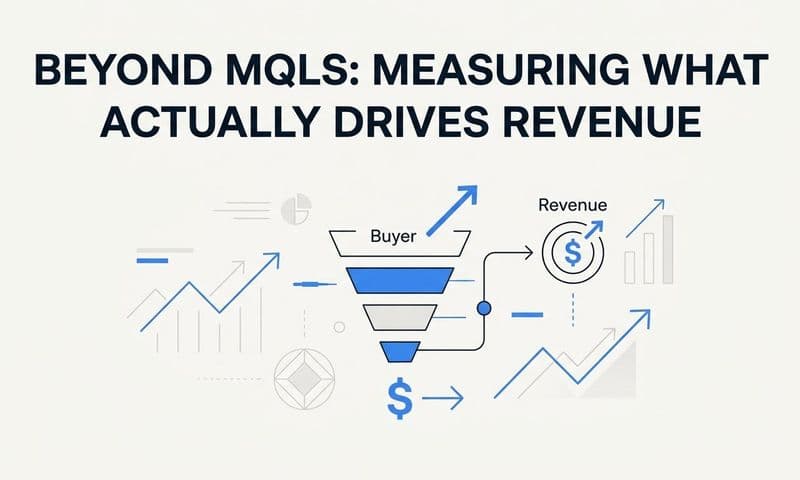
Pipeline and Revenue Attribution: The ultimate measure of B2B marketing performance is not leads generated or cost per click. It is pipeline created and revenue influenced. Attribution platforms built for B2B need to connect ad spend directly to pipeline value and closed-won revenue, giving marketing leaders the data they need to justify budget, optimize channel mix, and demonstrate ROI in terms that resonate with the executive team.
Subscription Revenue Integration: B2B SaaS revenue flows through subscription billing platforms like Stripe, not ecommerce order management systems. An attribution platform that can sync Stripe revenue data with ad spend data gives teams a complete view of customer lifetime value by acquisition channel, enabling smarter decisions about where to invest for long-term growth rather than just immediate conversions.
These requirements reflect a fundamentally different data architecture than what ecommerce attribution demands. The tools that serve ecommerce teams well are often not equipped to meet these needs, not because they are inferior, but because they were built for a different problem.
How Cometly Is Built Specifically for B2B Attribution
Cometly was designed from the ground up for the B2B SaaS attribution problem. Rather than adapting an ecommerce-first platform to fit a B2B workflow, it starts with the B2B funnel and builds attribution infrastructure around how B2B buyers actually move through the buying process.
 Triple Whale for B2B: What It Does Well and When to Consider Alternatives
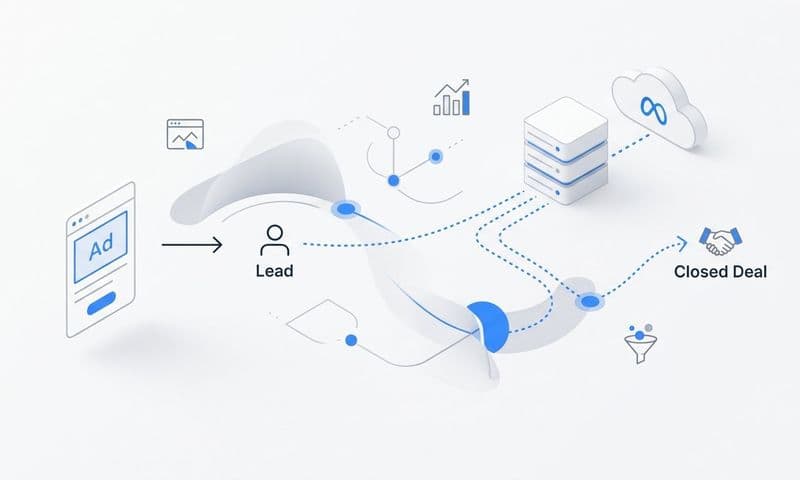
The platform connects your ad platforms, CRM, website behavior, and billing data into a single attribution view that spans the entire customer journey. From the first ad click that introduces a prospect to your brand, through every subsequent touchpoint, all the way to closed-won revenue in your CRM and subscription data in Stripe, Cometly maps the full picture in one place.
Capture Every Touchpoint: Cometly tracks every interaction across the customer journey, from ad clicks and form submissions to CRM events and stage changes. This complete data capture gives the platform's AI a rich, accurate view of how prospects move through your funnel, which is the foundation for any meaningful attribution analysis.
Server-Side Tracking and Conversion API Integration: Cometly's server-side tracking ensures that lead events, form submissions, and CRM stage changes are captured accurately even when browser-based tracking falls short. Conversion API integration sends enriched, conversion-ready events back to Meta, Google, and other ad platforms, improving the quality of signals those platforms use for targeting and optimization. This means your ad platform AI is working with better data, which translates to better campaign performance over time.
Know What Is Really Driving Revenue: Cometly connects every touchpoint to actual pipeline and revenue outcomes, not just surface-level metrics like clicks and impressions. You can see which campaigns are generating qualified leads that convert to opportunities, which channels are influencing deals at different stages of the funnel, and which ad spend is ultimately tied to closed-won revenue. This is the level of clarity that B2B marketing leaders need to make confident budget decisions.
AI-Powered Recommendations: The platform's AI ads manager analyzes performance across every channel and surfaces actionable recommendations on which campaigns and creatives are driving qualified pipeline. Instead of spending hours manually reviewing dashboards and trying to draw conclusions from fragmented data, B2B growth teams get clear guidance on what to scale and what to cut, backed by attribution data that connects ad performance to real revenue outcomes.
Stripe Revenue Integration: Cometly syncs Stripe subscription revenue data with ad spend data, giving B2B SaaS teams the ability to analyze customer lifetime value and revenue by acquisition channel. This closes the loop between marketing investment and business outcomes in a way that is directly relevant to how B2B SaaS companies measure growth.
With 70+ native integrations, Cometly connects the tools that B2B SaaS teams already rely on, including CRM platforms, ad channels, and billing systems, into a unified attribution view that reflects the full complexity of the B2B buying journey.
Why B2B teams choose Cometly
The reason B2B teams gravitate toward Cometly comes down to a simple but important reality: most attribution platforms were not built with B2B workflows in mind. They were built for transactional, high-volume environments where the conversion event is a purchase and the revenue is immediate. When B2B teams try to force those tools into their sales motion, they end up with attribution data that looks complete on the surface but is missing the layers that actually matter for a pipeline-driven business.
Cometly was built with B2B teams as the primary user, not an afterthought. That distinction shapes every part of how the platform works, from the data model it uses to connect touchpoints to the integrations it prioritizes to the way it surfaces recommendations for growth teams. The result is a platform that speaks the language B2B marketers actually use: pipeline, qualified leads, sales cycles, MQLs, SQLs, and closed-won revenue.
It Connects Marketing to Pipeline, Not Just Clicks: For B2B marketing leaders, the most important question is not which ad got the most clicks. It is which ads generated leads that became opportunities and which opportunities became customers. Cometly is built to answer that question directly by connecting ad-level data to CRM pipeline stages. This means you can evaluate campaign performance in terms of pipeline influenced and revenue generated, not just surface-level engagement metrics that do not tell you whether your spend is actually driving business outcomes.
It Accounts for Long and Complex Buying Journeys: B2B sales cycles do not compress neatly into short attribution windows. A deal that closes today may have started with an ad click weeks or months ago, followed by a series of touchpoints across organic search, content, email, and paid channels. Cometly is designed to track and connect those touchpoints across the full journey length, ensuring that early-stage channels receive appropriate credit rather than being invisible in your attribution data simply because they fall outside a narrow reporting window.
It Was Built Around the B2B Tech Stack: B2B SaaS teams run on tools like Salesforce, HubSpot, Stripe, and a range of paid channels that are distinct from the ecommerce ecosystem. Cometly's integrations were designed with this stack in mind. Instead of treating CRM and billing integrations as secondary features layered onto an ecommerce core, Cometly treats them as foundational infrastructure. This means the data flowing through the platform reflects how B2B revenue actually works, with deals progressing through pipeline stages and revenue recognized through subscription billing rather than order transactions.
It Solves the Server-Side Tracking Problem That Matters Most for B2B: B2B lead events, particularly form submissions and demo requests, are often the most critical conversion events a marketing team needs to track. These events are also among the most vulnerable to degradation from browser restrictions, cookie limitations, and ad blockers. Cometly's server-side tracking infrastructure captures these events reliably and sends enriched conversion data back to ad platforms through Conversion API integrations. For B2B teams where a single missed demo request could represent thousands of dollars in potential pipeline, this level of tracking fidelity is not a nice-to-have. It is essential.
It Gives Growth Teams Actionable Intelligence, Not Just Data: B2B marketing teams are often leaner than their ecommerce counterparts, and they need their attribution platform to do more than display dashboards. Cometly's AI-powered recommendations analyze performance across channels and surface clear guidance on which campaigns and creatives are driving qualified pipeline. This reduces the time spent interpreting data and increases the time spent acting on it, which is especially valuable for growth teams managing complex multi-channel programs without large analytics support functions.
It Closes the Loop on Subscription Revenue: One of the most persistent blind spots in B2B attribution is the gap between marketing spend and long-term revenue. A lead acquired through a LinkedIn campaign might convert into a customer who remains on a subscription for years, generating significant lifetime value that never surfaces in a typical lead-gen attribution report. By integrating with Stripe, Cometly allows B2B SaaS teams to trace which acquisition channels are driving not just initial conversions but high-value, long-term customers. This is where functioning as a true ad attribution platform for SaaS companies becomes essential, because understanding customer lifetime value at the channel level fundamentally changes how you approach budget allocation. When you can see that one channel produces customers with twice the retention rate of another, even at a higher cost per lead, your investment strategy shifts in ways that surface-level metrics would never reveal.
The through-line across all of these reasons is the same: Cometly was designed by studying how B2B SaaS companies actually generate revenue, and then building the platform to reflect that reality. Rather than retrofitting ecommerce logic onto longer sales cycles, it accounts for the complexity of subscription-based analytics from the ground up. That design philosophy is what makes it a genuinely different tool for B2B teams, not just a repurposed solution with a few additional integrations bolted on.
To make the evaluation process more concrete, the tables below lay out how attribution requirements differ between ecommerce and B2B SaaS, and then map those requirements directly to what Triple Whale and Cometly each offer. This is not a judgment of which platform is better in absolute terms. It is a framework for identifying which platform is better for your specific business model.
Ecommerce vs. B2B SaaS: What to Look for in an Attribution Platform
Attribution RequirementEcommerceB2B SaaSPrimary conversion eventCompleted purchase (order)Demo request, form fill, free trial signupTypical sales cycle lengthHours to daysWeeks to monthsAttribution window needed7 to 28 days is generally sufficient90 days or longer to capture full journeyRevenue data sourceShopify or ecommerce order managementCRM (Salesforce, HubSpot) and billing (Stripe)Number of decision-makers per conversionTypically one individualOften multiple stakeholders across the same accountCRM integration priorityLow (pipeline stages not relevant)High (pipeline stages are the core revenue metric)Attribution model complexityLast-click or short-window multi-touch is often adequateMulti-touch across a long journey is essentialServer-side tracking importanceImportant, primarily for purchase eventsCritical, lead events are highly vulnerable to browser restrictionsKey performance metricsROAS, cost per purchase, revenue per channelCost per MQL, pipeline influenced, closed-won revenue by channelCreative analytics importanceVery high (creative testing is a primary growth lever)Moderate (messaging matters, but pipeline quality is the primary filter)Subscription revenue trackingNot typically requiredEssential for understanding customer lifetime value by acquisition channelPost-purchase survey attributionHighly useful for blended attributionLess central; pipeline data carries more signal than self-reported discovery
With those distinctions in place, it becomes easier to evaluate how each platform maps to these requirements. The table below compares Triple Whale and Cometly across the features that matter most, segmented by which business model each serves.
Cometly vs. Triple Whale: Feature Comparison by Business Model
FeatureTriple WhaleCometlyBest Suited ForShopify-native integration✅ Deep, purpose-built integrationNot a core focusEcommerceCRM integration (Salesforce, HubSpot)Limited; not a primary design focus✅ Core infrastructure; connects ad touchpoints to pipeline stagesB2B SaaSStripe subscription revenue syncNot designed for subscription billing attribution✅ Syncs Stripe revenue with ad spend for LTV analysis by channelB2B SaaSServer-side tracking and Conversion APIAvailable; primarily optimized for purchase events✅ Built specifically for lead events, form fills, and CRM stage changesB2B SaaSMulti-touch attribution across long journeysOptimized for short-window cycles; less suited to 60 to 90 day journeys✅ Tracks touchpoints across full journey length with multi-touch modelsB2B SaaSCreative analytics✅ Best-in-class; granular creative performance reporting across Meta and TikTokAvailable; focused on pipeline-quality outcomesEcommercePost-purchase survey attribution✅ Built-in; blends pixel data with self-reported responsesNot a primary feature; pipeline data is the core signalEcommercePipeline and closed-won revenue reportingNot designed for CRM pipeline metrics✅ Connects ad spend directly to MQL, SQL, opportunity, and closed-won dataB2B SaaSAI-powered campaign recommendationsAvailable; focused on ecommerce ROAS optimization✅ Recommends scaling or cutting based on qualified pipeline influence, not clicksB2B SaaSNative ad platform integrations (Meta, Google, LinkedIn, TikTok)✅ Strong; especially Meta and TikTok for DTC campaigns✅ Strong; includes LinkedIn as a primary B2B channelBothProprietary first-party pixel✅ Purpose-built for iOS-era ecommerce tracking✅ Server-side architecture captures B2B lead events reliablyBoth, for different conversion typesNumber of native integrationsStrong ecommerce ecosystem✅ 70+ integrations spanning CRM, billing, ad platforms, and analytics toolsB2B SaaSDesigned primary use caseDTC ecommerce brands on Shopify running paid socialB2B SaaS companies with CRM-driven pipelines and subscription revenueModel-specific
What these tables make visible is that the differences between the two platforms are not a matter of quality. They are a matter of design intent. Triple Whale's strengths cluster around the features that matter most for ecommerce: creative-level performance data, Shopify revenue sync, and blended pixel attribution calibrated for short buying cycles. Cometly's strengths cluster around what B2B SaaS teams actually need: CRM pipeline integration, long-window multi-touch attribution, server-side tracking for lead events, and subscription revenue analysis through Stripe.
Using the wrong tool for your business model does not just mean missing a few features. It means your core performance data is built on a foundation that does not reflect how your buyers actually move through the funnel. For B2B marketing leaders making channel investment decisions, that gap between what the data shows and what is actually happening can lead to meaningful misallocation of budget over time. The tables above are a starting point for making that evaluation more concrete and less abstract.
 Triple Whale for B2B: What It Does Well and When to Consider Alternatives
Choosing the Right Attribution Tool for Your Business Model
The decision between attribution platforms ultimately comes down to one question: how does your business generate revenue, and does the platform's data model reflect that reality?
If your business sells products through an online storefront, runs on Shopify, and relies on short-cycle transactions driven by paid social campaigns, Triple Whale is an excellent fit. Its Shopify-native integration, creative analytics, proprietary pixel, and blended attribution approach are purpose-built for that motion. DTC ecommerce teams will find that it solves their core problems with speed and clarity.
If your business generates revenue through subscriptions, demos, and sales-assisted conversions tracked through a CRM, the evaluation criteria shift significantly. You need a platform that can connect ad touchpoints to CRM pipeline stages, support server-side tracking for lead events, model attribution across long multi-touch journeys, and tie everything back to subscription revenue rather than ecommerce order data.
A practical way to evaluate any attribution platform is to start with your conversion events. Write down every meaningful touchpoint in your customer journey, from first ad impression to closed deal. Then ask whether the platform can connect all of those events to actual revenue in your CRM or billing system. If the answer requires significant workarounds or custom integrations, that is a signal the platform was not designed for your business model.
Questions to Ask During Evaluation:
What is your primary conversion event? If it is a purchase, ecommerce-focused tools will serve you well. If it is a demo request or free trial that enters a CRM, you need B2B-specific infrastructure.
How long is your average sales cycle? If it exceeds 30 days, short-window attribution models will miss critical touchpoints and distort your channel performance data.
Where does your revenue data live? If it is in Shopify, Triple Whale's native integration is a genuine advantage. If it is in Stripe or a CRM, you need a platform that connects to those systems directly.
Do you need multi-stakeholder attribution? If multiple people from the same company interact with your marketing before a deal closes, you need attribution infrastructure that can account for that complexity.
Matching the platform to the business model is not a compromise. It is the difference between attribution data that drives confident decisions and attribution data that creates more confusion than clarity.