Your Facebook campaigns are running. Google Ads are live. You're tracking conversions with pixels installed on every page. But when you check your ad platform dashboards, something doesn't add up. The conversion numbers are lower than what your CRM shows. Your best customers aren't appearing in your reports. And your optimization algorithms keep making decisions based on incomplete data.
This isn't a technical glitch—it's the reality of browser-based tracking in 2026. Between iOS privacy updates blocking third-party cookies, browser extensions filtering tracking scripts, and users actively opting out of data collection, traditional pixel tracking is missing a significant portion of your actual conversions.
Enter conversion tracking APIs: a server-side approach that sends conversion data directly from your systems to ad platforms, completely bypassing the browser limitations that plague pixel-based tracking. Instead of relying on JavaScript code that loads in a user's browser (and can be blocked or fail to fire), conversion APIs create a direct server-to-server connection that captures every conversion event reliably. For marketers running campaigns across multiple platforms, understanding how these APIs work isn't just technical knowledge—it's the foundation of accurate attribution and effective optimization in today's privacy-first landscape.
How Server-Side Conversion Data Actually Flows
Traditional pixel tracking operates entirely in the browser. When someone completes a purchase on your site, a JavaScript pixel fires, sending conversion data to the ad platform while the user is still on your thank-you page. This approach worked well for years, but it has a critical weakness: it depends entirely on the browser successfully loading and executing that tracking code.
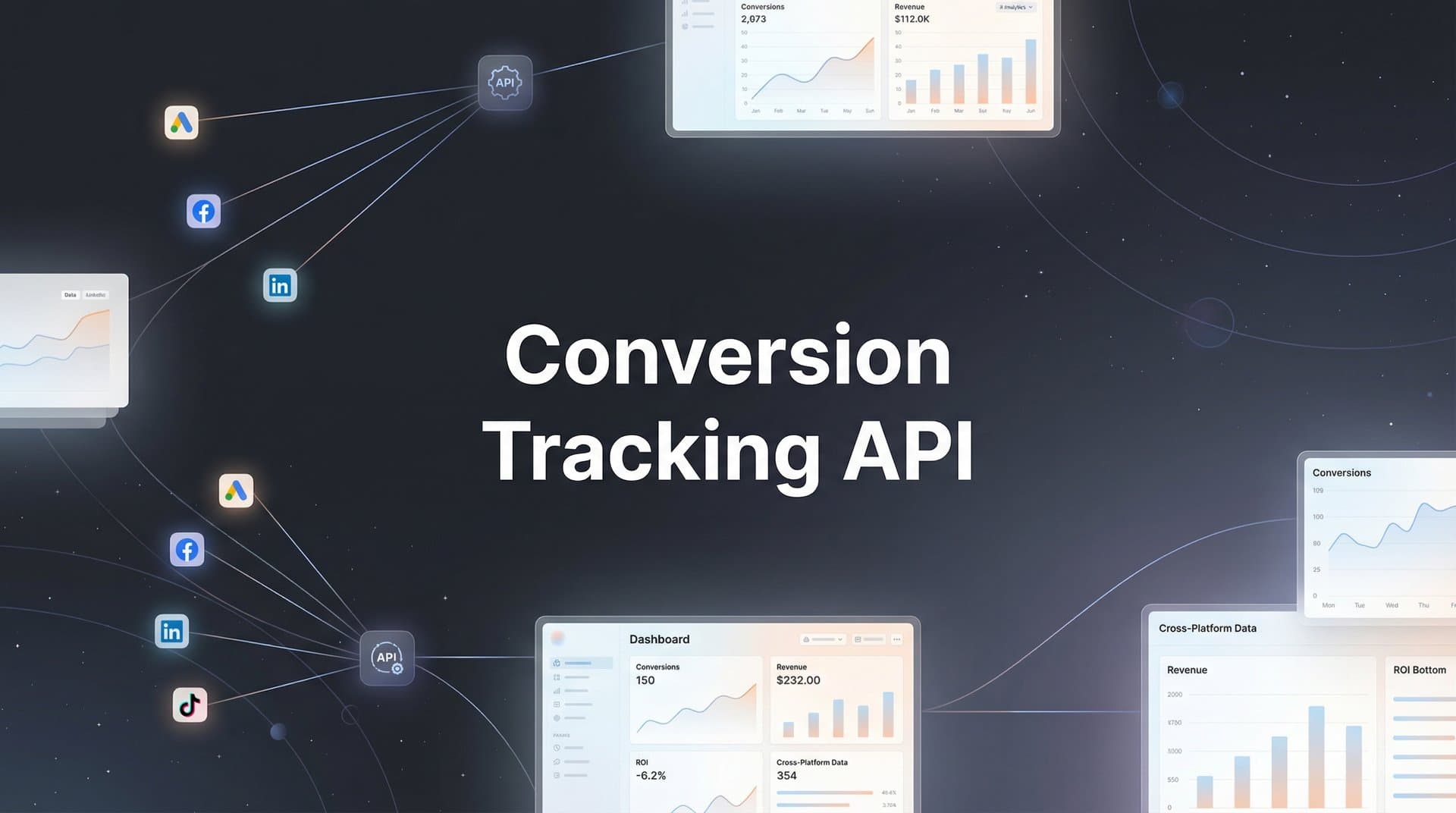
Conversion tracking APIs flip this model completely. Instead of tracking happening in the user's browser, the conversion event is captured on your server—whether that's your website backend, your CRM system, or your e-commerce platform. Once your server registers the conversion, it sends that data directly to the ad platform's API endpoint through a secure server-to-server connection.
Here's the actual flow: A user clicks your Facebook ad, visits your site, and completes a purchase. Your server processes the order and stores the transaction details in your database. Simultaneously (or shortly after), your server makes an API call to Meta's Conversions API, sending structured data about that purchase—the order value, the customer's email (hashed for privacy), the timestamp, and importantly, the original click identifier that connects this conversion back to the specific ad that drove it.
The key difference is reliability. Browser-based pixels can be blocked by ad blockers, fail to load on slow connections, or be prevented from firing by privacy settings. Server-side API calls happen regardless of what's happening in the user's browser. Your server knows a conversion occurred because it processed the transaction, and it can reliably report that conversion to the ad platform even if the user closed their browser immediately after checkout. Understanding what is server side conversion tracking helps clarify why this approach has become essential for modern marketers.
Think of it like the difference between asking customers to mail you a postcard after they visit your store (pixel tracking—they might forget or the postcard might get lost) versus your point-of-sale system automatically recording every transaction (API tracking—it happens whether customers think about it or not).
This is where terminology gets important. You'll hear terms like "server events," "offline conversions," and "webhooks" used in this context. Server events are simply conversion data sent from your server to an ad platform. Offline conversions typically refer to events that happen outside your website entirely—like a phone sale or in-store purchase—but are sent to ad platforms via API. Webhooks are automated messages your system sends when specific events occur, often used to trigger API calls. They're all variations of the same core concept: conversion data flowing from your systems to ad platforms without relying on browser-based tracking.
Major Platform APIs Every Marketer Should Know
Every major advertising platform has developed its own server-side conversion tracking solution, each with its own implementation requirements and capabilities. Understanding the landscape helps you prioritize which APIs matter most for your business.
Meta Conversions API: Meta's solution for Facebook and Instagram advertising is the most widely adopted conversion API. It allows you to send web events, app events, and offline conversions directly to Meta's servers. The API accepts standard events (like Purchase, Lead, AddToCart) and custom events you define. What makes Meta's API particularly powerful is its ability to deduplicate events—if both your pixel and your API send the same conversion, Meta's system can identify and count it only once using event matching parameters. The API requires you to send customer information parameters (email, phone number, or other identifiers) that Meta hashes and uses to match conversions back to specific ad interactions. For detailed implementation steps, check out our guide on Facebook Conversion API setup.
Google Ads API and Offline Conversion Imports: Google offers multiple ways to send conversion data server-side. The Google Ads API provides programmatic access to import conversions, while offline conversion imports allow you to upload conversion data via file or API for conversions that happen outside your website. Google's approach emphasizes Google Click ID (GCLID)—a unique identifier attached to each ad click that becomes the primary method for matching your server-side conversions back to specific ad interactions. You can also use enhanced conversions, which send hashed customer data to improve match rates when GCLID isn't available.
TikTok Events API: As TikTok advertising has matured, their Events API has become essential for advertisers serious about the platform. The API structure is similar to Meta's—you send events from your server with customer identifiers and event parameters. TikTok's API particularly emphasizes the Click ID parameter (ttclid) for accurate attribution. The platform's algorithm optimization relies heavily on receiving complete conversion data, making the Events API critical for campaigns using TikTok's automated bidding options.
LinkedIn Conversions API: For B2B marketers, LinkedIn's Conversions API enables server-side tracking of leads and conversions from LinkedIn advertising. The implementation requires setting up a conversion rule in Campaign Manager and then sending conversion events with matched member data. LinkedIn's API is particularly valuable because B2B sales cycles are long—being able to send conversions that happen weeks or months after the initial ad click (like closed deals in your CRM) helps LinkedIn's algorithm understand which audiences actually convert into customers, not just leads.
Beyond these major platforms, Pinterest, Snapchat, and Twitter (X) all offer their own server-side tracking solutions. The common thread across all these APIs is the same: they provide a direct channel for sending conversion data that doesn't depend on browser-based tracking, and they all require customer matching data to connect conversions back to ad interactions. Managing conversion tracking for multiple ad platforms requires understanding each platform's unique requirements.
Why Your Ad Platform Algorithms Need Better Data
Ad platform optimization algorithms are remarkably sophisticated, but they have one fundamental limitation: they can only optimize based on the data they receive. When browser-based tracking fails to capture 30-40% of your actual conversions, the algorithm is essentially learning from incomplete information—like trying to solve a puzzle with half the pieces missing.
Conversion APIs directly address this data gap. When you send server-side conversion data, you're feeding the ad platform a more complete picture of which ads, audiences, and placements actually drive results. This improved data quality creates a cascade of optimization benefits.
The first impact is on match rates. Ad platforms need to connect your conversion data back to specific ad interactions to understand cause and effect. When you send conversions via API with robust customer identifiers—email addresses, phone numbers, and click IDs—the platform can match a higher percentage of conversions back to the ads that drove them. Better match rates mean the algorithm has more signal to work with when deciding how to optimize your campaigns.
This directly affects your cost per acquisition. When Facebook's algorithm sees that a particular audience segment converts at a higher rate (because it's now seeing all the conversions, not just the ones pixels caught), it automatically shifts more budget toward that audience and away from segments that appear less profitable. The same principle applies to Google's Smart Bidding—when the algorithm has complete conversion data, it can more accurately predict which searches are likely to convert and adjust bids accordingly.
Lookalike audiences become dramatically more effective with complete conversion data. When you build a lookalike audience based on your converters, but the seed audience is missing 40% of your actual customers (because pixels didn't capture them), the lookalike will be optimized toward the wrong profile. Feed the platform complete conversion data via API, and suddenly your lookalike audiences are built from your entire customer base, finding prospects who actually resemble your best customers.
The impact extends to automated campaign types. Meta's Advantage+ Shopping campaigns, Google's Performance Max, and TikTok's automated creative optimization all rely on machine learning to make real-time decisions about creative, placement, and bidding. These systems are only as smart as the data they learn from. Complete conversion data from server-side APIs gives these automated systems the signal quality they need to actually deliver on their optimization promises.
Implementation Approaches: DIY vs. Platform Solutions
Understanding how conversion APIs work is one thing. Actually implementing them is another challenge entirely, and you have two primary paths forward.
Direct API Integration: Building your own server-side tracking means writing code that captures conversion events in your systems and makes API calls to each ad platform you use. This approach gives you complete control and customization. You'll need developers who understand your backend infrastructure, API authentication, and the specific requirements of each platform's conversion API. The technical requirements include setting up secure API credentials, implementing event capture logic in your application code, handling error cases and retry logic, and building monitoring to ensure conversions are being sent successfully.
The ongoing maintenance burden is significant. Each ad platform updates its API periodically, requiring code changes to maintain compatibility. You need to monitor delivery rates and debug when conversions aren't being received correctly. As your marketing stack grows and you add new ad platforms, you're building and maintaining separate integrations for each one. Our comprehensive conversion tracking setup guide walks through the technical requirements in detail.
Attribution Platform Solutions: The alternative is using a marketing attribution platform that handles conversion API integration as part of its core functionality. These platforms sit between your data sources (website, CRM, payment processor) and your ad platforms, automatically capturing conversion events and syncing them to the appropriate APIs. This approach centralizes your conversion tracking infrastructure—instead of building five separate integrations for five ad platforms, you integrate once with the attribution platform, which then handles distribution to all your ad channels.
The key advantage is automation at scale. When a conversion happens in your CRM, the platform automatically enriches it with attribution data (which ads the customer interacted with across all channels), then sends properly formatted conversion events to Meta, Google, TikTok, LinkedIn, and any other platforms you're using. The platform handles deduplication logic, manages API credentials, monitors delivery rates, and adapts to API changes automatically.
Critical Implementation Considerations: Regardless of which approach you choose, certain technical challenges must be addressed. Event deduplication is essential—if you're running both pixel tracking and API tracking (which is recommended), you need logic to prevent the same conversion from being counted twice. This typically involves sending a unique event ID with both pixel and API events so platforms can identify duplicates. Understanding the nuances of conversion API vs pixel tracking helps you implement both methods effectively.
Event matching quality determines how many of your server-side conversions can be attributed back to specific ads. This requires sending robust customer identifiers with every conversion—email addresses, phone numbers, and platform-specific click IDs. The more identifiers you include, the higher your match rate will be.
Data quality maintenance is ongoing work. You need processes to validate that customer identifiers are formatted correctly, that required parameters are included with every event, and that the conversion data you're sending accurately reflects what happened in your systems.
Common Pitfalls That Undermine Your Tracking Accuracy
Even with conversion APIs properly implemented, specific mistakes can compromise your data quality and undermine the optimization benefits you're trying to achieve.
Duplicate Events Without Proper Deduplication: Running both pixel and API tracking is best practice for redundancy, but only if you implement deduplication correctly. Many marketers send the same conversion through both channels without including matching event IDs, causing platforms to count each conversion twice. This inflates your conversion numbers and confuses optimization algorithms. The solution is simple but often overlooked: generate a unique event ID for each conversion and include that same ID in both your pixel event and your API call. Ad platforms use this ID to recognize duplicates and count the conversion only once.
Missing or Malformed Customer Identifiers: Conversion APIs rely on customer matching data to connect conversions back to ad clicks. Sending conversions without email addresses, phone numbers, or click IDs means the ad platform receives the conversion data but can't attribute it to any specific ad interaction. The result? The conversion is recorded, but it doesn't inform optimization because the platform doesn't know which campaign, ad set, or creative drove it. Even worse is sending malformed data—emails with typos, phone numbers in inconsistent formats, or identifiers that weren't properly hashed. Every conversion you send should include multiple identifiers formatted exactly according to each platform's specifications. Following best practices for tracking conversions accurately helps prevent these common errors.
Failing to Test and Validate: Many marketers implement conversion APIs, see events appearing in their ad platform's test tools, and assume everything is working correctly. But test events and production events often behave differently. Real validation means checking that conversions are being received, that they're being attributed to the correct campaigns, and that the conversion values match what actually happened in your systems. This requires regularly comparing the conversions showing in your ad platforms against the conversions recorded in your CRM or order database. Discrepancies indicate problems with your implementation that need investigation.
Inconsistent Event Parameters Across Platforms: Different ad platforms have different required and optional parameters for conversion events. Sending a purchase event to Meta with certain fields but omitting those same fields when sending to Google creates inconsistencies in your data. Your attribution analysis becomes unreliable when the same conversion is represented differently across platforms. Standardizing your event structure—using the same event names, parameters, and values across all platforms—ensures your cross-platform attribution remains accurate. Learning how to address conversion tracking accuracy issues is essential for maintaining data integrity.
Putting Your Conversion Data to Work
Understanding conversion APIs is valuable, but the real question is how to move from theory to implementation in a way that actually improves your advertising results.
Start with an audit of your current tracking infrastructure. Document which conversion events you're currently tracking, which methods you're using (pixel only, API only, or both), and what customer identifiers you're capturing. Check your ad platforms' diagnostics tools to see your current match rates and identify where you're losing attribution signal. This baseline assessment shows you exactly where the gaps are. If you discover issues, our guide on fixing conversion tracking gaps provides actionable solutions.
Prioritize which conversion events to send via API first. Not all conversions have equal impact on optimization. Purchase events with revenue values should be your top priority—these directly inform ROAS optimization and are the conversions ad platforms care most about. Lead form submissions come next, especially if you're running lead generation campaigns. Lower-funnel events like add-to-cart or checkout initiation can wait until your primary conversion tracking is solid.
Build your implementation in stages rather than trying to deploy everything at once. Start with one ad platform—typically your highest-spend channel—and get server-side conversion tracking working correctly there before expanding to other platforms. This staged approach lets you work through implementation challenges on a smaller scale and validate that everything is working before multiplying the complexity.
Establish monitoring and validation processes from day one. Set up regular checks comparing conversion counts across your ad platforms, your analytics system, and your actual business systems. Create alerts for sudden drops in conversion volume that might indicate tracking issues. Schedule monthly reviews of match rates and data quality metrics to catch degradation before it significantly impacts optimization.
The foundation you're building isn't just about fixing tracking gaps—it's about creating a data infrastructure that supports accurate, cross-platform attribution. When every conversion is captured reliably and sent to all your ad platforms with complete matching data, you finally have the visibility to understand which marketing touchpoints actually drive revenue. That visibility transforms how you allocate budget, which campaigns you scale, and ultimately, how efficiently you acquire customers. For a deeper understanding of the entire measurement ecosystem, explore our attribution marketing tracking complete guide.
The Path Forward for Modern Marketing Measurement
Conversion tracking APIs aren't a temporary workaround for browser tracking limitations—they represent the fundamental shift in how marketing measurement works in a privacy-conscious world. As browsers continue restricting third-party cookies and privacy regulations expand globally, privacy compliant conversion tracking methods will become the standard approach for any marketer who needs accurate attribution data.
The implementation effort is real. Whether you're building custom integrations or adopting a platform solution, moving to server-side conversion tracking requires technical work, testing, and ongoing maintenance. But the alternative—continuing to optimize campaigns based on incomplete data while your competitors feed their algorithms complete conversion information—means accepting a permanent competitive disadvantage.
The marketers who win in this environment are those who treat conversion data infrastructure as a strategic priority rather than a technical afterthought. When your ad platforms receive complete, accurate conversion data through reliable server-side APIs, their optimization algorithms can finally deliver on their promise. Your targeting improves. Your lookalike audiences find better prospects. Your automated bidding makes smarter decisions. And most importantly, you can confidently scale campaigns knowing your attribution data reflects reality.
This is where Cometly's Conversion Sync becomes invaluable. Rather than building and maintaining separate API integrations for Meta, Google, TikTok, LinkedIn, and every other platform you advertise on, Cometly handles the entire conversion syncing process automatically. The platform captures conversions from your CRM and website events, enriches them with complete attribution data across every touchpoint, and sends properly formatted conversion events to all your ad platforms simultaneously. You get the benefits of server-side tracking—complete data, better match rates, improved optimization—without the technical burden of building and maintaining it yourself.
Ready to elevate your marketing game with precision and confidence? Discover how Cometly's AI-driven recommendations can transform your ad strategy—Get your free demo today and start capturing every touchpoint to maximize your conversions.