Something significant has shifted in digital marketing over the past few years, and if you are still relying on third-party cookies to power your attribution, you are already behind. Major browsers have moved decisively against cross-site tracking. Safari's Intelligent Tracking Prevention has been restricting third-party cookies for years. Firefox followed. Chrome has tightened its own policies significantly. The result is a tracking environment that looks nothing like it did five years ago, and marketers who built their measurement stacks on third-party data are feeling the gap.
First-party cookies are not a new concept, but they have become the foundation of accurate, privacy-respecting marketing measurement in a way they never were before. They are the data layer that keeps attribution intact, powers conversion tracking, and gives you a reliable view of how users move from ad click to closed deal. For B2B SaaS marketers especially, where sales cycles stretch across weeks and months, getting this layer right is not optional. It is the difference between confident budget decisions and expensive guesswork.
This article breaks down exactly what first-party cookies are, what they track in a marketing context, why they are now central to accurate attribution, and how to implement them correctly as part of a complete measurement strategy. If you want to understand why your ad platform numbers and your analytics numbers keep disagreeing, this is where the answer starts.
The Cookie Landscape Has Changed: Understanding What You Are Working With
Let's start with a clean definition. A first-party cookie is a small data file set by the website a user is actively visiting. It is stored in the user's browser and can only be read by that same domain. When someone visits your SaaS product's pricing page, your site can set a cookie that remembers their session, their source, and their behavior. That cookie belongs to you and only you.
A third-party cookie works differently. It is set by an external domain, typically an ad network, a data management platform, or an analytics provider, while the user is on your site. That external domain can then read that same cookie when the user visits other sites that load the same external script. This is how cross-site behavioral tracking has worked for decades, and it is exactly what browsers have been dismantling.
Safari introduced Intelligent Tracking Prevention in 2017 and has steadily tightened its restrictions since. Firefox followed with Enhanced Tracking Protection. Chrome, which holds the largest share of browser usage globally, has significantly tightened its own policies and continues to evolve its approach to cross-site tracking. The practical result is that third-party cookies are either blocked outright or severely limited across the vast majority of modern browsers.
The core technical difference matters more than it might seem at first. Third-party cookies depend on external domains having permission to track users across sites they did not visit. First-party cookies are tied to direct interaction with your own domain. The user came to your site, your site set the cookie, and your site reads it. That relationship is fundamentally different from a surveillance perspective, which is why browsers treat them differently.
For marketers, this distinction has real consequences. First-party cookies are more durable because they are not subject to cross-site restrictions. They are more accurate because they reflect actual user behavior on your own properties. And they are more aligned with where the industry is heading, because the regulatory and browser environment will only continue to favor direct, consent-based data collection over passive cross-site tracking.
The shift is not temporary. It is not a technical glitch waiting to be patched. The industry has made a structural decision to move away from third-party tracking, and first-party cookies are the correct foundation to build on going forward.
What First-Party Cookies Actually Track in a Marketing Context
Understanding the definition is one thing. Understanding what first-party cookies actually do for your marketing data is where it gets practical. There are several specific use cases that matter most for B2B SaaS marketers.
Session continuity: When a user lands on your site, a first-party cookie keeps their session alive as they move from page to page. Without this, every page load would look like a new, anonymous visitor. With it, you can track the full path a user takes through your site in a single visit, from the blog post that brought them in to the pricing page they checked before signing up for a trial.
User identification across return visits: A first-party cookie can persist across sessions, meaning when a user returns to your site days later, you can recognize them as the same person. For B2B SaaS companies where the buying journey often spans multiple visits over weeks, this is essential. You cannot understand your funnel if every return visit looks like a brand new user.
UTM parameter persistence: This is one of the most underappreciated functions of first-party cookies in marketing attribution. When a user clicks an ad and lands on your site with UTM parameters in the URL, those parameters exist only in that initial page load. If the user navigates to another page, the UTMs disappear from the URL. First-party cookies capture those UTM values on the first page load and carry them through the entire session and beyond, so your attribution does not break mid-journey.
Click ID preservation: Ad platforms like Meta and Google append click identifiers to URLs when users click on ads. The fbclid from Meta and the gclid from Google are the keys that allow those platforms to match a conversion back to a specific ad interaction. First-party cookies store these click IDs at the moment of landing, and they persist until a conversion event fires. When that conversion happens, the stored click ID gets sent back to the ad platform, completing the attribution loop even if days or weeks have passed since the original click.
Customer journey stitching: First-party cookies are what allow you to connect multiple touchpoints across a single user's journey. A user might discover your product through a LinkedIn ad, return a week later via a Google search, and then convert after reading a case study. First-party cookies make it possible to recognize that these interactions belong to the same person and sequence them into a coherent journey. Without this, multi-touch attribution is not possible. You are left with disconnected events that cannot be assembled into a meaningful picture of how users actually move toward conversion.
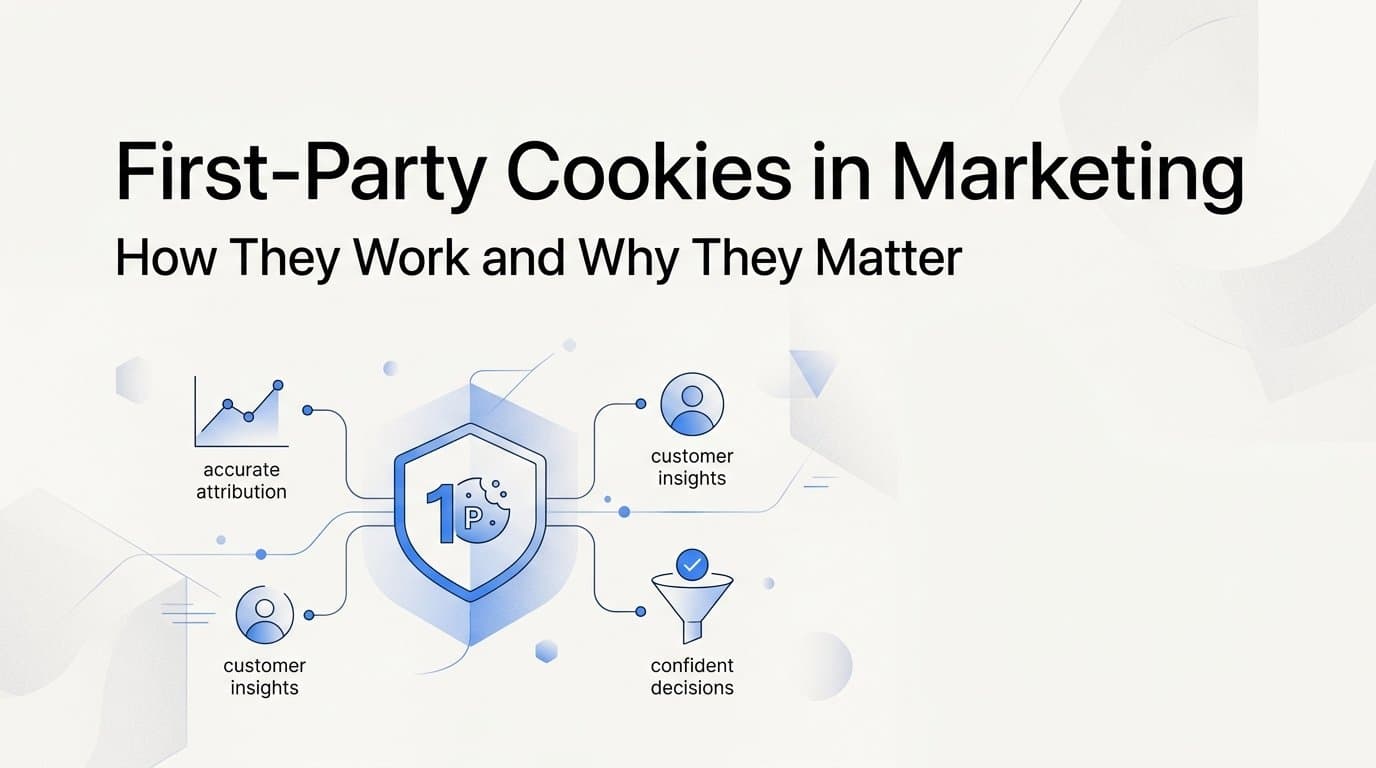
Taken together, these capabilities make first-party cookies the data collection layer that every other part of your marketing measurement depends on. They are not a nice-to-have feature. They are the infrastructure that keeps attribution accurate when everything else in the tracking environment is becoming less reliable.
Why First-Party Data Is Now the Backbone of Accurate Attribution
If you have ever stared at a dashboard where your ad platform reports significantly more conversions than your analytics tool can verify, you have seen the attribution gap in action. This is not a reporting quirk. It is a structural problem created by third-party cookie deprecation, and it makes confident budget decisions genuinely difficult.
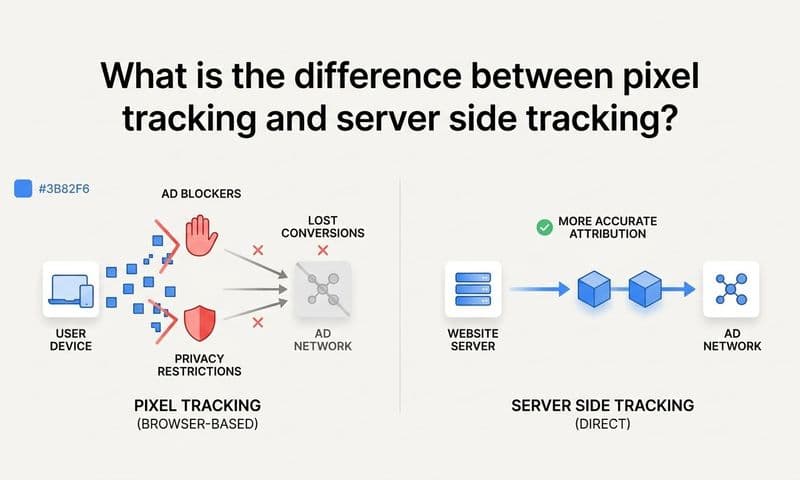
Here is what happens. A user clicks your ad. The ad platform's pixel fires and records the click. The user converts days later, but by then the browser has restricted or cleared the third-party cookie that the pixel depended on. The ad platform either misses the conversion entirely or attributes it incorrectly. Your analytics tool, which also relies on browser-based tracking, may have lost the original source entirely. The result is two systems telling you different things, and neither one is fully right.
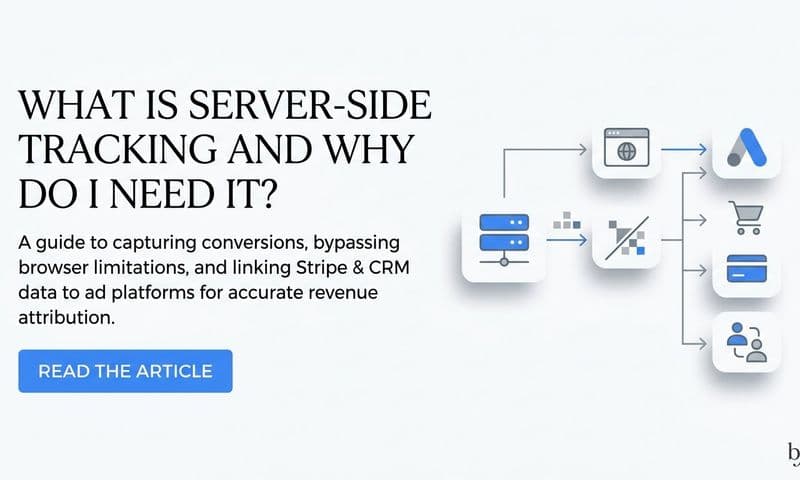
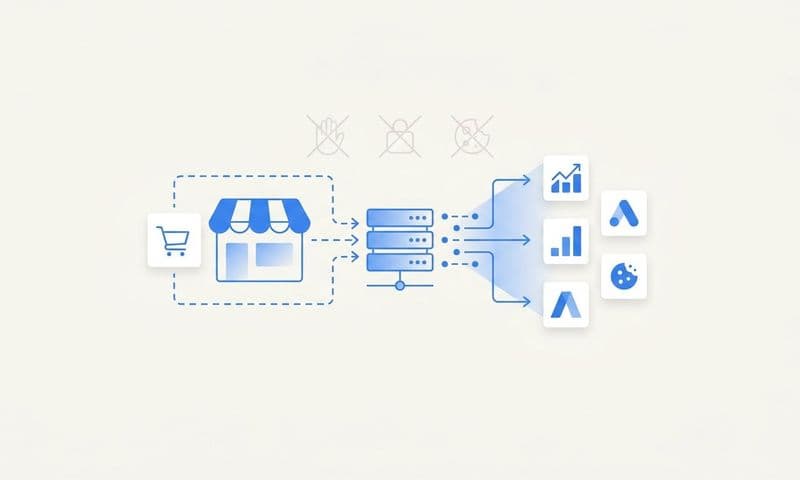
First-party cookies address this directly. Because they are set by your own domain and are not subject to cross-site restrictions, they persist through the user's journey in a way that third-party pixels cannot. When combined with server-side tracking, the data they carry becomes even more reliable. Instead of depending on a browser pixel that can be blocked by ad blockers, restricted by browser policies, or lost when a user switches tabs, you send conversion signals directly from your server to the ad platform using the first-party identifiers stored in those cookies.
This is where Conversion API integrations come in. Meta's Conversion API and Google's Enhanced Conversions both accept conversion events sent server-side, matched using first-party data signals like click IDs, email addresses, or other identifiers. Because these signals come from your server rather than a degraded browser environment, they are more complete, more accurate, and more trusted by the ad platform's matching algorithms.
The connection to multi-touch attribution is equally important. Multi-touch attribution requires knowing which touchpoints a user encountered before converting, in what order, and with what time gaps. That kind of journey reconstruction is only possible if you have persistent, reliable identifiers linking sessions and events across time. First-party cookies provide those identifiers. Without them, you cannot look back across a user's journey and assign credit to the right channels. You default to last-click attribution, which systematically undervalues the top-of-funnel and mid-funnel activity that actually built the relationship with the buyer.
For B2B SaaS companies, where a paid LinkedIn ad might introduce a prospect who eventually converts sixty days later after multiple organic touchpoints, last-click attribution is not just inaccurate. It actively misleads budget decisions by making top-of-funnel investment look unproductive. First-party cookies, combined with server-side tracking and proper attribution modeling, are what make it possible to see the full picture and allocate spend accordingly.
How to Implement First-Party Cookie Tracking the Right Way
Getting first-party cookie tracking right requires more than simply switching from a third-party script to a first-party one. There are technical decisions, data enrichment strategies, and consent requirements that all need to work together.
Set cookies via your own domain: The most important technical distinction is between cookies set via JavaScript running in the browser and cookies set server-side via HTTP response headers. Browsers like Safari apply ITP rules that can reduce the lifespan of JavaScript-set first-party cookies to as little as seven days. Cookies set server-side via HTTP headers are generally more durable and not subject to the same browser-imposed limitations. For B2B SaaS companies with sales cycles that stretch well beyond seven days, this distinction is critical. Server-side cookie setting should be the default approach, not an advanced option.
Align cookie duration with your sales cycle: Think carefully about how long your cookies need to persist. If your average sales cycle is sixty to ninety days, a thirty-day cookie window will miss a significant portion of your conversions. Set your cookie expiration to comfortably exceed your typical time-to-conversion, and revisit this as your data matures and you have a clearer picture of how long your actual buying journeys take.
Enrich first-party data with real identifiers: Cookie-based tracking alone has limits. Users switch devices. They clear their browsers. They use incognito mode. First-party data enrichment addresses this by capturing persistent identifiers at key touchpoints. When a user fills out a form, signs up for a trial, or logs into your product, capture their email address or CRM ID and tie it to their cookie data. This creates a bridge between anonymous session tracking and known user records, allowing you to maintain attribution continuity even when cookie-based identification breaks down. Connecting your CRM data to your tracking layer is what transforms first-party cookies from a session tool into a full-funnel attribution asset.
Implement proper consent management: First-party cookies still require clear disclosure and, in many regions, explicit user consent before being set. A cookie banner paired with a well-written privacy policy is not optional. It is a legal requirement in jurisdictions like the EU under GDPR and in California under CCPA. A consent management platform helps you collect, store, and honor user preferences in a way that keeps your tracking compliant without unnecessarily degrading data quality. The goal is to build consent flows that are clear and easy to accept, so you maximize the percentage of users who give consent and maintain as complete a data set as possible.
Done correctly, first-party cookie implementation gives you a tracking layer that is more accurate, more durable, and more defensible than anything built on third-party dependencies. It takes more intentional setup, but the result is a measurement foundation that holds up as browser restrictions continue to evolve.
Feeding Better Data Back to Ad Platforms
One of the most direct ways first-party cookies improve marketing performance is through the quality of the conversion signals you send back to ad platforms. This is where the infrastructure investment pays off in measurable ways.
When a user clicks a Meta ad, Meta appends an fbclid to the landing page URL. Your first-party cookie captures that fbclid at the moment of landing and stores it persistently. When that user converts, your server reads the stored fbclid from the cookie and sends a conversion event to Meta via the Conversion API, along with any additional first-party identifiers you have collected, such as a hashed email address. Meta matches that event back to the original ad interaction and records the conversion accurately.
The same logic applies to Google's Enhanced Conversions. The gclid stored in a first-party cookie, combined with first-party user data sent server-side, gives Google the information it needs to match conversions back to the correct ad clicks with high confidence. This improves what Google calls event match quality, which directly influences how well the algorithm can optimize your campaigns toward the outcomes you care about.
Here is why this matters beyond just accurate reporting. Ad platform AI, whether Meta's Advantage+ or Google's Smart Bidding, learns from the conversion signals it receives. When those signals are incomplete or inaccurate because browser pixels are being blocked or degraded, the algorithm trains on bad data. It optimizes toward the wrong users, wastes budget on low-quality audiences, and underinvests in the segments that actually convert. When you feed ad platforms richer, more accurate first-party conversion signals, you improve the quality of the data the algorithm learns from, which improves targeting efficiency over time.
For B2B SaaS specifically, this challenge is amplified by long sales cycles. A prospect might click an ad today and become a paying customer sixty days from now. Standard browser-based pixel tracking will almost certainly miss that conversion. Only a persistent first-party cookie combined with CRM data integration can reliably bridge a sixty-day gap between ad click and revenue event. When that conversion data eventually flows back to the ad platform via server-side integration, it gives the algorithm a much more accurate picture of which users and behaviors actually lead to revenue, not just trial signups or form fills.
This is the downstream impact of getting first-party cookie tracking right: better data in means better optimization out, which means more efficient spend and higher returns on your advertising investment.
First-Party Cookies as Part of a Complete Attribution Strategy
First-party cookies do not operate in isolation. They are the data collection layer that feeds into everything else in your attribution stack: the models that assign credit, the dashboards that surface insights, and the AI that recommends where to scale spend. Getting the cookie layer right is necessary, but it is not sufficient on its own.
A complete attribution strategy connects first-party cookie data with CRM events, ad platform data, and revenue information into a single, coherent view of marketing performance. This is where the work of stitching together multiple data sources becomes critical. Your first-party cookies tell you what happened on your website. Your CRM tells you what happened in the sales process. Your ad platforms tell you what you spent and on whom. The attribution layer is what connects all three and surfaces the answer to the question that actually matters: which campaigns are driving pipeline and closed revenue?
This is precisely what Cometly is built to do. Cometly connects your ad platforms, CRM, and website tracking into a single attribution platform that takes first-party cookie data and combines it with downstream revenue events to give you a complete picture of marketing performance. Instead of reconciling three different dashboards that all tell you something slightly different, you get a single source of truth that shows which channels, campaigns, and ads are actually driving revenue, not just clicks or form fills.
Cometly's server-side conversion tracking and Conversion API integrations are built on exactly the first-party data infrastructure this article describes. The AI-driven recommendations surface which campaigns deserve more budget based on full-funnel performance, not just top-of-funnel vanity metrics. And the multi-touch attribution models are only possible because the first-party cookie layer preserves the full journey data needed to assign credit accurately across every touchpoint.
Marketers who invest in first-party data infrastructure now are building a durable competitive advantage. As browser restrictions continue to tighten and third-party tracking continues to degrade, the gap between teams with strong first-party measurement and those without will only grow wider. The time to build this foundation is before the gaps become critical, not after.
First-party cookies are not a workaround for a broken system. They are the correct foundation for modern marketing measurement: accurate, durable, privacy-respecting, and aligned with where the entire industry is headed. The question is not whether to build on them. It is whether you build the infrastructure now, while you can do it deliberately, or scramble to catch up later when the gaps in your data are already costing you real money.
Start by auditing your current tracking setup. Identify where you are still depending on third-party scripts, browser pixels, or short-lived JavaScript cookies that browser policies are actively degrading. Map the gaps between what your ad platforms report and what your analytics can verify. Those gaps are your first-party data problem made visible.
Then build toward a stack where first-party cookies capture the full customer journey, server-side tracking sends enriched conversion signals back to ad platforms, and a unified attribution layer connects ad spend to revenue. Get your free demo and see how Cometly connects your first-party data to full-funnel revenue attribution, so every budget decision you make is backed by accurate, complete measurement.