
Accurate attribution data improves Facebook Advantage+ campaigns by giving Meta's AI system the precise conversion signals it needs to find high-value users, reduce wasted spend, and optimize bids in real time. Without clean data flowing into Meta, Advantage+ operates on incomplete information and makes suboptimal decisions about who to show your ads to and how much to pay for each impression.
For B2B SaaS marketing teams, this gap is especially costly. Advantage+ Shopping and Advantage+ Audience campaigns rely heavily on conversion events to train Meta's algorithm. When those events are missing, duplicated, or delayed, the algorithm mistrains and performance suffers.
Tools like Cometly address this directly by sending enriched, server-side conversion events back to Meta via the Conversion API, giving Advantage+ the first-party data signal it needs to optimize accurately. This article breaks down the specific strategies that connect accurate attribution data to better Advantage+ outcomes, covering everything from server-side event quality to multi-touch signal enrichment and revenue-level feedback loops.
1. Send Server-Side Conversion Events to Close the Signal Gap
The Challenge It Solves
Browser-based pixel tracking has become increasingly unreliable. Ad blockers, browser privacy restrictions, and Apple's App Tracking Transparency framework introduced with iOS 14.5 all limit how much conversion data your Meta pixel can capture. When Advantage+ receives an incomplete picture of who converted, it cannot accurately identify which users are worth targeting or how much to bid for them.
The Strategy Explained
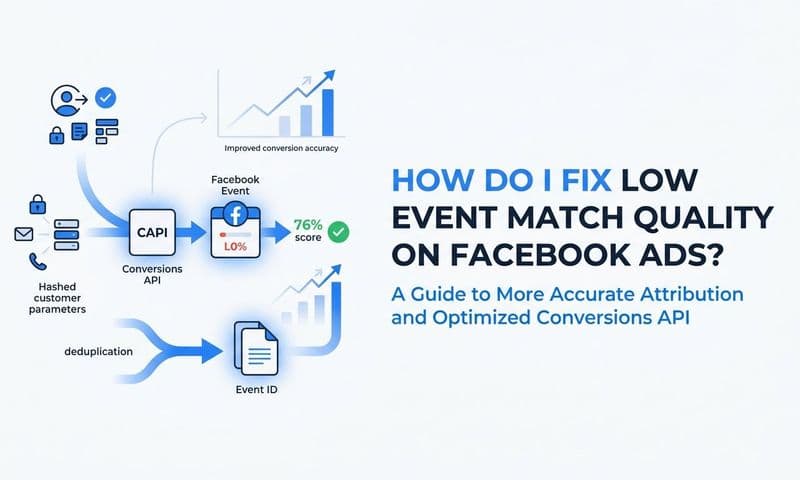
Meta's Conversions API (CAPI) allows you to send conversion events directly from your server to Meta, bypassing the browser entirely. This means events are captured regardless of ad blockers, browser settings, or device-level tracking restrictions. The result is a more complete and accurate signal that Advantage+ can use to train its targeting and bidding models.
Meta recommends running both pixel and CAPI in parallel to maximize event coverage. When implemented correctly with deduplication, this approach gives Advantage+ the richest possible conversion signal, which directly improves the algorithm's ability to find users who look like your best customers.
Implementation Steps
1. Set up Meta's Conversions API through your server or a supported integration partner like Cometly, which handles the server-side connection natively.
2. Configure your most important conversion events to fire via both browser pixel and server-side CAPI, using a shared event ID for deduplication.
3. Monitor your Event Match Quality score in Meta Events Manager. A higher score indicates better signal quality reaching Advantage+.
Pro Tips
Prioritize server-side tracking for your highest-value conversion events first, such as demo requests and trial signups. These are the events Advantage+ uses most heavily to calibrate targeting. If your pixel is already firing these events, adding CAPI on top typically improves match rates and reduces the signal loss that quietly degrades campaign performance over time.
2. Match Conversion Events to the Right Stage of the Funnel
The Challenge It Solves
B2B SaaS sales cycles are long. If you only send closed-won revenue events to Meta, Advantage+ might wait weeks or months before receiving a meaningful optimization signal. That delay forces the algorithm to operate with minimal feedback, which slows down learning and makes it harder for Advantage+ to identify patterns in your best-converting audiences.
The Strategy Explained
Sending mid-funnel conversion events gives Advantage+ more frequent signals aligned to your business outcomes. Events like MQL created, SQL qualified, trial started, and demo booked all indicate meaningful user intent. When these events flow back to Meta consistently, the algorithm has enough data to optimize targeting in near real time rather than waiting for a trickle of bottom-funnel events.
Think of it like coaching a player with immediate feedback after each practice drill rather than waiting until the end of the season to review their performance. More frequent, relevant signals produce faster, more accurate learning.
Implementation Steps
1. Map your CRM pipeline stages to Meta conversion events. MQL, SQL, demo booked, and trial started are natural candidates for B2B SaaS funnels.
2. Send these mid-funnel events via server-side CAPI so they are not subject to browser tracking limitations.
3. Review which events correlate most strongly with closed-won revenue in your CRM, and prioritize those for optimization in your Advantage+ campaign settings.
Pro Tips
Avoid optimizing Advantage+ campaigns toward events that are too easy to achieve, such as page views or email signups, if those events have a weak correlation with actual revenue. The goal is to find the mid-funnel event that is frequent enough to generate signal volume but specific enough to predict downstream value.
3. Feed Revenue-Level Data Back Into Meta for Value-Based Optimization
The Challenge It Solves
Not all conversions are equal. A trial signup from a five-person startup is worth far less than a demo booked by a 500-person enterprise. When Advantage+ treats all conversions as identical, it optimizes for volume rather than value, which can fill your pipeline with low-quality leads while ignoring the accounts that actually drive revenue.
The Strategy Explained
Meta supports value-based optimization, which allows you to pass an actual monetary value with each conversion event. When Advantage+ receives this data, it can optimize bids to prioritize users who are more likely to convert at higher values. This shifts the algorithm's objective from "find more conversions" to "find more revenue," which is a fundamentally different and more useful optimization target for B2B SaaS teams.
Platforms like Cometly integrate directly with Stripe and CRM data, allowing you to pass actual deal values or subscription revenue back to Meta as part of server-side conversion events. This closes the loop between ad spend and real business outcomes.
Implementation Steps
1. Integrate your CRM or billing platform (such as Stripe) with your attribution system to capture actual deal values at each conversion stage.
2. Pass the 'value' parameter with your conversion events when sending data to Meta via CAPI. Use estimated deal value for mid-funnel events if actual revenue is not yet known.
3. Enable value-based bidding in your Advantage+ campaign settings and monitor how the algorithm shifts spend toward higher-value conversion opportunities.
Pro Tips
If you do not yet have actual deal values to pass, start with estimated values based on your average deal size by segment or lead source. Even rough value signals are more useful to Advantage+ than treating every conversion as a binary equal event.
4. Use Multi-Touch Attribution to Identify Which Ads Actually Convert
The Challenge It Solves
Meta's native reporting defaults to last-click attribution, which tends to over-credit retargeting ads that appear just before conversion. This creates a distorted picture of which Advantage+ creatives and placements are genuinely driving pipeline. When you allocate budget based on last-click data, you often end up investing heavily in ads that close deals but did not actually start them.
The Strategy Explained
Multi-touch attribution distributes conversion credit across all the touchpoints a user engaged with before converting. This gives you a more accurate view of which Advantage+ ads introduced prospects to your brand, which ones nurtured them through consideration, and which ones drove the final action. With this data, budget allocation decisions are grounded in actual influence rather than proximity to conversion.
Cometly's multi-touch attribution models let you compare how different attribution approaches assign credit across your Advantage+ campaigns, so you can see the full picture of what is driving pipeline and revenue, not just what happened last.
Implementation Steps
1. Set up a multi-touch attribution platform that connects your ad data, CRM, and website events into a unified customer journey view.
2. Compare performance across attribution models, such as linear, time decay, and position-based, to understand how credit shifts across your Advantage+ creatives and placements.
3. Use multi-touch insights to inform which ad types and messages deserve more budget, then validate those decisions by tracking downstream pipeline and revenue outcomes.
Pro Tips
Use multi-touch attribution as a diagnostic tool alongside Meta's native reporting rather than as a replacement. The goal is to identify systematic biases in how Advantage+ performance is being measured, then correct for those biases when making budget decisions.
5. Enrich First-Party Data Before Sending It to Meta
The Challenge It Solves
When Meta receives a conversion event, it tries to match that event to a Facebook user profile using customer information parameters like email address, phone number, and name. If your conversion events arrive with incomplete or missing customer data, the match rate drops, fewer conversions get attributed, and Advantage+ builds its targeting models on a smaller, less accurate dataset.
The Strategy Explained
Data enrichment means adding as many customer information parameters as possible to your server-side events before they reach Meta. When a lead submits a demo request form, for example, you can capture their email, company name, and any other available identifiers, then pass all of that alongside the conversion event. Meta uses this information to match the event to a Facebook profile with higher confidence.
Higher match rates mean more conversions get attributed, Advantage+ has more data to learn from, and the custom and lookalike audiences Meta builds from your converters become more accurate and more useful for future targeting.
Implementation Steps
1. Audit your current conversion events to identify which customer information parameters you are already capturing and which are missing.
2. Update your form and CRM capture processes to collect email, phone, and any other identifiers your prospects are willing to share.
3. Pass all available customer information parameters with every server-side conversion event, hashing sensitive fields like email and phone as required by Meta's specifications.
Pro Tips
Focus on email address first, as it typically produces the highest match rates when sent to Meta. If you also have phone numbers in your CRM, include those as well. Each additional parameter you pass gives Meta more ways to confirm a match, which compounds the improvement in event quality over time.
6. Eliminate Duplicate Events That Confuse Meta's Algorithm
The Challenge It Solves
When you run both a browser pixel and a server-side CAPI integration simultaneously, the same conversion can fire twice: once from the browser and once from the server. Without deduplication, Meta counts both events as separate conversions. This inflates your reported conversion numbers, distorts your cost-per-result metrics, and causes Advantage+ to misallocate budget based on data that does not reflect reality.
The Strategy Explained
Meta's deduplication system uses a unique event ID parameter to identify when two events represent the same conversion. When the browser pixel and the CAPI integration both send the same event ID for a given conversion, Meta recognizes them as duplicates and counts only one. This allows you to run both tracking methods in parallel without inflating your conversion data.
Proper deduplication is not optional when you are running both pixel and CAPI. It is a prerequisite for accurate reporting and for giving Advantage+ a clean signal to optimize against.
Implementation Steps
1. Generate a unique event ID for each conversion event at the moment it occurs, typically a combination of user ID, event type, and timestamp.
2. Pass that same event ID in both your browser pixel event and your server-side CAPI event for the same conversion.
3. Verify deduplication is working correctly in Meta Events Manager by checking that your browser and server event counts are not simply adding together.
Pro Tips
Test deduplication in a staging environment before pushing to production. A common mistake is generating different event IDs on the browser and server sides, which defeats the deduplication logic entirely. If your attribution platform handles CAPI integration, confirm with your provider that event IDs are being passed consistently across both sources.
7. Track the Full Customer Journey to Validate Advantage+ Performance
The Challenge It Solves
Meta's Ads Manager shows you conversions, but it cannot tell you whether those conversions became paying customers. For B2B SaaS teams, this is a critical blind spot. Advantage+ might be generating a high volume of demo requests or trial signups that look great in the dashboard but rarely close into revenue. Without connecting ad data to CRM pipeline and closed-won outcomes, you have no way to verify whether the campaign is actually working.
The Strategy Explained
Full-funnel attribution connects your ad platform data to your CRM pipeline and revenue data, so you can trace every Advantage+ conversion through to its ultimate business outcome. This means you can see not just how many leads Advantage+ generated, but how many of those leads became qualified opportunities, how many closed, and what revenue they generated.
Cometly is built specifically for this workflow. It captures every touchpoint from first ad click through to closed-won revenue, integrates with CRM platforms and Stripe, and surfaces the connection between ad spend and actual pipeline performance. B2B SaaS marketing teams get a single source of truth that makes Advantage+ performance visible at the revenue level, not just the conversion level.
Implementation Steps
1. Connect your ad platform data to your CRM so that leads generated by Advantage+ are tagged with their originating campaign, ad set, and creative from the moment they enter your pipeline.
2. Track those leads through each pipeline stage, noting conversion rates from lead to MQL, MQL to SQL, SQL to closed-won.
3. Compare the revenue generated by Advantage+ leads against the ad spend attributed to those campaigns to calculate true return on ad spend at the revenue level.
Pro Tips
Set up this full-funnel view before scaling your Advantage+ budget. It is far easier to validate performance at a lower spend level and then scale confidently than to increase budget based on surface-level conversion metrics and discover later that the leads were not converting into customers.
Putting It All Together
The fastest path to better Advantage+ performance is not a new creative or a higher budget. It is cleaner, richer attribution data flowing back into Meta's system. Each strategy in this list builds on the previous one: server-side events close the signal gap, funnel-stage events increase signal frequency, revenue values shift optimization toward high-LTV customers, and full-funnel tracking validates whether any of it is working.
Here is a practical implementation sequence to follow:
1. Start with server-side conversion tracking via the Conversions API to establish a reliable, complete data foundation.
2. Add event deduplication immediately to prevent inflated reporting from undermining your optimization signal.
3. Layer in mid-funnel events so Advantage+ receives frequent, business-relevant signals rather than waiting for bottom-funnel conversions.
4. Enrich your first-party data with customer information parameters to improve match rates and audience quality.
5. Pass revenue values with conversion events to enable value-based optimization and shift Advantage+ toward high-LTV targeting.
6. Connect ad data to CRM pipeline to validate performance at the revenue level, not just the conversion level.
Cometly is built specifically for this workflow. It captures every touchpoint from first ad click to closed-won revenue, enriches conversion events with CRM and Stripe data, and sends those signals back to Meta via server-side integration. B2B SaaS marketing teams using Cometly get a single source of truth across their ad platforms, CRM, and website, so Advantage+ always has the data it needs to optimize toward real revenue.
If your Advantage+ campaigns are underperforming, the attribution layer is the most likely culprit. Start there. Get your free demo today and see exactly which touchpoints are driving your pipeline and revenue.