
You've got sales reps sending hundreds of LinkedIn messages every week. Conversations are happening. Demos are getting booked. Prospects are moving through the pipeline. But when the marketing team asks which LinkedIn outreach sequences are actually driving closed-won revenue, the honest answer is: nobody really knows.
This is one of the most common frustrations in B2B SaaS marketing. LinkedIn is widely recognized as a primary channel for pipeline generation, yet the attribution picture is murky at best. Unlike paid LinkedIn ads, where UTM parameters and the LinkedIn Insight Tag create a traceable data trail, direct messages and InMail sequences operate in a tracking blind spot. The conversation happens on LinkedIn. The prospect visits your website days later. The deal closes weeks after that. And the marketing team credits the retargeting ad because that was the last click they could see.
LinkedIn outreach attribution is not a nice-to-have feature for advanced analytics teams. It is a strategic necessity for any B2B SaaS company trying to scale what works and stop investing in what does not. When you cannot connect outreach activity to pipeline value and revenue, you end up making budget and strategy decisions based on incomplete information. The result is misallocated spend, undervalued channels, and outreach programs that run on gut feel rather than data.
This article is a practical guide to solving that problem. We will walk through why LinkedIn outreach creates a unique attribution challenge, how to build the tracking infrastructure to address it, which attribution models make the most sense for B2B buying journeys, and how a modern attribution platform can connect every touchpoint from the first LinkedIn message to closed-won revenue.
Why LinkedIn Outreach Creates an Attribution Blind Spot
To understand the attribution problem, it helps to understand what makes LinkedIn outreach fundamentally different from other marketing channels. When someone clicks a paid LinkedIn ad, the LinkedIn Insight Tag fires, UTM parameters are captured, and the visit is recorded in your analytics platform. The tracking infrastructure works automatically because it was designed to work that way.
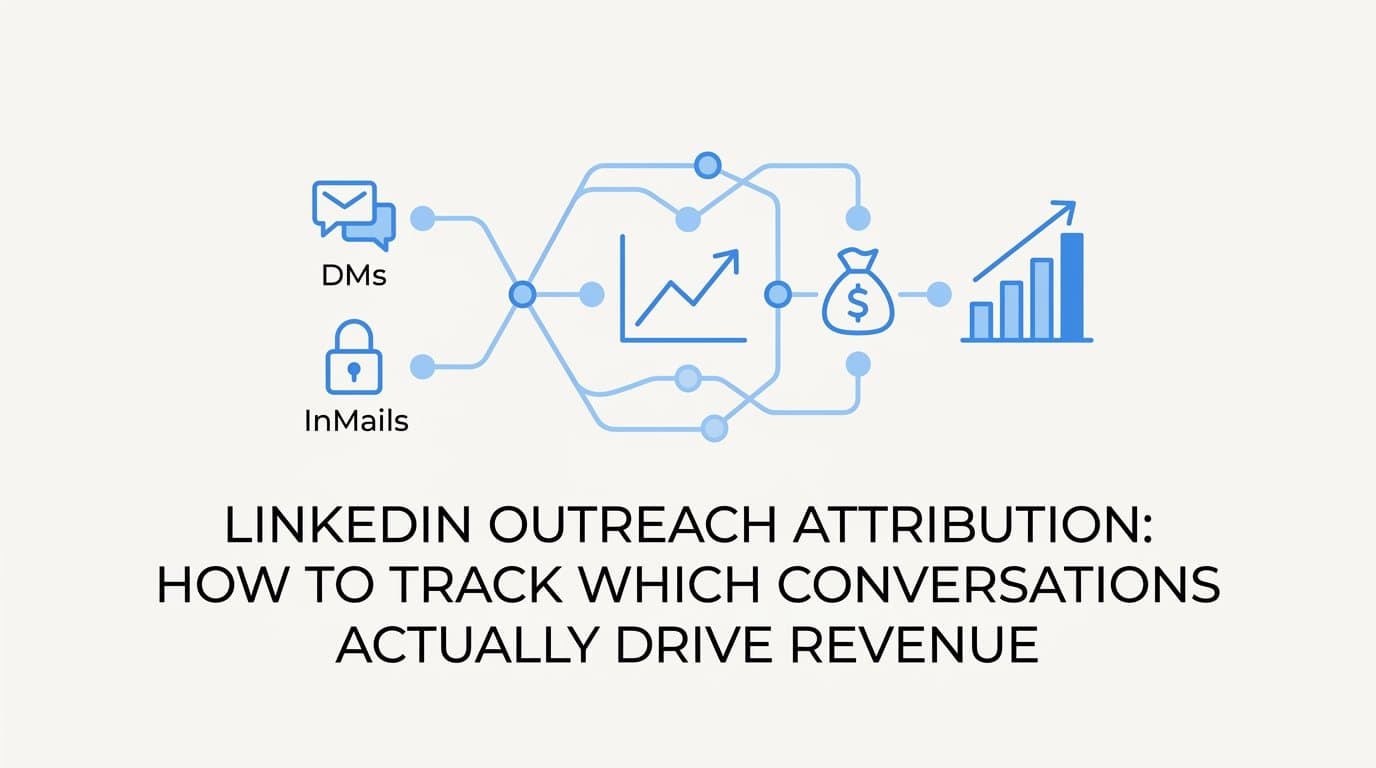
LinkedIn outreach operates by entirely different rules. When a sales rep sends a direct message or InMail, there is no pixel firing on message opens, no automatic UTM tagging on links unless the sender manually includes tracked URLs, and no native sync between LinkedIn conversations and your CRM. The outreach happens, the conversation unfolds, and the data trail goes cold the moment the prospect closes the LinkedIn app.
This creates a structural gap in your attribution data. Consider a common B2B buying journey: a prospect receives a LinkedIn connection request from a sales rep, accepts it, and reads the follow-up message. They are intrigued but not ready to act. Three days later, they search your brand name on Google and visit your website. A week after that, they click a retargeting ad and request a demo. Last-click attribution gives full credit to the retargeting ad. First-click attribution credits the branded search. The LinkedIn outreach that initiated the entire journey receives no credit at all because it left no trackable footprint.
Most teams try to patch this gap with manual self-reporting. They ask prospects on demo calls how they heard about the company, or they include "How did you find us?" fields on forms. This approach sounds reasonable but produces unreliable data. Prospects often cannot accurately recall the sequence of touchpoints that led them to a conversation. They default to the most memorable interaction, not necessarily the first or most influential one. The result is attribution data that systematically undervalues top-of-funnel touchpoints, including LinkedIn outreach.
The consequences are real. Teams that cannot see the contribution of LinkedIn outreach to pipeline tend to underinvest in it, over-attribute revenue to paid channels, and make sequencing decisions based on activity metrics like reply rates rather than revenue outcomes. The outreach program keeps running, but it is not being optimized against the thing that actually matters: closed-won deals.
Solving this requires more than a single fix. It requires a connected tracking infrastructure that captures LinkedIn touchpoints at multiple points in the buyer journey and links them back to CRM data and revenue outcomes.
The Building Blocks of LinkedIn Outreach Attribution
Building a reliable LinkedIn outreach attribution system starts with accepting that no single tool will solve the problem automatically. The solution is a combination of disciplined tagging practices, CRM hygiene, and first-party data capture working together to create a connected data trail.
UTM Parameters on Every Link: Any URL shared in a LinkedIn message, connection request, or InMail should carry UTM parameters. This is the most immediate and actionable step most teams can take. When a prospect clicks a link in an outreach message and lands on your website, the UTM parameters tell your analytics platform exactly where that visit came from. Define a consistent naming convention: source as "linkedin," medium as "outreach," and campaign names that map to specific sequences or personas. This data feeds directly into your attribution reports and makes LinkedIn-driven website visits visible for the first time.
CRM Integration as the Connective Tissue: UTM parameters capture what happens after a prospect clicks a link, but they do not capture the conversation itself. That is where CRM integration becomes critical. When a LinkedIn conversation leads to a booked meeting, that touchpoint needs to be logged in the CRM as an activity tied to the contact record. This can be done manually by sales reps, through CRM workflow automation triggered by meeting bookings, or via integrations between your sales engagement tools and your CRM. The key is consistency. Every LinkedIn-sourced meeting that goes unlogged in the CRM is a gap in your attribution data.
First-Party Data Capture at Conversion Points: Demo request forms, landing pages, and sign-up flows are moments where you can capture or infer the LinkedIn source. A hidden form field that pre-populates with UTM data from the URL allows you to pass the LinkedIn source directly into your CRM record at the moment of conversion. Combining this with logged CRM activities creates a multi-touchpoint picture rather than a single data point. You can see that a prospect was contacted via LinkedIn outreach, visited the website via a UTM-tagged link, and then converted on a landing page, all connected to the same contact record.
Consistent Naming Conventions Across the Stack: The attribution system only works if the data is clean and consistent. Campaign names in UTM parameters should match activity labels in the CRM, which should match segment names in your analytics platform. When naming conventions are inconsistent, data gets siloed and the cross-channel picture breaks down. Establishing a shared taxonomy across marketing and sales is foundational work that pays dividends every time you pull an attribution report.
These building blocks do not require a massive technology overhaul. They require process discipline and a shared commitment between marketing and sales to treat attribution data as a joint asset rather than a departmental metric.
Attribution Models That Make Sense for LinkedIn Outreach
Once you have the tracking infrastructure in place, the next question is how to assign credit across the touchpoints you are capturing. Attribution models are frameworks for distributing revenue credit, and the right model depends on what question you are trying to answer.
First-Touch Attribution: This model gives full credit to the first touchpoint that brought a prospect into the funnel. For LinkedIn outreach, first-touch attribution is valuable when you want to understand which sequences or personas are generating net-new pipeline. If your outreach is consistently the first point of contact for prospects who eventually close, first-touch attribution will surface that contribution clearly. The limitation is that it ignores everything that happened between the initial outreach and the closed deal, which can make other channels look less valuable than they are.
Multi-Touch Attribution: This model distributes credit across all touchpoints in the buyer journey. A prospect who received a LinkedIn message, visited the website, engaged with a retargeting ad, and then booked a demo would have all four touchpoints receive a share of the credit. Multi-touch attribution gives a more accurate picture of how LinkedIn outreach works alongside paid channels and organic traffic. For B2B SaaS teams with complex, multi-channel buying journeys, this model reflects reality more closely than any single-touch approach.
Linear Attribution: A specific type of multi-touch model that distributes credit equally across all touchpoints. Linear attribution is useful when you want to understand the full ecosystem of touchpoints that contribute to a deal without over-weighting any single interaction. It is a good starting point for teams that are new to multi-touch attribution and want a balanced view before moving to more sophisticated models.
Time-Decay Attribution: This model gives more credit to touchpoints that occurred closer to the conversion event. In a B2B SaaS context with long sales cycles, time-decay attribution can help you understand the role LinkedIn outreach plays in late-stage nurture versus top-of-funnel awareness. If your outreach is primarily generating initial conversations but other channels are closing the deal, time-decay models will reveal that pattern clearly. This insight can inform how you allocate resources across the funnel.
The practical recommendation for most B2B SaaS teams is to start with multi-touch attribution as the primary model and use first-touch as a secondary lens for evaluating outreach program effectiveness. Running both models in parallel allows you to answer different questions: which outreach sequences open the door, and which touchpoints across the full journey contribute to revenue.
No attribution model is perfect. Every model makes trade-offs. The goal is not to find the one true model but to use attribution data as a directional signal that informs better decisions over time.
Connecting LinkedIn Touchpoints to Pipeline and Revenue
Tracking clicks and logging CRM activities are necessary steps, but they are not the end goal. The real purpose of LinkedIn outreach attribution is to connect outreach activity to pipeline value and closed-won revenue. This is where many teams stop short, treating attribution as a marketing analytics exercise rather than a revenue intelligence function.
Connecting outreach to revenue requires syncing CRM opportunity data back to the original attribution source. This means that when a deal closes, the deal stage, deal value, close date, and associated contact records should all be traceable back to the LinkedIn outreach touchpoint that initiated the relationship. In practice, this requires your CRM to be the central hub where outreach activities, opportunity data, and attribution sources are all connected to the same contact and account records.
B2B SaaS sales cycles add another layer of complexity. Deals often take weeks or months to close, which means the time window between the initial LinkedIn outreach and the closed deal can be substantial. Attribution systems that only look back 30 days will systematically miss the contribution of outreach that happened earlier in the journey. Your attribution lookback window needs to match the reality of your sales cycle. For most B2B SaaS companies, a 90-day or longer lookback window is appropriate.
Segmenting attribution data by outreach type adds another dimension of insight. Not all LinkedIn outreach is the same. Cold connection requests, warm follow-ups to engaged prospects, InMail campaigns to targeted lists, and follow-ups after events or content interactions all have different conversion profiles. When you segment attribution data by outreach type, you can identify which patterns generate the highest-value pipeline, not just the most meetings. A sequence that books 50 meetings but generates low pipeline value is less valuable than a sequence that books 20 meetings but consistently generates high-value opportunities.
This kind of segmented revenue attribution data also informs paid channel strategy. If LinkedIn outreach is consistently the first touchpoint for your highest-value deals, that insight should influence how you allocate budget for LinkedIn paid ads, retargeting, and content distribution. Attribution data should flow in both directions: from outreach into revenue insights, and from revenue insights back into outreach and channel strategy.
The teams that do this well treat LinkedIn outreach attribution as an ongoing intelligence function rather than a one-time setup task. They review attribution data regularly, look for patterns in which sequences and personas generate pipeline that actually closes, and use those insights to continuously refine both outreach and paid channel investment.
How a Modern Attribution Platform Closes the Gap
Building LinkedIn outreach attribution manually is possible, but it is fragile. It depends on consistent human behavior, clean CRM data entry, and the ability to join data across multiple systems without errors. A modern attribution platform automates much of this work and creates a connected data environment where LinkedIn touchpoints, paid channel data, and CRM events all live in a single source of truth.
Cometly is built specifically for B2B SaaS teams that need this kind of connected attribution. It integrates with your ad platforms, CRM, and website to track the entire customer journey in real time. When a LinkedIn outreach touchpoint is logged in the CRM and a prospect later converts via a paid ad or organic visit, Cometly captures the full journey so no touchpoint is invisible. The result is a complete picture of how outreach, paid channels, and organic traffic work together to drive pipeline and revenue.
Server-side tracking and first-party data enrichment are particularly important for LinkedIn-driven traffic. Browser-based tracking is increasingly unreliable due to ad blockers, browser privacy settings, and the ongoing deprecation of third-party cookies. LinkedIn outreach traffic often does not carry reliable tracking signals, especially when prospects navigate to your site through paths that do not preserve UTM parameters. Server-side tracking captures conversion events at the server level, bypassing the limitations of browser-based pixels and ensuring that LinkedIn-sourced touchpoints are attributed correctly even when the browser environment works against you.
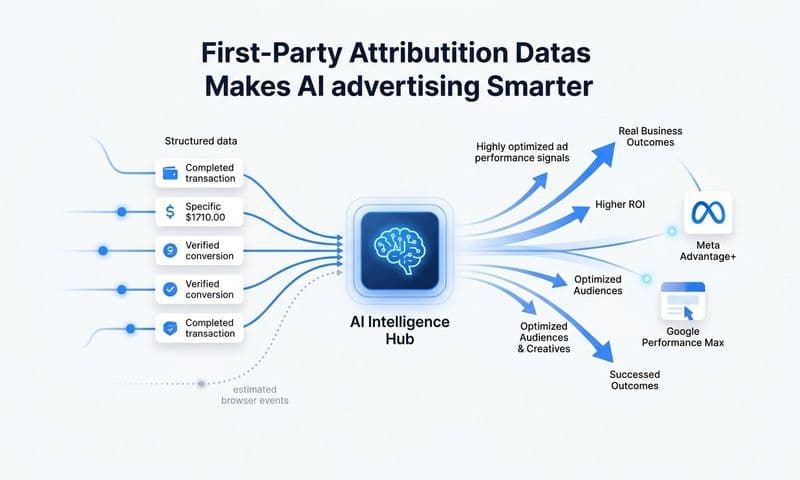
Cometly's Conversion API integrations send enriched, conversion-ready events back to ad platforms like Meta and Google. This improves the quality of the signal those platforms use for targeting and optimization, which means your paid channels benefit from the first-party data your outreach program is generating. Attribution becomes a two-way value exchange: better data in leads to better ad performance out.
AI-powered insights take attribution from reporting to action. Rather than requiring growth teams to manually analyze attribution data and identify patterns, Cometly surfaces which outreach-driven journeys are converting at the highest rates. This allows teams to scale the sequences and personas that are actually driving revenue rather than optimizing based on activity metrics or incomplete attribution data. The platform connects every touchpoint to conversions so you can see which sources actually convert, and then uses AI to surface recommendations that help you act on those insights with confidence.
The combination of server-side tracking, CRM integration, multi-touch attribution, and AI-powered recommendations creates an attribution system that is both more accurate and more actionable than anything built manually from disconnected tools.
Putting LinkedIn Attribution Into Practice
Understanding the methodology is one thing. Implementing it consistently is another. Here is how to translate the concepts above into a practical attribution workflow that your team can actually maintain.
Establish a UTM Naming Convention First: Before sending another outreach message, define your UTM structure. Every link shared in LinkedIn outreach should follow a consistent format. Use source as "linkedin," medium as "outreach," and campaign names that map to specific sequences, personas, or outreach programs. Document the convention in a shared resource that both marketing and sales can reference. Clean, consistent UTM data is the foundation everything else is built on.
Build CRM Workflows That Automate Tagging: Manual data entry is the enemy of attribution accuracy. Build CRM automation that tags contacts as LinkedIn-sourced when a meeting is booked from an outreach sequence. If your sales engagement tool integrates with your CRM, configure it to log LinkedIn activities automatically. The goal is to ensure that the LinkedIn touchpoint is recorded in the CRM even when the prospect does not click a tracked link, because conversations matter even when they do not generate a click.
Set a Regular Attribution Review Cadence: Attribution data is only valuable if it informs decisions. Schedule a regular review, whether weekly or monthly, where you analyze attribution data at the campaign and sequence level. Look for patterns in which outreach approaches generate pipeline that actually closes versus meetings that stall at early stages. Use that data to inform outreach strategy, persona prioritization, and paid channel investment.
Align Marketing and Sales on Attribution as a Shared Asset: LinkedIn outreach attribution breaks down when marketing and sales treat it as separate concerns. Marketing needs the CRM data that sales generates. Sales needs the UTM and conversion data that marketing captures. Building a shared attribution dashboard that both teams review together creates alignment and ensures that the insights from attribution data flow into both outreach strategy and channel investment decisions.
Starting with these four steps will give most B2B SaaS teams a significantly clearer picture of how LinkedIn outreach contributes to pipeline and revenue than they have today.
The Bottom Line on LinkedIn Attribution
LinkedIn outreach attribution is a solvable problem. It requires the right combination of tracking infrastructure, CRM discipline, and a connected attribution platform, but none of these pieces are out of reach for a focused B2B SaaS team.
The teams that win are the ones that stop guessing and start measuring every touchpoint in the buyer journey. They use UTM parameters consistently, log LinkedIn activities in the CRM without exception, apply attribution models that reflect the complexity of B2B buying journeys, and connect outreach data to revenue outcomes rather than stopping at meetings booked.
When you can see which LinkedIn sequences generate the highest-value pipeline, which personas convert at the highest rates, and how outreach interacts with paid channels across the full buyer journey, you stop running outreach programs on gut feel and start scaling what actually works.
Cometly is built to give B2B SaaS teams exactly that visibility. From capturing every touchpoint to connecting ad spend and outreach activity to pipeline and closed-won revenue, it provides the single source of truth that modern growth teams need to make confident, data-driven decisions.
Ready to stop guessing and start seeing the full picture? Get your free demo today and start capturing every touchpoint to maximize your conversions.