Picture this: your marketing team walks into the quarterly business review confident. They've generated a record number of leads, CPL is down, and the pipeline looks healthy on paper. Then sales presents their numbers. Close rates are flat, deal quality is inconsistent, and the revenue targets are still out of reach. Both teams are looking at the same quarter through completely different lenses, and leadership is left trying to figure out who's right.
This is one of the most common and costly tensions in B2B SaaS organizations. And here's the thing: it's not a communication problem. It's a data problem.
Sales and marketing data alignment is the practice of unifying how both teams define, collect, and interpret performance data across the entire customer journey. It means that when marketing says a lead is qualified, sales understands exactly what that means. It means that when a campaign is credited with driving pipeline, that credit is based on a shared, traceable data trail rather than a best guess. In a world where revenue accountability is increasingly shared across both functions, this kind of alignment isn't a nice-to-have. It's the foundation everything else is built on.
The Hidden Cost of Disconnected Revenue Data
When sales and marketing operate from separate data sources, the symptoms are predictable. Marketing reports that leads are coming in qualified. Sales says most of them aren't workable. Both teams believe they're right, and neither can prove it because there's no shared data source to trace the discrepancy back to.
This is more than a frustrating conversation. It's a structural failure that compounds over time. When marketing can't see what happens to a lead after it's handed off to sales, they keep optimizing for the wrong signals. They scale campaigns that generate volume but not revenue. They cut channels that look expensive on a cost-per-lead basis but actually close at a much higher rate. Without visibility into the pipeline, they're flying blind.
Sales has the opposite problem. They can see which leads convert and which ones waste their time, but they have no visibility into what drove those leads in the first place. Was it a specific ad campaign? A particular keyword? A retargeting sequence? Without that context, sales can't give marketing useful feedback, and the cycle of misalignment continues.
This is what attribution blind spots look like in practice. Marketing optimizes for the top of the funnel. Sales optimizes for the bottom. And the middle, where qualification, nurture, and intent signals live, falls into a gap that neither team owns.
The downstream effect on budget decisions is significant. When teams optimize based on incomplete or contradictory data, ad spend gets allocated to channels that look good in isolation but underperform in the context of actual revenue. Campaigns get killed prematurely because they appear costly at the lead level, even though they're generating the highest-quality pipeline. And campaigns that look efficient on a surface-level dashboard keep getting funded even though they produce leads that never close.
The cost here isn't just wasted budget. It's the compounding opportunity cost of making strategic decisions with a fractured view of reality. The longer misalignment persists, the harder it becomes to course-correct, because the data gaps widen and the organizational habits around those gaps become entrenched.
Defining What True Alignment Looks Like
A lot of teams think alignment means sharing a dashboard or holding a weekly sync. Those things help, but they don't solve the underlying problem. Real sales and marketing data alignment is a shared data infrastructure, not just shared goals.
It starts with definitions. Both teams need to agree on what counts as a lead, what qualifies as an MQL, when a lead becomes an SQL, and what constitutes a conversion event. These definitions need to be documented, agreed upon, and then encoded directly into your tracking setup and CRM configuration. If the definition lives in a slide deck but not in your data systems, it doesn't actually govern how data is collected or reported.
This sounds basic, but it's where most organizations fall apart. Marketing may define an MQL as anyone who fills out a demo request form. Sales may define a workable lead as someone who meets specific firmographic criteria and has a budget in place. If those definitions aren't reconciled and built into the data infrastructure, every report will reflect a different reality.
Beyond definitions, alignment requires a unified customer journey view. Every touchpoint, from the first ad impression through to a closed-won deal in the CRM, needs to be tracked in one connected system. This is what allows both teams to see the same story rather than each team seeing only their chapter.
It's also worth distinguishing between two levels of alignment. Tactical alignment is when both teams use shared dashboards and agree on which metrics to report. That's useful. But structural alignment goes deeper. It's when your ad platforms, CRM, website tracking, and revenue data are all connected and flowing into a single source of truth. Tactical alignment without structural alignment is fragile. You can agree on what to measure, but if the underlying data is inconsistent or disconnected, the numbers will still diverge.
Structural alignment is what makes it possible for marketing to say "this campaign drove twelve opportunities" and for sales to confirm "yes, and six of them closed." That conversation can only happen when the data systems are actually connected end to end.
The Four Data Layers That Must Connect
A useful way to think about sales and marketing data alignment is through the lens of four distinct data layers. Alignment breaks down when any one of these layers is missing or disconnected from the others.
Layer One: Ad Platform Data. This is where the customer journey begins for most B2B SaaS companies. Impressions, clicks, spend, and campaign-level performance data from channels like Google Ads and Meta. This layer tells you how much you're spending and what's generating initial engagement. On its own, it's useful but limited.
Layer Two: Website and Conversion Event Data. This layer captures what happens after someone clicks an ad. Which pages do they visit? Do they fill out a form? Do they start a trial? This data is typically captured through pixel tracking or, increasingly, server-side tracking. The accuracy of this layer has a direct impact on how well ad platform algorithms can optimize, because conversion signals feed back into the platforms and inform targeting decisions.
Layer Three: CRM Pipeline Data. This is where sales lives. Lead source fields, deal stages, opportunity values, and close rates all live in the CRM. This layer is where lead quality becomes visible. A lead that looked promising at the conversion event stage may stall at the discovery call or fail to progress past the proposal stage. Without this layer connected to the layers above, marketing has no way to evaluate quality beyond the initial conversion.
Layer Four: Revenue and Billing Data. This is the layer that most teams never connect, and it's the most valuable one. Actual closed-won revenue, pulled from billing or payment systems like Stripe, is the ultimate measure of whether a campaign worked. Connecting this data to your marketing attribution infrastructure means you can evaluate campaigns not on leads or even pipeline, but on actual revenue generated.
When all four layers are connected, both teams can trace any deal back to its originating campaign and any campaign forward to its revenue contribution. When even one layer is missing, the picture becomes incomplete and the decisions built on that picture become unreliable.
How Attribution Models Bridge the Gap Between Teams
Attribution models are the mechanism by which marketing activity gets connected to revenue outcomes. They're also one of the most common sources of disagreement between teams, because different models tell very different stories about which channels and campaigns deserve credit.
A first-touch model gives all the credit to the first interaction a prospect had with your brand. A last-click model gives all the credit to the final touchpoint before conversion. A linear model distributes credit evenly across every touchpoint in the journey. A data-driven model uses historical conversion data to assign credit based on which touchpoints actually influenced the outcome.
Each model is defensible on its own terms. The problem is when marketing and sales are implicitly using different models to evaluate the same results. Marketing might be reporting based on first-touch attribution, which makes their awareness campaigns look highly effective. Sales might be evaluating leads based on what they see in the CRM at the point of handoff, which reflects a very different slice of the journey. Neither team is wrong, but they're not having the same conversation.
This is why agreeing on an attribution model before reporting is a prerequisite for alignment, not an afterthought. The model you choose shapes every conclusion you draw about performance. If both teams aren't working from the same model, the numbers will never reconcile.
Multi-touch attribution is particularly valuable for alignment because it gives both sales and marketing a shared, complete view of the customer journey. Rather than each team seeing only their slice of the funnel, multi-touch attribution surfaces every interaction that contributed to a conversion and assigns credit across the full path. This creates a common language for discussing what's working and what isn't.
When both teams can look at the same multi-touch attribution report and see which campaigns drove early awareness, which touchpoints accelerated pipeline progression, and which interactions correlated with closed-won revenue, the conversation shifts from "whose numbers are right" to "what do we do next." That's the real value of attribution as a bridge between teams.
Building a Shared Data Foundation: Practical Steps
Getting sales and marketing data alignment right requires deliberate action at both the definitional and technical levels. Here's how to approach it in practice.
Start with documented definitions. Before you touch a single tool or integration, get both teams in a room and align on what key terms actually mean. What is a lead? What makes it qualified? What is a conversion event? When does a lead become an opportunity? Document these definitions in writing, then build them into your CRM field configurations, your tracking setup, and your reporting logic. Definitions that only exist in conversations don't govern data.
Implement server-side conversion tracking. Browser-based tracking has become increasingly unreliable due to ad blockers, cookie restrictions, and privacy changes at the operating system level. Server-side tracking captures conversion events directly from your server rather than relying on a browser pixel, which means you get more complete and accurate data. Pair this with Conversion API integrations for platforms like Meta and Google, and you're sending enriched, first-party conversion signals back to the ad platforms. This improves attribution accuracy and helps the platforms optimize more effectively because their algorithms are working with better data.
Connect your ad data to your CRM. Every lead that enters your CRM should carry with it the campaign, channel, and ad that drove it. This requires a clean integration between your ad platforms and your CRM, with consistent UTM parameter tracking and proper lead source field population. When this connection is in place, sales can see where a lead came from at the point of handoff, and marketing can see how leads from different sources progress through the pipeline.
Integrate revenue data into your attribution view. Connect your billing or payment system to your attribution infrastructure so that closed-won revenue flows back to the campaigns that drove it. This is the step that transforms attribution from a marketing reporting exercise into a shared revenue intelligence tool. When both teams can see which campaigns contributed to actual closed revenue, the conversation about budget allocation becomes grounded in evidence rather than assumption.
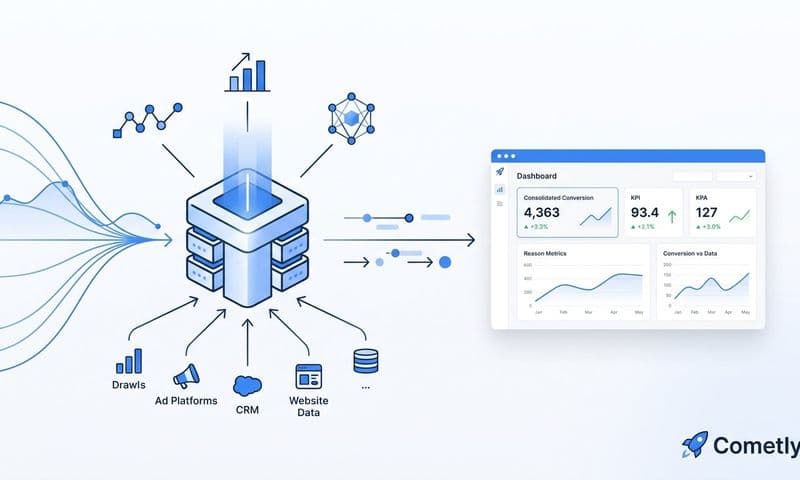
Platforms like Cometly are built specifically to connect these layers. By integrating ad platform data, CRM pipeline data, and revenue signals from tools like Stripe into a single attribution view, Cometly gives both sales and marketing teams the shared data infrastructure that alignment requires. Every touchpoint is tracked, every lead is traceable, and every campaign can be evaluated on its contribution to pipeline and closed revenue.
Turning Aligned Data Into Decisions That Scale Revenue
Once the data infrastructure is in place, the nature of the conversation between sales and marketing changes fundamentally. Instead of each team defending their own numbers, both teams can look at the same data and ask the same question: what's actually working?
Marketing can show which campaigns generated pipeline, broken down by channel, ad creative, and audience segment. Sales can confirm which sources produced the best close rates and the highest average contract values. Together, those two perspectives create a complete picture of campaign effectiveness that neither team could see on their own.
This is where AI-driven insights become particularly powerful. AI tools, whether they're built into your ad platforms or layered on top through an analytics platform, perform significantly better when the underlying data is clean, complete, and connected. When your attribution data is fragmented or inconsistent, AI recommendations are built on a shaky foundation. When the data is aligned, AI can identify patterns that aren't visible to the human eye: which ad combinations correlate with faster sales cycles, which audience segments have the highest lifetime value, which campaign sequences produce the most qualified pipeline.
Cometly's AI-driven recommendations work exactly this way. By analyzing enriched, connected data across every touchpoint, the platform surfaces insights about which ads and channels are performing and which ones should be scaled. When both teams trust the underlying data, those recommendations carry real weight and translate into faster, more confident budget decisions.
The long-term effect of aligned data is a compounding feedback loop. Better data feeds ad platform algorithms, which improves targeting and reduces wasted spend. Improved targeting generates higher-quality leads, which improves close rates and shortens sales cycles. Better close rates validate the campaigns that drove them, which informs smarter budget allocation in the next cycle. Each iteration builds on the last, and the ROI compounds over time.
This is the real strategic value of sales and marketing data alignment. It's not just about cleaner reports or fewer arguments in QBRs. It's about building a system where every decision is informed by a complete view of reality, and where the feedback between marketing activity and revenue outcomes is tight enough to actually learn from.
The Bottom Line on Alignment
Sales and marketing data alignment is not a soft organizational challenge that gets solved with better communication or more frequent syncs. It's a technical and strategic challenge that requires connected systems, agreed definitions, and a shared view of the customer journey from the first ad click to closed revenue.
When that alignment is in place, both teams can move faster and with more confidence. Marketing knows which campaigns to scale and which to cut. Sales knows which sources produce the best leads and can give marketing feedback that actually improves quality. Leadership has a single source of truth to evaluate performance and make resource decisions.
Getting there requires work at every layer: defining terms, implementing server-side tracking, connecting your CRM to your ad data, and integrating revenue signals into your attribution view. But the payoff is a data infrastructure that makes every decision smarter and every campaign more effective over time.
Cometly is built to provide exactly this infrastructure. By connecting your ad platforms, CRM, and revenue data into one unified attribution view, it gives sales and marketing teams the shared foundation they need to align around what's actually driving growth. If you're ready to stop reconciling conflicting reports and start making decisions from a single source of truth, Get your free demo and see how Cometly works for your team.