You open your Monday morning dashboard and immediately feel the tension. Your Google Ads account is reporting a strong week. Your Facebook Ads Manager is claiming even better results. But your CRM tells a completely different story, and your sales team is questioning whether marketing is driving any pipeline at all. Three platforms, three versions of reality, and a team that cannot agree on what is actually working.
This is not a reporting inconvenience. For B2B SaaS marketing teams, it is a strategic liability. When your sales cycles stretch across weeks or months, when prospects touch five different channels before converting, and when leadership is asking you to justify every dollar of ad spend, conflicting data is not something you can afford to shrug off.
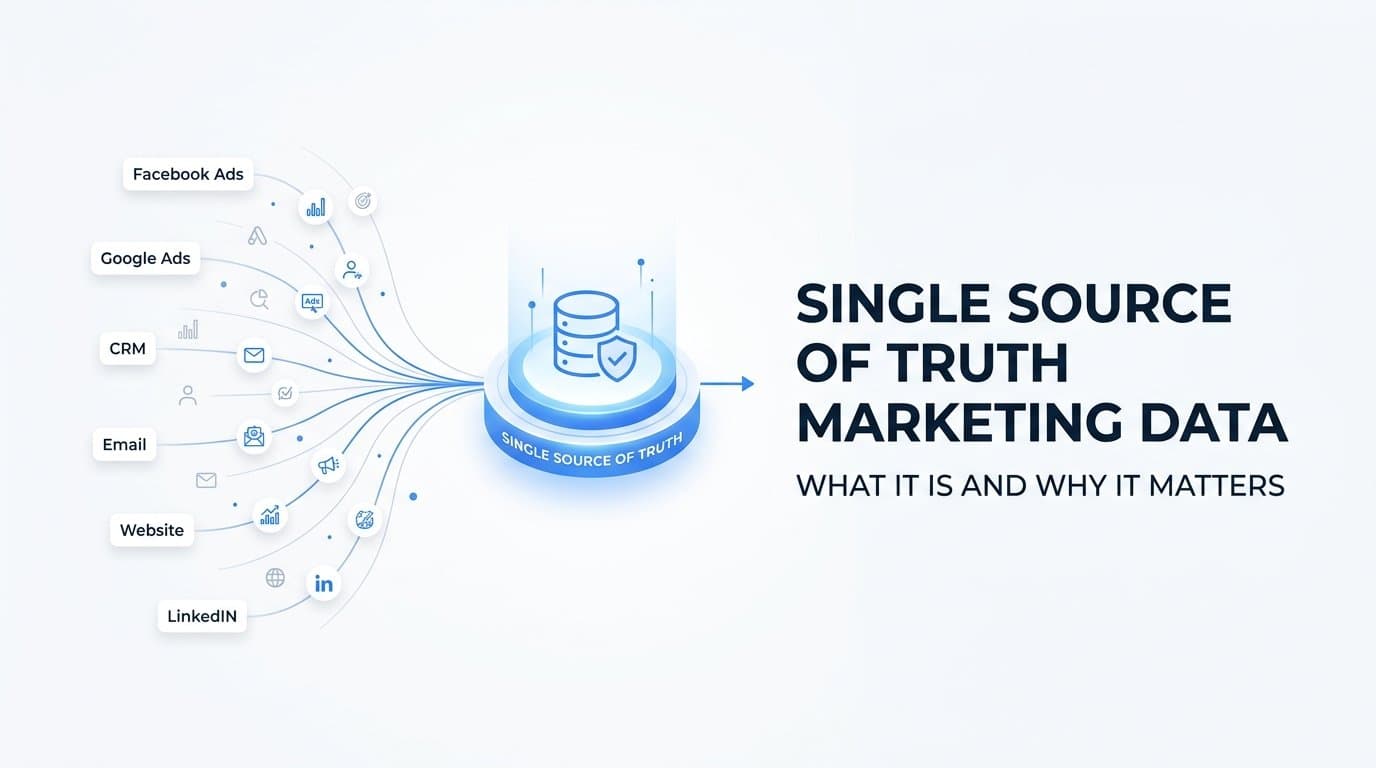
The solution is a single source of truth for marketing data: one authoritative system where every channel, touchpoint, and conversion event flows together so your entire team is working from the same numbers. This article breaks down what that actually means, why it is harder to achieve than it sounds, and how modern attribution platforms make it practical for B2B SaaS teams who need to connect ad spend directly to closed revenue.
Why Marketing Teams Are Drowning in Conflicting Data
Data fragmentation does not happen because teams are careless. It happens because the modern marketing stack was never designed to speak a common language. As teams grow, they adopt more tools: a CRM for pipeline management, Google Ads for search campaigns, Meta for social, LinkedIn for B2B targeting, a website analytics platform, and a collection of spreadsheets stitching it all together. Each of these tools tracks events independently and attributes credit using its own internal logic.
Here is where the structural problem becomes clear. Meta's default attribution window is seven days for clicks and one day for view-through conversions. Google Ads defaults to last-click attribution. LinkedIn uses its own model with its own windows. When the same prospect sees your LinkedIn ad on Tuesday, clicks your Google search ad on Thursday, and converts on Friday, all three platforms may claim full credit for that conversion. Add up the reported conversions from each platform and the total will often exceed your actual number of leads by a wide margin.
For B2B SaaS teams specifically, this creates compounding problems. Marketing leaders present pipeline numbers that do not match what sales is seeing in the CRM. Budget decisions get made based on whichever platform is telling the most optimistic story rather than what is actually driving revenue. And when leadership asks a simple question like "which channel is performing best," the honest answer is "it depends on where you look," which is not a confidence-inspiring response.
The operational consequences are real. Teams misallocate spend toward channels that appear to perform well in their native dashboards but are actually double-counting conversions already attributed elsewhere. Decision-making slows down because every budget conversation starts with a debate about whose numbers are correct. Marketing and sales end up working from different baselines, which erodes trust and creates friction in pipeline reviews.
The underlying issue is not that any individual platform is lying. Each one is reporting accurately within its own attribution framework. The problem is that without a layer that reconciles all of this data using consistent logic, you are essentially reading five different translations of the same book and wondering why the plot does not match up.
What "Single Source of Truth" Actually Means in Practice
A single source of truth for marketing data is one unified system where data from every channel, touchpoint, and platform is collected, standardized, and made accessible so that every team member is working from the same numbers. It is the authoritative layer that sits above your individual tools and reconciles their data into one coherent view of performance.
It is worth being clear about what this concept does not mean. It does not mean tearing out your existing tools or forcing your sales team off their CRM. It does not mean picking one ad platform and abandoning the others. It means having a centralized attribution layer that ingests data from all of your sources, applies consistent logic, and gives you a single set of numbers that everyone agrees to use as the baseline.
Think of it like a financial system of record. A company might use different software for payroll, invoicing, and expense management, but all of that data ultimately flows into one accounting system that becomes the official record. Marketing data works the same way. Your ad platforms, CRM, and analytics tools each play a role, but a unified attribution layer becomes the system of record for understanding what is driving results.
This is especially critical for B2B SaaS companies because of how complex the customer journey typically is. A prospect might discover your product through a LinkedIn sponsored post, spend two weeks reading your blog, click a Google search ad after a competitor comparison search, attend a webinar, and then convert through a direct visit to your pricing page. That journey involves multiple channels, multiple sessions, and a significant time gap between first touch and conversion.
Without a unified data layer, you have no way to understand the full sequence of that journey. You might see the direct conversion and credit your brand campaign, while completely overlooking the LinkedIn ad that introduced the prospect to your product in the first place. For B2B SaaS teams where customer acquisition costs are high and every closed deal matters, that kind of blind spot is expensive.
A true single source of truth connects ad data all the way through to closed-won revenue in your CRM. It does not stop at leads or form fills. It follows the customer journey to its conclusion so you can answer the question that actually matters: which marketing activities are driving revenue, not just clicks.
The Building Blocks: Unifying Your Marketing Data Stack
Building a single source of truth requires bringing together several distinct categories of data. Getting this right means understanding what needs to flow into your unified layer and how to capture it accurately.
Ad platform data: This includes spend, impressions, clicks, and reported conversions from every platform you run campaigns on. Google Ads, Meta, LinkedIn, and any other paid channels need to feed into a central system where their data can be compared using consistent attribution logic rather than each platform's native defaults.
Website and conversion event data: Every meaningful action a visitor takes on your site, whether that is a form submission, a demo request, a free trial signup, or a pricing page visit, needs to be captured and tied back to the traffic source that drove it. This is where server-side tracking becomes critical.
CRM pipeline and revenue data: For B2B SaaS teams, the most important data lives in the CRM. Which leads became opportunities? Which opportunities closed? What was the deal value? Connecting this data to the ad and website data upstream is what makes true revenue attribution possible.
Offline conversion signals: Not every meaningful conversion happens on a website. Sales calls, demo completions, and contract signings often happen outside the digital tracking environment. Capturing these signals and feeding them back into your attribution layer closes gaps that would otherwise distort your understanding of channel performance.
The role of server-side tracking and Conversion API integrations deserves particular attention here. Browser-based tracking has become significantly less reliable over the past few years due to privacy changes, iOS updates, and the widespread use of ad blockers. When a conversion event fires in a user's browser, there is a meaningful chance it never makes it back to your analytics platform or ad platform. Server-side tracking captures those events at the server level, bypassing browser restrictions and delivering more complete, accurate conversion data.
Conversion API integrations with platforms like Meta and Google Enhanced Conversions take this a step further by sending enriched first-party conversion data directly back to the ad platforms. This matters for attribution accuracy and for ad platform optimization, which we will cover in the next section.
Once all of this data flows into a unified layer, attribution model comparison becomes genuinely useful. First-touch attribution reveals which channels are driving awareness and top-of-funnel activity. Last-click shows what is closing. Linear and time-decay models distribute credit across the journey in different ways. The ability to compare all of these models from a single data set, rather than running separate analyses in separate tools, is what gives marketing leaders the confidence to make budget decisions based on evidence rather than instinct.
How Data Silos Silently Destroy Ad ROI
Consider a realistic scenario. A B2B SaaS marketing team is running campaigns across Google Ads and LinkedIn simultaneously. LinkedIn is generating brand awareness among their target personas. Google search campaigns are capturing demand from prospects already researching solutions. A prospect sees the LinkedIn ad, does some research, and then converts through a Google search ad two weeks later.
In LinkedIn's reporting, this conversion may or may not appear depending on their attribution window. In Google Ads, it shows up as a last-click conversion attributed entirely to search. The marketing team looks at their dashboards, sees Google performing well and LinkedIn showing weaker direct conversion numbers, and decides to shift budget away from LinkedIn. The result: they cut the channel that was generating the initial awareness that made the Google conversion possible in the first place.
This kind of decision happens constantly in teams that lack a unified data layer. It is not a failure of intelligence or effort. It is a structural problem created by relying on platform-native reporting that each tells an incomplete version of the same story.
The damage extends beyond budget misallocation. When ad platforms receive incomplete or duplicated conversion signals, their machine learning algorithms are optimizing based on flawed inputs. Meta's algorithm, for example, uses the conversion signals you send back to it to find more users who are likely to convert. If your conversion data is fragmented, delayed, or duplicated, the algorithm is essentially learning from bad data. Over time, this degrades targeting quality and increases your cost per acquisition, even if your campaigns appear to be running normally.
Revenue attribution breaks down entirely when marketing data and CRM data live in separate systems. A marketing team might report a strong month based on lead volume, while the sales team knows that many of those leads were low quality and few are progressing through the pipeline. Without a connection between ad data and CRM outcomes, there is no way to close this loop. Marketing optimizes for metrics that do not reflect revenue, and the disconnect between marketing and sales performance becomes a recurring source of organizational friction.
For B2B SaaS companies where the cost of acquiring a customer is high and the sales cycle is long, these feedback loop failures are particularly costly. The longer it takes to realize that a channel or campaign is not driving qualified pipeline, the more budget gets wasted and the harder it becomes to course-correct.
Building a Unified Marketing Data System That Actually Works
Getting to a true single source of truth for marketing data is a practical project, not just a strategic aspiration. It starts with an honest audit of your current state.
Begin by mapping every data source your team currently uses: ad platforms, your CRM, your website analytics tool, any email marketing platforms, and any spreadsheets or manual reports being maintained. For each source, identify what data it captures, how it defines key events like conversions and leads, and what attribution logic it applies by default. This audit will surface the gaps and inconsistencies that are currently creating conflicting reports.
Next, implement server-side event tracking to capture first-party conversion data reliably. This means moving critical conversion events away from browser-based scripts and firing them from your server instead. The result is more complete data that is not subject to browser restrictions, ad blockers, or cookie loss. This step alone often reveals that your actual conversion volume is higher than your current tracking suggests.
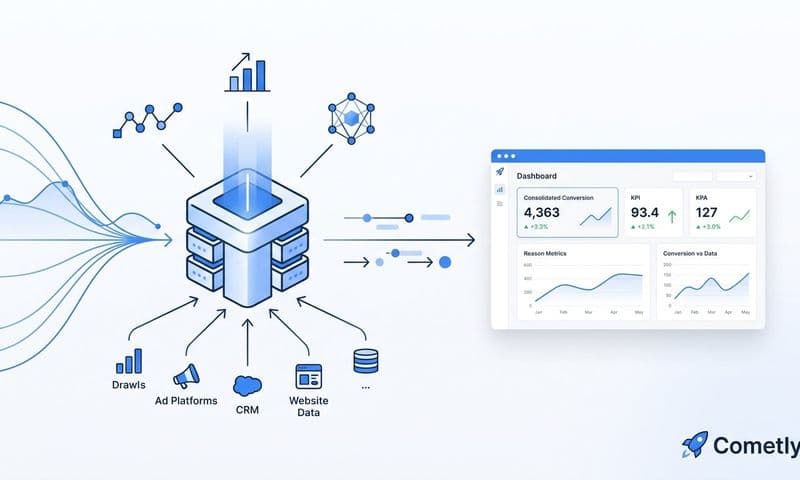
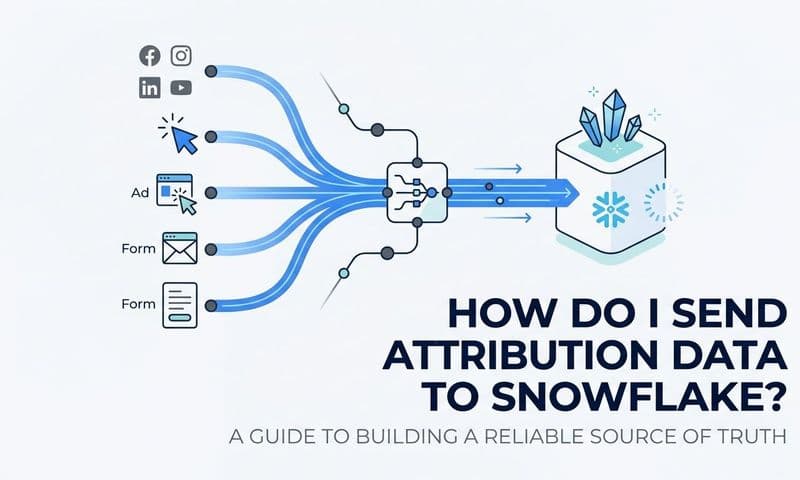
Integrate your ad platforms and CRM into a centralized attribution layer. This is the core infrastructure step. Your attribution platform needs to ingest data from every paid channel, match it to website sessions and conversion events, and then connect those events to pipeline and revenue outcomes in your CRM. When this is working correctly, you can trace a closed deal back to the first ad impression that introduced that customer to your product.
Once unified data is flowing, AI-powered analysis becomes genuinely valuable. Rather than manually cross-referencing dashboards to figure out which campaigns are influencing pipeline, an AI layer can surface these insights automatically, flagging which ads are driving the most qualified leads, which channels are contributing to multi-touch journeys that close, and where budget reallocation would have the greatest impact.
Feeding enriched, unified conversion data back to your ad platforms is the final step that closes the loop. When you send accurate, complete conversion signals back to Meta through Conversion API or to Google through Enhanced Conversions, you are giving their optimization algorithms better inputs to work with. The result is improved targeting, more efficient delivery, and better campaign performance over time. This is not a one-time setup task. It is an ongoing data quality practice that compounds in value as your campaigns accumulate more signal.
From Unified Data to Confident Marketing Decisions
The operational shift that happens when a team achieves a true single source of truth for marketing data is significant. Budget allocation stops being a negotiation about whose numbers to trust and becomes an evidence-based process. When every channel is measured using the same attribution logic and the same conversion definitions, channel comparisons are finally apples to apples.
Reporting to leadership becomes faster and more credible. Instead of spending hours reconciling numbers before a quarterly review, marketing leaders can pull from one system that everyone has agreed to treat as the authoritative source. This is not just a time-saving benefit. It changes the quality of the conversation. When the numbers are not in dispute, the discussion can focus on strategy and optimization rather than data validation.
Customer journey analytics within a unified system reveal patterns that are invisible when data is fragmented. Teams can see which touchpoint sequences lead to conversion most often, which channels tend to appear at the beginning of journeys versus the end, and how journey length correlates with deal value. This kind of insight enables smarter campaign sequencing, better messaging alignment across channels, and more intentional use of budget at each stage of the funnel.
Attribution model comparison becomes a genuine strategic tool rather than an academic exercise. When all of your data lives in one place, you can switch between first-touch, last-click, linear, and data-driven attribution models and see immediately how each one changes your understanding of channel performance. This does not create confusion. It creates nuance. Marketing leaders can use first-touch data to understand awareness drivers, last-click data to understand conversion influencers, and multi-touch models to understand the full journey. All from the same data set, with confidence that the underlying numbers are consistent.
The payoff is an ongoing measurement practice that gets smarter over time. With all data in one place, teams can test hypotheses, compare results across time periods, and continuously refine their understanding of what drives revenue. This is what separates marketing teams that scale efficiently from those that remain stuck in a cycle of conflicting reports and reactive budget decisions.
Putting It All Together
Conflicting data across your ad platforms, CRM, and analytics tools is not just a reporting headache. For B2B SaaS marketing teams navigating long sales cycles and multi-touch customer journeys, it is a strategic liability that leads to misallocated spend, broken feedback loops, and decisions made on incomplete information.
A single source of truth for marketing data solves this by creating one authoritative layer where ad data, CRM data, and conversion events are unified, standardized, and accessible to every team member working from the same baseline. When that layer is in place, budget decisions become evidence-based, channel comparisons use consistent logic, and revenue attribution finally closes the loop between your first ad impression and your last closed deal.
The path to getting there is practical: audit your data sources, implement server-side tracking, integrate your ad platforms and CRM into a centralized attribution layer, and feed enriched conversion data back to your ad platforms to improve their optimization over time.
Cometly is built specifically for B2B SaaS teams who need this level of clarity. It connects your ad platforms, CRM, and website data into one attribution system, tracks every touchpoint from first click to closed revenue, and uses AI to surface which campaigns are actually driving pipeline. You get the complete picture, not five different versions of it.
Ready to stop guessing and start making decisions from data you can trust? Get your free demo and see how Cometly connects every touchpoint to revenue in one place.