Running ads on Meta, Google, TikTok, and LinkedIn simultaneously is the norm for most marketing teams today. But when your campaigns span multiple platforms, each with its own dashboard, metrics, and attribution logic, getting a clear picture of what is actually driving revenue becomes a real challenge.
Platform-reported numbers frequently overlap, over-count conversions, or miss key touchpoints entirely. The right cross-platform tracking tool pulls everything into one view so you can see which channels, campaigns, and creatives deserve more budget and which ones are quietly draining it.
We evaluated dozens of tools based on integration depth, attribution accuracy, ease of setup, reporting flexibility, and pricing transparency. Here are nine standout options for marketers who need reliable, unified tracking across every platform they run.
1. Cometly
Best for: AI-driven multi-touch attribution and feeding enriched conversion data back to ad platforms
Cometly is an AI-powered marketing attribution platform that tracks the full customer journey across all paid channels and syncs verified conversions back to the ad platforms running your campaigns.
 9 Best Marketing Attribution Platforms to Compare in 2026
Where This Tool Shines
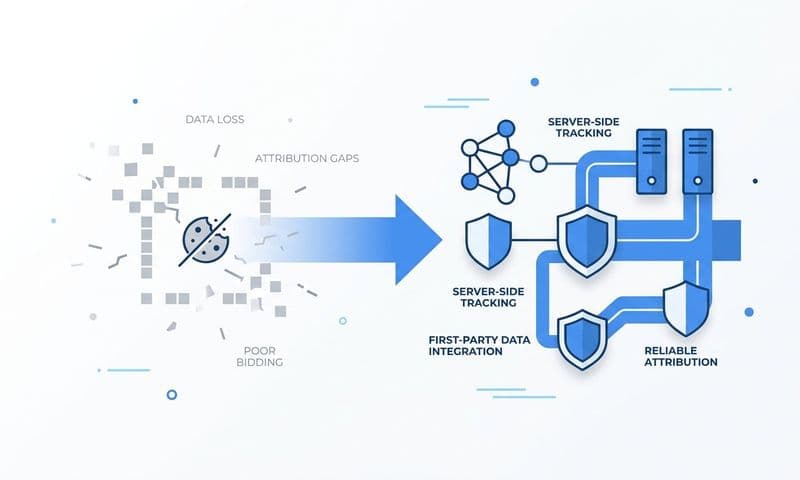
Cometly addresses one of the most persistent problems in cross-platform tracking: the gap between what ad platforms report and what actually happened. By using server-side tracking, it captures conversion events that browser-based pixels often miss due to ad blockers, iOS restrictions, and cookie limitations. This means your attribution data reflects reality rather than a filtered version of it.
What sets Cometly apart is its Conversion Sync capability. Instead of just showing you attribution data, it feeds enriched, verified conversion events back to Meta, Google, TikTok, and other platforms. This gives ad platform algorithms cleaner signals to work with, improving bidding efficiency and audience targeting over time. The AI layer on top adds optimization recommendations and a natural-language chat interface for exploring your data without needing to build custom reports.
Key Features
Server-Side Tracking: Captures conversions at the server level, bypassing browser limitations and ad blockers for more accurate cross-platform data.
Multi-Touch Attribution: Supports multiple attribution models simultaneously so you can compare how credit is assigned across your customer journey.
Conversion Sync: Sends enriched conversion data back to Meta, Google, TikTok, and more to improve ad platform optimization and bidding.
AI Ads Manager: Surfaces AI-driven recommendations on which campaigns and creatives to scale, pause, or reallocate budget toward.
AI Chat: Lets you query your marketing data using plain language, making analysis accessible without requiring SQL or custom dashboards.
Best For
Cometly is built for growth-focused marketing teams and agencies running paid campaigns across multiple channels who need accurate attribution and want to feed better data back into ad platform algorithms. It's particularly well-suited for teams frustrated by discrepancies between platform-reported ROAS and actual revenue.
Pricing
Custom pricing based on ad spend. A demo is available on request at cometly.com.
2. Triple Whale
Best for: Ecommerce brands on Shopify needing unified ad and revenue reporting
Triple Whale is an ecommerce-focused analytics and attribution platform built around Shopify, combining first-party pixel tracking with creative performance reporting.
 7 Best Funnel.io Alternatives for Marketing Data Analytics in 2026
Where This Tool Shines
Triple Whale was designed specifically for direct-to-consumer brands that live and breathe Shopify. Its first-party pixel captures customer behavior on your storefront and connects it directly to ad platform spend, so you can see true ROAS rather than relying on Meta or Google's self-reported numbers. The unified dashboard brings together ad spend, revenue, and customer data in one place.
The creative analytics feature is a standout for teams running high volumes of ad variations. You can break down performance by individual creative assets across platforms, making it easier to identify which hooks, formats, and visuals are driving purchases rather than just clicks.
Key Features
First-Party Pixel: Shopify-native tracking that captures purchase events independently of ad platform pixels.
Unified Dashboard: Combines ad platform spend data with Shopify revenue in a single view for accurate ROAS calculation.
Creative Analytics: Breaks down ad performance by individual creative assets across Meta, TikTok, and other platforms.
Customer Journey Mapping: Visualizes the touchpoints a customer interacts with before converting on your store.
Best For
DTC ecommerce brands running on Shopify that want accurate attribution, creative performance insights, and a clean dashboard without heavy technical setup. Less suited for B2B or non-ecommerce use cases.
Pricing
Plans start around $100 per month and scale based on monthly revenue. Higher tiers unlock more advanced features and data history.
3. Northbeam
Best for: Brands that want statistical modeling and incrementality analysis alongside attribution
Northbeam is an attribution and media mix modeling platform that uses machine learning to help brands understand the true incremental impact of each channel.
 9 Best Ad Optimization Software Tools to Maximize Your ROI in 2026
Where This Tool Shines
Northbeam goes beyond standard click-based attribution by layering in media mix modeling, which uses statistical analysis to estimate how each channel contributes to revenue even when direct tracking is incomplete. This is particularly valuable for channels like YouTube or connected TV where click-through tracking is limited.
The platform also offers customizable attribution windows and lookback periods, which matters a lot for brands with longer consideration cycles. If your customers research for weeks before buying, a 7-day attribution window will systematically undercount the channels that introduced them to your brand.
Key Features
Multi-Touch Attribution with MMM: Combines click-based attribution with media mix modeling for a more complete picture of channel impact.
Incrementality Analysis: Uses machine learning to estimate the true lift each channel provides beyond what would have happened organically.
Budget Optimization Recommendations: Surfaces cross-channel allocation suggestions based on modeled performance data.
Customizable Attribution Windows: Lets you adjust lookback periods to match your actual sales cycle length.
Best For
Growth-stage and established brands with meaningful ad budgets across multiple channels who want statistical rigor in their attribution, not just last-click or platform-reported data. Best for teams with some analytical sophistication.
Pricing
Custom pricing. Northbeam is typically positioned for brands with significant monthly ad spend, so it may not be cost-effective for smaller advertisers.
4. Hyros
Best for: High-ticket businesses and info products with long sales cycles and phone sales
Hyros is an ad tracking and attribution platform designed for businesses where the path from ad click to purchase spans days, weeks, or includes offline touchpoints like sales calls.
 9 Best Attribution Tracking Software for Smarter Ad Spend in 2026
Where This Tool Shines
Most attribution tools are optimized for ecommerce transactions that happen within a short window after an ad click. Hyros takes a different approach, building in long attribution windows and call tracking integration so businesses can connect a phone sale back to the original ad that drove the lead. This is a meaningful advantage for coaching programs, consulting services, SaaS with sales teams, and other high-ticket offers.
The platform also tracks the full funnel from ad click through opt-in, webinar attendance, application, and final purchase. For businesses with multi-step funnels, this level of visibility helps identify exactly where the drop-offs happen and which ad sources produce buyers rather than just leads.
Key Features
Long Attribution Windows: Tracks conversions over extended periods to match longer consideration and sales cycles.
Call and Phone Sales Tracking: Connects offline phone conversions back to the original digital ad source.
Deep Funnel Tracking: Follows prospects from first click through every funnel step to final purchase.
AI-Based Ad Optimization: Provides suggestions for improving ad performance based on actual revenue attribution, not just lead volume.
Best For
High-ticket businesses, info product creators, coaching programs, and B2B companies with sales-assisted conversions that need attribution extending beyond the standard 7 or 28-day windows.
Pricing
Starts around $99 per month with higher tiers for larger ad spend volumes. Pricing scales with the level of tracking and data volume required.
5. Rockerbox
Best for: Omnichannel brands measuring digital, TV, and direct mail together
Rockerbox is a cross-channel attribution platform that brings digital and offline marketing measurement into a single, deduplicated view.
 9 Best Tools to Track Marketing Across Multiple Platforms in 2026
Where This Tool Shines
Most attribution tools focus exclusively on digital channels. Rockerbox is one of the few platforms that can measure TV advertising, direct mail campaigns, and digital ads side by side with deduplication built in. For brands running integrated campaigns across both online and offline channels, this eliminates the guesswork of trying to stitch together separate measurement tools.
The customer journey visualization makes it easy to see how offline touchpoints interact with digital ones. A customer might see a direct mail piece, search for the brand on Google, and then convert through a retargeting ad. Rockerbox captures that full sequence rather than giving all credit to the last digital click.
Key Features
Deduplicated Attribution: Removes double-counting across digital and offline channels for accurate conversion credit.
TV and Direct Mail Measurement: Tracks offline channel performance alongside digital ads in the same dashboard.
Customer Journey Visualization: Maps the full sequence of touchpoints across all channels before conversion.
CRM and Ecommerce Integrations: Connects with major platforms to pull in revenue data for accurate ROAS calculation.
Best For
Mid-market and enterprise brands running integrated campaigns that include TV, direct mail, or other offline channels alongside digital advertising. Less necessary for purely digital advertisers.
Pricing
Custom pricing based on the number of channels and data volume. Typically positioned for brands with established marketing budgets across multiple channel types.
6. Segment (Twilio)
Best for: Engineering-forward teams building a centralized customer data infrastructure
Segment is a customer data platform that collects, cleans, and routes event data from your website and apps to any downstream analytics, marketing, or data warehouse tool.
 8 Best Attribution-Focused Platforms vs Segment: Which Approach Fits Your Marketing Stack in 2026
Where This Tool Shines
Segment is not an attribution platform in the traditional sense. Instead, it acts as the data plumbing layer that makes accurate cross-platform tracking possible. You instrument your site or app once with Segment's SDK, and then route that clean event data to any combination of analytics tools, ad platforms, CRMs, or data warehouses without rebuilding your tracking for each destination.
The identity resolution capability is particularly powerful for teams tracking users across devices and sessions. Segment can stitch together anonymous and identified user profiles, giving you a more complete view of individual customer journeys across multiple touchpoints.
Key Features
Event-Based Data Collection: Captures user actions across web and mobile with a single instrumentation layer.
400+ Pre-Built Integrations: Routes data to virtually any analytics, marketing, or data storage tool without custom development.
Identity Resolution: Stitches together cross-device and cross-session user data into unified customer profiles.
Real-Time Data Routing: Sends event data to downstream destinations in real time for immediate use in analytics and marketing tools.
Best For
Product and engineering teams at growth-stage or enterprise companies that want a scalable data infrastructure layer. Requires technical resources to implement and maintain effectively.
Pricing
Free tier available for low-volume use. Team plan starts at $120 per month. Enterprise pricing is custom based on monthly tracked users and destinations.
7. Google Analytics 4
Best for: Budget-conscious teams needing solid web analytics with Google Ads integration
Google Analytics 4 is Google's free web and app analytics platform built on an event-based data model with cross-device measurement and native integration across Google's advertising ecosystem.
 11 Best Marketing Analytics Tools to Track and Optimize Campaign Performance in 2026
Where This Tool Shines
GA4 is the most accessible starting point for cross-platform tracking because it is free and already integrated with Google Ads and Search Console. The shift from session-based to event-based tracking gives marketers more flexibility in defining what constitutes a meaningful user action, and the cross-device reporting helps bridge gaps between desktop and mobile behavior.
For teams running primarily Google Ads campaigns, the native integration is a genuine advantage. Conversions tracked in GA4 can be imported directly into Google Ads, and audience segments built in GA4 can be used for remarketing. The optional BigQuery export unlocks more advanced analysis for teams with data engineering resources.
Key Features
Event-Based Tracking: Captures any user action as a configurable event, replacing the older session-and-pageview model.
Cross-Device Measurement: Uses Google's identity graph to track users across devices and sessions where consent allows.
Native Google Ads Integration: Syncs conversions and audiences directly with Google Ads without additional configuration.
BigQuery Export: Allows raw event data export for advanced SQL-based analysis at no additional cost beyond BigQuery usage.
Best For
Teams of any size that want a free, capable analytics foundation, especially those with significant Google Ads spend. GA4 alone is not sufficient for multi-platform attribution but works well as part of a broader tracking stack.
Pricing
Free for standard use. GA4 360, the enterprise version, is available at custom pricing for organizations needing higher data limits and SLAs.
8. Supermetrics
Best for: Marketers who want to pull ad platform data into spreadsheets or dashboards for reporting
Supermetrics is a marketing data pipeline tool that connects 100+ ad platforms and marketing tools to your preferred reporting destination, from Google Sheets to BigQuery.
Where This Tool Shines
Supermetrics excels at one specific job: getting data out of ad platforms and into the tools your team already uses for reporting. If your analysts live in Google Sheets or Looker Studio, Supermetrics removes the manual export process and keeps your reports refreshed automatically on a schedule you define. It covers an impressive range of sources including Meta, Google Ads, LinkedIn, TikTok, Bing, Pinterest, and many more.
The custom query builder gives you granular control over exactly which metrics and dimensions you pull, so you are not stuck with preset report templates. For teams that need to blend data from multiple sources into a single custom dashboard, Supermetrics handles the collection layer cleanly.
Key Features
100+ Source Connectors: Pulls data from virtually every major ad platform, SEO tool, and marketing channel.
Flexible Destinations: Exports to Google Sheets, Excel, Looker Studio, BigQuery, Snowflake, and more.
Automated Scheduled Refreshes: Keeps your reports updated automatically without manual data pulls.
Custom Query Builder: Lets you select specific metrics, dimensions, and date ranges for precise data extraction.
Best For
Marketing analysts and agencies that need to centralize reporting data from multiple ad platforms into existing dashboards or spreadsheets. Supermetrics aggregates data but does not provide attribution modeling on its own.
Pricing
Pricing starts around $39 per month per connector destination. Costs scale as you add more source connectors and destinations, so agency or enterprise use can add up quickly.
9. Funnel.io
Best for: Enterprise marketing teams automating data collection and transformation at scale
Funnel.io is an enterprise-grade marketing data hub that automates the collection, mapping, and transformation of data from all major ad and marketing platforms.
Where This Tool Shines
Funnel.io is built for marketing operations teams that need more than just data extraction. Where Supermetrics focuses on getting data into reporting tools, Funnel adds a data transformation layer on top, allowing you to normalize inconsistent naming conventions, map custom metrics, and clean data before it reaches your dashboard or warehouse. This is especially valuable when consolidating data from many platforms that each use different terminology for similar metrics.
With over 500 connectors and built-in transformation capabilities that require no coding, Funnel removes a significant amount of manual data work for larger marketing organizations. The result is a reliable, clean data foundation that any BI tool or analyst can work with confidently.
Key Features
500+ Connectors: Covers virtually every ad platform, marketing tool, and data source at enterprise scale.
Data Mapping and Normalization: Standardizes metrics and naming conventions across platforms automatically.
No-Code Data Transformation: Cleans and reshapes data before export without requiring SQL or engineering support.
Universal Export: Sends transformed data to any BI tool, data warehouse, or dashboard platform.
Best For
Mid-market and enterprise marketing teams managing large volumes of data across many channels who need clean, normalized data flowing reliably into their analytics stack. Typically overkill for smaller teams or simpler channel mixes.
Pricing
Custom pricing based on data volume and connectors. Funnel.io is generally positioned for organizations with dedicated marketing operations or data engineering resources.
Which Tool Is Right for Your Marketing Stack?
The best cross-platform tracking tool depends heavily on your channel mix, sales cycle, technical resources, and what question you are actually trying to answer. There is no single tool that wins for every team, but the landscape is clear enough to make a confident recommendation based on your situation.
If your primary goal is accurate attribution across paid channels with the added benefit of feeding better conversion data back to Meta, Google, and TikTok, Cometly is the strongest all-around choice. Its server-side tracking captures what browser pixels miss, its multi-touch attribution models give you flexibility in how you assign credit, and its Conversion Sync capability actively improves your ad platform performance over time rather than just reporting on it. The AI layer makes it genuinely useful for day-to-day optimization, not just end-of-month reporting.
For Shopify-first ecommerce brands, Triple Whale offers the tightest integration with your store and the best creative analytics in its category. If you need statistical modeling and incrementality analysis, Northbeam brings a level of rigor that click-based attribution alone cannot match. Teams running TV or direct mail alongside digital will find Rockerbox uniquely capable in that omnichannel space.
On the data infrastructure side, GA4 remains the right free foundation for teams with significant Google Ads exposure. Supermetrics and Funnel.io are excellent choices when your priority is aggregating and normalizing data across sources for reporting, though neither provides attribution modeling on their own. Segment belongs in the stack of any team serious about building a clean, scalable customer data layer.
Before committing to any tool, map out your actual channel mix, your typical sales cycle length, and whether your team has the technical capacity to implement and maintain a more complex solution. The right tool is the one your team will actually use and trust.
If you are ready to move beyond fragmented platform dashboards and see exactly which ads and channels are driving real revenue, Get your free demo of Cometly today. From capturing every touchpoint to feeding enriched conversion data back to your ad platforms, it is built to give you the clarity and confidence to scale what is actually working.