
You check your Facebook Ads dashboard on a Monday morning and something is off. Campaigns are running. Clicks are coming in. But conversions? Zero. Or close to it. If you've been here before, you know the specific dread that follows: is it the pixel? The events? Did something break over the weekend? And more importantly, how long has this been happening?
This is one of the most common and costly problems in paid social advertising. Broken Facebook conversion tracking does not announce itself with an error message or a campaign pause. It just quietly stops working while your budget continues to spend, your algorithm loses its optimization signal, and your reporting becomes increasingly meaningless.
The reasons it happens have also grown more complex over the past few years. What used to be a simple pixel placement issue is now layered with iOS privacy restrictions, browser-level tracking prevention, server-side infrastructure gaps, and misconfigured events that look correct on the surface but silently break attribution. Understanding which of these is affecting your account is the first step toward fixing it properly.
This article is a diagnostic guide. We will walk through what broken tracking actually costs you, the most common causes behind it, why privacy changes have made the old approach obsolete, and how to build a tracking setup that survives the current and future privacy landscape. By the end, you will have a clear framework for auditing your setup and a path toward durable, reliable conversion data.
The Silent Revenue Leak: What Broken Conversion Tracking Actually Costs You
The most dangerous thing about broken Facebook conversion tracking is how invisible it is in the early stages. Your campaigns are still active. Your ads are still serving impressions. Clicks are still registering. From the outside, everything looks normal. But underneath, the feedback loop that powers Facebook's entire optimization engine has gone dark.
Facebook's algorithm depends on conversion signals to understand which users are most likely to take valuable actions. When you run a campaign optimized for purchases or leads, the platform uses conversion data to identify patterns: which demographics, behaviors, interests, and placements are correlated with the outcomes you care about. When that data stops flowing, the algorithm is essentially flying blind. It continues spending your budget, but it loses the ability to target efficiently. Over days, this compounds into measurably worse performance even though your spend has not changed.
The budget allocation problem is equally serious. When conversion data is missing or incomplete, the numbers you use to make decisions are wrong. A campaign that appears to have zero conversions might actually be your best performer, but without tracking data to prove it, you may pause it in favor of a campaign that looks better in the dashboard simply because its tracking happened to survive. You are not making bad decisions intentionally. You are making decisions on bad data, which is worse because the error is hidden.
There is also a compounding effect that most marketers underestimate. Tracking failures rarely cause an immediate, obvious collapse in reported results. Instead, they create gradual data decay. Conversion counts drift downward slowly. Cost per result climbs incrementally. By the time the problem is obvious enough to trigger an investigation, the algorithm has already spent weeks optimizing toward the wrong signals, audience quality has degraded, and reversing the damage takes time even after the tracking is fixed. Understanding Facebook ads reporting discrepancies is often the first clue that something has gone wrong.
This is why treating conversion tracking as a set-and-forget infrastructure decision is so costly. The problem is not just a reporting inconvenience. It is a direct drag on campaign performance, budget efficiency, and the quality of every optimization decision your team makes.
The Most Common Reasons Facebook Ads Stop Tracking Conversions
When conversion tracking breaks, it usually traces back to one of a handful of root causes. Knowing which category your issue falls into saves hours of debugging and gets you to a fix faster.
Pixel implementation errors: The Meta Pixel is a JavaScript snippet that lives in your website's code. It is fragile in the sense that any change to your site can disrupt it. A website redesign, a CMS update, a new theme, or a developer removing a tag manager container can all cause the pixel to disappear from pages where it previously fired. Duplicate pixel IDs are another common failure mode, where the same pixel fires multiple times on a single page load, inflating event counts and confusing Facebook's deduplication logic. A thorough understanding of Facebook pixel tracking is essential to catching these issues before they compound. Events placed on the wrong pages, or events that fire on page load instead of on the correct user action, are also frequent culprits that are easy to miss during a routine audit.
Misconfigured conversion events: Even when the pixel is technically present and firing, the events it sends can be configured incorrectly in Events Manager. An event set to the wrong optimization type, a custom conversion built on a URL rule that no longer matches your site structure, or a standard event firing with incorrect parameters can all cause attribution to break silently. Facebook will not always alert you when this happens. The event may still appear in Events Manager with a green status while producing no usable optimization signal.
iOS privacy changes and browser restrictions: This is the category that has grown most significantly in recent years. Apple's App Tracking Transparency framework and Safari's Intelligent Tracking Prevention have fundamentally changed what the Meta Pixel can capture from a large portion of your audience. These are not configuration errors you can fix by adjusting your pixel. They are structural limitations on client-side tracking that require a different architectural approach to solve.
Attribution window changes: Meta has changed its default attribution window settings over time, moving away from 28-day click attribution to a 7-day click and 1-day view default. If your account's attribution window settings changed, either manually or through a platform update, your reported conversions can drop significantly even when actual conversions have not changed. This is a reporting change, not a tracking failure, but it can look identical from the outside and is worth checking early in any audit.
How iOS and Browser Privacy Changes Broke Client-Side Tracking
For most of Facebook advertising's history, the Meta Pixel worked by dropping a third-party cookie in the user's browser when they clicked an ad. When that user later completed a conversion on your website, the pixel would read the cookie, match it back to the original click, and send the conversion signal to Facebook. It was simple, reliable, and effective at scale.
That model no longer works the way it used to. Apple's App Tracking Transparency framework, introduced with iOS 14.5, requires apps to ask users for explicit permission before tracking them across apps and websites. A large share of iOS users decline this permission. When they do, the Meta Pixel loses access to the identifiers it would normally use to attribute their conversions back to ad clicks. The result is a structural gap in conversion data for a significant portion of mobile users.
Safari's Intelligent Tracking Prevention compounds the problem for desktop and mobile Safari users regardless of their iOS version. ITP limits the lifespan of third-party cookies to as little as 24 hours in some cases, and blocks certain types of cross-site tracking entirely. Since the Meta Pixel historically relied on these cookies to bridge the gap between an ad click and a later conversion, ITP directly reduces the pixel's ability to capture every sale your ads drive when the purchase happens more than a day after the initial click.
Ad blockers add another layer. Browser extensions like uBlock Origin or Privacy Badger, along with built-in browser privacy modes in Firefox and Brave, can prevent the pixel script from loading entirely. When the pixel does not load, no events fire at all, meaning conversions from those users are invisible to Facebook regardless of how correctly your pixel is configured.
The critical thing to understand about all of these changes is that they are permanent. They reflect a broader, industry-wide shift toward user privacy that is not going to reverse. Each new iOS version, each browser update, and each regulatory development tends to add more restrictions, not fewer. Marketers who treat these as temporary bugs to wait out will continue to see their tracking degrade over time. The only durable response is to move tracking infrastructure away from the browser and onto the server.
Server-Side Tracking and Conversion API: The Durable Fix
The Meta Conversion API, commonly called CAPI, is Facebook's official answer to the privacy-driven limitations of pixel-based tracking. Instead of relying on the user's browser to fire events, CAPI sends conversion data directly from your server to Meta's servers. Because the data never passes through the browser, it is completely unaffected by ad blockers, iOS restrictions, Safari's ITP, or any other client-side privacy mechanism. Understanding why server-side tracking is more accurate helps clarify why this architectural shift is so consequential for ad performance.
This architectural shift is significant. When a user completes a purchase on your site, your server can send that event to Facebook directly, including the conversion value, the product details, and the customer data parameters that improve match quality. The user's browser settings are irrelevant. The event reaches Facebook regardless of what privacy tools the user has installed or what permissions they have granted.
Running CAPI alongside the pixel: Most implementations run CAPI in parallel with the existing pixel rather than replacing it entirely. This creates redundancy: the pixel captures events when it can, and CAPI captures events from the server side. To prevent the same conversion from being counted twice, Facebook uses event deduplication. You assign a unique event ID to each conversion, and when Facebook receives the same event ID from both the pixel and CAPI, it counts it only once. This means you get better coverage without inflating your reported conversion numbers.
Event match quality: CAPI's effectiveness depends heavily on the quality of customer data parameters you send with each event. Parameters like hashed email addresses, phone numbers, and external customer IDs help Facebook match the server-side event back to a specific Facebook user and, by extension, back to the ad click that preceded the conversion. This match quality score is visible in Events Manager and is a direct indicator of how well your CAPI implementation is performing. Higher match quality leads to better optimization and more accurate attribution. Learning how to sync conversion data to Facebook Ads correctly is the practical foundation of this process.
First-party data collection: To send enriched customer data parameters, you need to collect them at the point of conversion. This means capturing email addresses, phone numbers, or other identifiers through your forms and checkout flows, then passing them to your server-side event pipeline. This is a first-party data strategy, and it is one of the most valuable investments you can make in your tracking infrastructure right now.
Diagnosing Your Tracking Setup: A Step-by-Step Audit Framework
Before you can fix broken tracking, you need to understand exactly what is and is not working. A structured audit gives you a clear picture of where your data is leaking and where to focus your effort first.
Step one: Verify pixel presence and event firing. Install the Meta Pixel Helper browser extension in Chrome. Visit each of your key conversion pages, including your landing pages, thank-you pages, and checkout confirmation pages, and check whether the pixel is loading and which events are firing. The extension will show you event names, parameters, and any errors detected. Pay attention to whether events are firing on the correct user action, not just on page load, and whether you see duplicate pixel IDs firing on the same page.
Step two: Use the Test Events tool in Events Manager. Navigate to Events Manager in your Meta Business Suite and use the Test Events feature to trigger real events on your site while monitoring whether they are received by Facebook in real time. This confirms end-to-end connectivity between your site and Facebook's servers, and it is particularly useful for verifying CAPI events that would not be visible through the Pixel Helper extension. Following best practices for tracking conversions accurately at this stage ensures your audit produces actionable results.
Step three: Review event match quality scores. In Events Manager, each event has an event match quality score. This score reflects how reliably Facebook can match incoming events to Facebook user accounts. A low score means your conversion data is arriving but cannot be attributed effectively, which degrades optimization even when event counts look normal. Low scores are a strong signal that you need to improve the customer data parameters being sent with each event.
Step four: Compare in-platform data against your backend. Pull your actual conversion counts from your CRM, your payment processor, or your backend database for a defined time period. Compare that number to what Facebook's Ads Manager reports for the same period under the same attribution window. The gap between these two numbers is the size of your tracking discrepancy. This comparison also helps you prioritize: a small gap may be acceptable, while a large gap indicates a critical infrastructure problem that needs immediate attention.
Step five: Audit your attribution window settings. In Ads Manager, check the attribution window your campaigns are using and compare it to historical settings. If the window changed, your reported conversion numbers may have dropped even though actual conversions remained stable. Adjust your view to the attribution window that best matches your sales cycle and use that consistently across campaigns for accurate comparisons.
Building a Tracking Stack That Survives Privacy Changes
Fixing a broken pixel is a short-term solution. Building a tracking architecture that remains reliable as privacy standards continue to evolve is the long-term imperative. The difference between these two approaches is significant in terms of the time, resources, and competitive advantage at stake.
The foundation: first-party data plus server-side delivery. A resilient tracking stack starts with collecting first-party data at every conversion point, then delivering that data to ad platforms via server-side connections rather than browser-based pixels. This combination gives you coverage across the full range of users, including iOS users who have opted out of tracking and desktop users running ad blockers, while also providing the enriched customer data parameters that improve event match quality and optimization performance.
The independent view: a unified attribution platform. Relying exclusively on Facebook's native reporting is a structural risk. Facebook's in-platform data is affected by attribution window settings, data modeling assumptions, and the platform's own limitations in matching conversions to users. An independent Facebook ads attribution platform connects your ad platforms, CRM, and website data into a single system, giving you a view of campaign performance that is not filtered through any single platform's reporting logic.
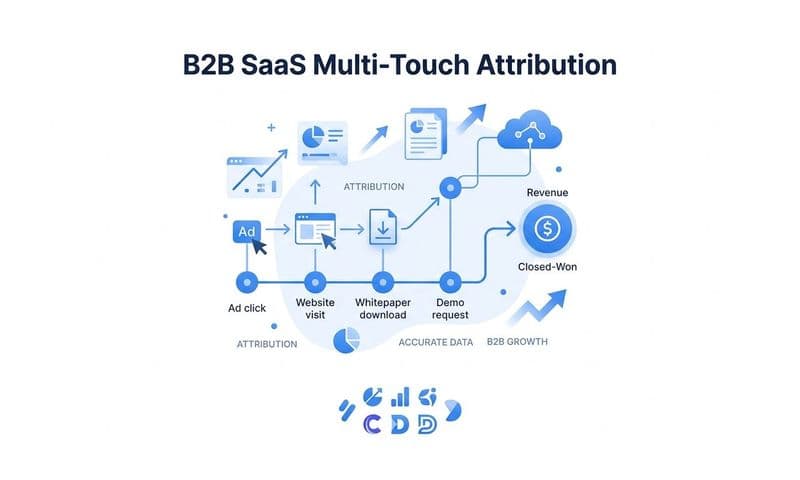
This is where a platform like Cometly becomes strategically valuable. Cometly connects your ad spend data with your CRM events and website tracking to show you which campaigns are actually driving pipeline and closed revenue, not just the conversions Facebook's algorithm decides to claim credit for. It captures every touchpoint across the customer journey, feeds enriched conversion data back to ad platforms to improve their optimization, and gives your team a single source of truth for making budget decisions.
The process: regular audits on a defined schedule. The silent data decay that causes major tracking failures does not happen overnight. It accumulates through small disruptions: a site update that moves a pixel, an event that stops firing after a form change, a CAPI connection that breaks after an API version update. Running a structured tracking audit on a monthly or quarterly schedule catches these issues before they compound into serious optimization failures. Treat your tracking infrastructure the way you treat your ad creative: something that requires regular attention, not a one-time setup. Using dedicated ad tracking management software makes this ongoing process significantly more reliable.
Putting It All Together
Broken Facebook conversion tracking is not a simple technical glitch you fix once and forget. It is an ongoing infrastructure challenge shaped by a privacy landscape that continues to evolve. The pixel alone is no longer sufficient. iOS restrictions, browser privacy tools, and the structural shift away from third-party cookies have made client-side tracking an unreliable foundation for ad optimization.
The path forward is clear: audit your current setup systematically, implement server-side tracking via the Meta Conversion API, enrich your events with first-party customer data, and build an independent view of attribution that is not dependent on any single platform's reporting. These steps will not just fix your current tracking gap. They will give you a durable advantage as privacy standards continue to tighten.
The marketers who invest in this infrastructure now will make better budget decisions, run more efficiently optimized campaigns, and have accurate data to act on while competitors are still trying to figure out why their numbers look wrong.
If you are ready to stop guessing and start seeing exactly which ads and campaigns are driving real revenue, Get your free demo of Cometly today. Connect your ad platforms, CRM, and website data into a single source of truth, and give your team the attribution clarity it needs to scale with confidence.