Running paid campaigns across Google, Meta, TikTok, LinkedIn, and beyond sounds like a growth strategy. But without the right tracking in place, it quickly becomes an expensive guessing game. Each platform reports its own numbers, claims its own conversions, and tells you it's the reason your revenue went up. The result? Double-counted data, misallocated budgets, and a lot of wasted ad spend.
The right ad spend tracking tool cuts through that noise. It gives you a single, accurate view of where every dollar is going and, more importantly, which channels and campaigns are actually driving revenue. If you're serious about scaling paid media, this is the infrastructure that makes it possible.
When evaluating these tools, we focused on cross-platform support, attribution accuracy, ease of use, reporting depth, and pricing flexibility. Whether you're a solo marketer or an agency managing dozens of accounts, understanding how attribution works and how ad tracking has evolved will help you get more from whichever tool you choose. Here are the top ad spend tracking tools worth your attention in 2026.
1. Cometly
Best for: Marketers who need accurate cross-platform attribution tied directly to revenue
Cometly is an AI-powered marketing attribution platform that connects your ad spend across every major channel to actual revenue through server-side tracking, multi-touch attribution, and conversion sync.
 9 Best Marketing Attribution Platforms to Compare in 2026
Where This Tool Shines
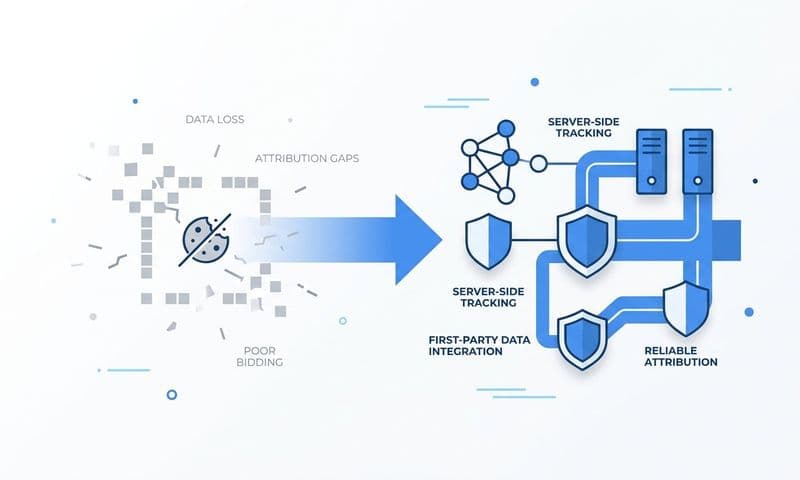
Most attribution tools tell you what happened. Cometly tells you why, and what to do next. Its server-side tracking architecture means you're capturing conversion data even when browser-based methods fall short, which is increasingly common given iOS privacy restrictions and the ongoing deprecation of third-party cookies.
What sets Cometly apart is the combination of accurate data collection and AI-powered analysis on top of it. Instead of pulling reports manually and trying to interpret the numbers yourself, Cometly's AI surfaces recommendations and lets you ask questions about your data in plain language through its AI Chat feature. That's a meaningful time saver for any team managing spend across multiple platforms.
Key Features
Server-Side Tracking: Captures accurate ad spend and conversion data at the server level, bypassing browser limitations and ad blockers for more reliable attribution.
Multi-Touch Attribution: Maps every customer touchpoint across channels and connects them to actual revenue, so you can see which combinations of ads drive conversions.
AI-Powered Budget Recommendations: Analyzes cross-channel performance and surfaces specific recommendations for where to increase or reduce spend to improve ROI.
Conversion Sync: Feeds enriched, conversion-ready events back to Meta, Google, and TikTok so their algorithms optimize on better data, improving targeting and ad delivery.
AI Chat for Analysis: Lets you ask natural-language questions about your ad spend and performance data without needing to build custom reports from scratch.
Best For
Cometly is built for digital marketers, growth teams, and agencies managing paid campaigns across multiple platforms who need accurate attribution data and AI-driven insights to make faster, smarter budget decisions. It's particularly valuable for teams frustrated by the discrepancy between native platform reporting and actual business results.
Pricing
Custom pricing based on ad spend volume. A free demo is available so you can see how it works with your actual data before committing.
2. Triple Whale
Best for: Shopify-based ecommerce brands tracking ad spend and creative performance
Triple Whale is an ecommerce analytics platform that centralizes ad spend, attribution, and creative data for DTC brands primarily running on Shopify.
 7 Best Funnel.io Alternatives for Marketing Data Analytics in 2026
Where This Tool Shines
Triple Whale was built with the Shopify ecosystem in mind, and that focus shows. The platform connects your store data with your ad platforms to give you a unified view of spend, revenue, and customer acquisition in one dashboard. For brands running heavy creative testing on Meta and TikTok, the creative analytics module is especially useful, letting you compare ad creative performance alongside spend data without jumping between platforms.
The first-party pixel helps fill attribution gaps left by iOS changes, and the customer journey mapping feature gives DTC brands a clearer picture of how shoppers move from first touch to purchase.
Key Features
Unified Spend Dashboard: Aggregates ad spend data from Meta, Google, TikTok, and other platforms into a single view alongside Shopify revenue data.
First-Party Pixel: Collects conversion data directly from your Shopify store to improve attribution accuracy beyond what native platform pixels capture.
Creative Analytics: Measures ad creative performance alongside spend so you can identify which visuals and copy formats drive the best results.
Customer Journey Mapping: Visualizes the multi-step paths customers take before purchasing, giving DTC brands insight into which touchpoints matter most.
Best For
Ecommerce brands running on Shopify with active paid campaigns across Meta, Google, and TikTok. Less suited for B2B or non-ecommerce businesses that need deeper funnel tracking beyond the purchase event.
Pricing
Starts around $100/month for smaller stores and scales based on revenue volume. Higher tiers unlock more advanced analytics and attribution features.
3. Northbeam
Best for: Data-driven ecommerce brands that want both click-level attribution and media mix modeling
Northbeam is an advanced attribution and media mix modeling platform designed for brands that want granular visibility into how ad spend performs at both the individual click level and the aggregate channel level.
 9 Best Attribution Software for Multiple Channels in 2026
Where This Tool Shines
Northbeam goes deeper than most attribution tools by combining multi-touch attribution with media mix modeling in a single platform. That combination lets you understand both the tactical performance of individual campaigns and the strategic contribution of each channel to overall revenue. The incrementality testing feature adds another layer of confidence by helping you validate whether your ad spend is actually driving lift or just capturing demand that would have converted anyway.
The customizable lookback windows are a practical advantage for brands with longer consideration cycles, where a 7-day attribution window would miss a significant portion of influenced conversions.
Key Features
Multi-Touch Attribution: Tracks and credits every touchpoint in the customer journey with customizable lookback windows to match your sales cycle.
Media Mix Modeling: Provides channel-level budget allocation insights using statistical modeling to understand the aggregate impact of your ad spend.
Incrementality Testing: Measures the true incremental lift from ad spend to help validate whether your campaigns are driving new revenue or just claiming credit.
Cross-Device Tracking: Connects customer interactions across devices and platforms to build a more complete attribution picture.
Best For
Mid-to-large ecommerce brands with meaningful ad budgets who want sophisticated attribution methodology and are comfortable with a more technical setup process.
Pricing
Custom pricing. Generally positioned for brands with mid-to-high ad spend where the investment in advanced attribution methodology is justified by budget scale.
4. Hyros
Best for: High-ticket businesses with long sales cycles and phone-based conversions
Hyros is an ad tracking and attribution platform built specifically for businesses with complex, extended sales funnels where standard 7-day attribution windows miss most of the story.
 9 Best Attribution Tracking Software for Smarter Ad Spend in 2026
Where This Tool Shines
Hyros fills a gap that most attribution tools overlook: high-ticket sales funnels where the journey from first ad click to closed deal can span weeks or months. Its long attribution windows are designed to capture conversions that happen well after the initial ad interaction, giving businesses a more accurate picture of which campaigns are actually generating revenue over time.
The call tracking integration is a standout feature for businesses where phone calls are a primary conversion path. Connecting ad spend data to phone-based conversions is a challenge most platforms don't address directly, and Hyros does it well.
Key Features
Long Attribution Windows: Tracks customer journeys over extended periods to capture conversions that occur well after initial ad exposure, critical for high-ticket sales cycles.
Call Tracking Integration: Connects phone-based conversions back to the specific ads that drove them, closing a major attribution gap for businesses that rely on sales calls.
AI-Driven Ad Optimization: Surfaces recommendations for improving ad performance based on actual revenue attribution data rather than platform-reported metrics.
Deep Funnel Tracking: Follows user behavior across landing pages, email sequences, and checkout flows to map the complete conversion path.
Best For
High-ticket coaches, consultants, course creators, and B2B businesses with longer sales cycles and phone or email-based conversion processes where standard attribution tools fall short.
Pricing
Starts around $199/month with higher tiers for larger ad spend volumes. Pricing reflects the specialized nature of the platform.
5. Rockerbox
Best for: Brands running both digital and offline advertising who need unified measurement
Rockerbox is a unified marketing measurement platform that brings together multi-touch attribution, media mix modeling, and incrementality testing across digital and offline channels in one place.
 9 Best Ad Spend Tracking Tools to Maximize Your Budget in 2026
Where This Tool Shines
Most ad spend tracking tools are built exclusively for digital channels. Rockerbox stands out by including offline media like TV, podcasts, and direct mail alongside your digital campaigns. For brands running integrated marketing strategies, this unified view is genuinely difficult to replicate with other tools, and it prevents the common problem of digital attribution tools making offline channels look ineffective simply because they can't measure them.
The combination of MTA, MMM, and incrementality testing in a single platform also means you're not stitching together insights from multiple vendors to get a complete picture of your marketing performance.
Key Features
Unified Digital and Offline View: Tracks ad spend and performance across TV, podcasts, direct mail, and digital channels in a single dashboard.
Multi-Touch Attribution: Customizable attribution models that credit touchpoints across the full customer journey, both online and offline.
Media Mix Modeling: Provides strategic budget planning insights by modeling the aggregate contribution of each channel to overall revenue.
Incrementality Testing: Measures the true lift generated by specific campaigns or channels to validate whether ad spend is driving real growth.
Best For
Mid-to-enterprise brands running integrated marketing across both digital and traditional channels who need a single measurement framework that covers the full media mix.
Pricing
Custom pricing based on the number of channels and data volume. Best suited for brands with substantial marketing budgets across multiple channel types.
6. Supermetrics
Best for: Analysts and data teams who want to pull ad spend data into custom reporting environments
Supermetrics is a data pipeline tool that extracts ad spend and performance data from over 100 marketing platforms and delivers it directly into spreadsheets, BI tools, and data warehouses for custom analysis.
 9 Best Ad Spend Tracking Tools to Maximize Your Budget in 2026
Where This Tool Shines
Supermetrics isn't an attribution platform. It's a data movement tool, and it does that job exceptionally well. If your team already has a preferred reporting environment, whether that's Google Sheets, Looker Studio, BigQuery, or Snowflake, Supermetrics connects your ad platforms to those destinations automatically. That flexibility makes it a favorite among analysts who want full control over how they structure and visualize their data.
The breadth of connectors is a genuine differentiator. With 100+ integrations, you can pull spend data from niche platforms that other tools don't support, making it useful for teams running campaigns on a wide variety of channels.
Key Features
100+ Data Connectors: Integrates with virtually every major ad platform, analytics tool, and CRM to centralize your marketing data in one pipeline.
Flexible Destinations: Sends data directly to Google Sheets, Looker Studio, BigQuery, Snowflake, and other BI or warehouse environments your team already uses.
Automated Data Refresh: Schedules automatic data pulls so your reports always reflect current spend and performance without manual updates.
Custom Query Builder: Allows granular control over which metrics, dimensions, and date ranges you pull for precise spend breakdowns.
Best For
Data analysts, marketing ops teams, and agencies that need flexible data pipelines to power custom dashboards and reports rather than an out-of-the-box attribution solution.
Pricing
Starts around $39/month per connector with pricing that varies by destination and data volume. Costs can add up quickly if you need many connectors simultaneously.
7. Whatagraph
Best for: Agencies that need automated, white-label ad spend reports for multiple clients
Whatagraph is a cross-channel reporting platform built specifically for agencies that need to produce clean, visual ad spend reports for clients across all major advertising platforms without spending hours on manual formatting.
Where This Tool Shines
Whatagraph's strength is presentation-ready reporting at scale. The drag-and-drop builder and pre-built templates mean you can produce polished, client-facing reports quickly, and the white-label functionality lets agencies brand everything under their own identity. For agencies managing 10, 20, or 50 client accounts, automated report scheduling alone can save meaningful time each month.
The platform isn't designed for deep attribution analysis, but for agencies whose primary reporting need is communicating ad spend performance clearly to clients, it delivers well.
Key Features
Drag-and-Drop Report Builder: Create visual, professional reports using pre-built templates or custom layouts without needing design or development skills.
White-Label Reporting: Apply your agency's branding to all client reports for a polished, professional presentation.
45+ Platform Integrations: Connects to Meta, Google, LinkedIn, TikTok Ads, and other major platforms to pull spend and performance data automatically.
Automated Report Scheduling: Sends reports to clients on a set schedule so delivery is consistent without manual effort each reporting cycle.
Best For
Digital marketing agencies that manage multiple client accounts and need to produce regular, branded performance reports efficiently. Less suited for teams that need deep attribution or revenue-level analysis.
Pricing
Starts around $199/month with agency plans available for teams managing multiple client accounts at scale.
8. Adriel
Best for: Marketing teams that want AI-assisted monitoring and anomaly detection across ad channels
Adriel is an AI-powered ad operations platform that centralizes ad spend data across channels and uses AI to detect budget anomalies, surface performance insights, and suggest optimizations automatically.
Where This Tool Shines
Adriel sits in an interesting position between a reporting tool and an active monitoring system. Rather than simply displaying your spend data, it watches your campaigns for anomalies, such as sudden budget spikes, underperforming ad sets, or unusual CPM shifts, and alerts you before small issues become expensive problems. For teams managing large numbers of campaigns, this kind of automated oversight is hard to replicate manually.
The AI-generated insight summaries also reduce the time it takes to interpret performance data, making it easier for teams to act on what the numbers are telling them without deep analytical expertise.
Key Features
Centralized Spend Dashboard: Aggregates ad spend data from Google, Meta, TikTok, and other platforms into a unified view for easy cross-channel monitoring.
AI Anomaly Detection: Automatically identifies unusual patterns in budget spend or campaign performance and alerts your team before issues escalate.
Automated Insight Generation: Produces plain-language summaries of performance trends and optimization opportunities across your active campaigns.
White-Label Reporting: Supports agency use cases with branded client reporting built into the platform.
Best For
Marketing teams and agencies that run a high volume of campaigns across multiple platforms and want AI-assisted monitoring to catch budget issues and surface optimization opportunities faster.
Pricing
A free plan is available with limited features. Paid plans start around $199/month, with agency pricing for teams managing multiple accounts.
9. Google Ads Data Hub
Best for: Enterprise advertisers who need granular, privacy-safe analysis of Google ad spend
Google Ads Data Hub is a privacy-safe analytics environment from Google that allows enterprise advertisers to run custom SQL queries on their Google and YouTube ad spend data using BigQuery.
Where This Tool Shines
Ads Data Hub is purpose-built for advertisers who need to go beyond what the standard Google Ads interface provides. By connecting your first-party data with Google's event-level ad data inside a secure BigQuery environment, you can run analyses that simply aren't possible through the native dashboard. Think cross-campaign frequency analysis, custom audience overlap reporting, or granular spend breakdowns by creative format and placement.
The privacy-safe architecture is also worth noting. Because user-level data is aggregated within the environment rather than exported directly, it's designed to meet modern data privacy standards while still enabling sophisticated analysis.
Key Features
Event-Level Ad Analysis: Access granular impression, click, and conversion data from Google and YouTube campaigns for custom analysis beyond standard reporting.
Privacy-Safe Environment: Keeps user-level data aggregated within BigQuery to enable analysis while respecting data privacy requirements.
BigQuery Integration: Run custom SQL queries directly on your ad data using Google Cloud infrastructure, enabling highly flexible and precise reporting.
Cross-Campaign Spend Analysis: Compare performance and spend across campaigns, formats, and audiences in ways that native Google Ads reporting doesn't support.
Best For
Enterprise advertisers with significant Google and YouTube ad spend who have data engineering resources and want maximum analytical flexibility within Google's ecosystem. Not practical for small teams without SQL or BigQuery experience.
Pricing
Free to use. You'll need a Google Cloud account and will pay standard BigQuery compute and storage costs based on query volume and data size.
Choosing the Right Tool for Your Team
The best ad spend tracking tool depends on what problem you're actually trying to solve. Are you losing visibility because your data is scattered across platforms? Do you suspect your budget is flowing to channels that look good in native dashboards but don't actually drive revenue? Or do you need to produce clear reports for clients without spending hours on formatting? Each of those problems points to a different solution.
For teams that need accurate, revenue-connected attribution across all their paid channels, Cometly is the strongest starting point. Its server-side tracking solves the data accuracy problem at the source, and the AI-powered recommendations mean you're not just collecting data but acting on it. If you want to understand what's really driving your results, understanding multi-touch attribution and server-side tracking will show you exactly why these capabilities matter for modern paid media.
If you're running a Shopify-based ecommerce brand, Triple Whale or Northbeam are worth serious consideration depending on how sophisticated your attribution needs are. For high-ticket businesses with long sales cycles, Hyros fills a niche that most other tools don't address. Agencies focused on client reporting will find Whatagraph or Adriel more practical than a full attribution platform. And if your team lives in BigQuery and needs maximum analytical flexibility within Google's ecosystem, Ads Data Hub is worth exploring.
The common thread across all these tools is that they're solving a problem native platform dashboards can't: giving you an independent, accurate view of where your money is going and what it's actually producing. That clarity is what separates teams that scale efficiently from those that keep spending more without knowing why results aren't improving.
Ready to see exactly which ads and channels are driving your revenue? Get your free demo of Cometly and start connecting every ad dollar to real business outcomes.