
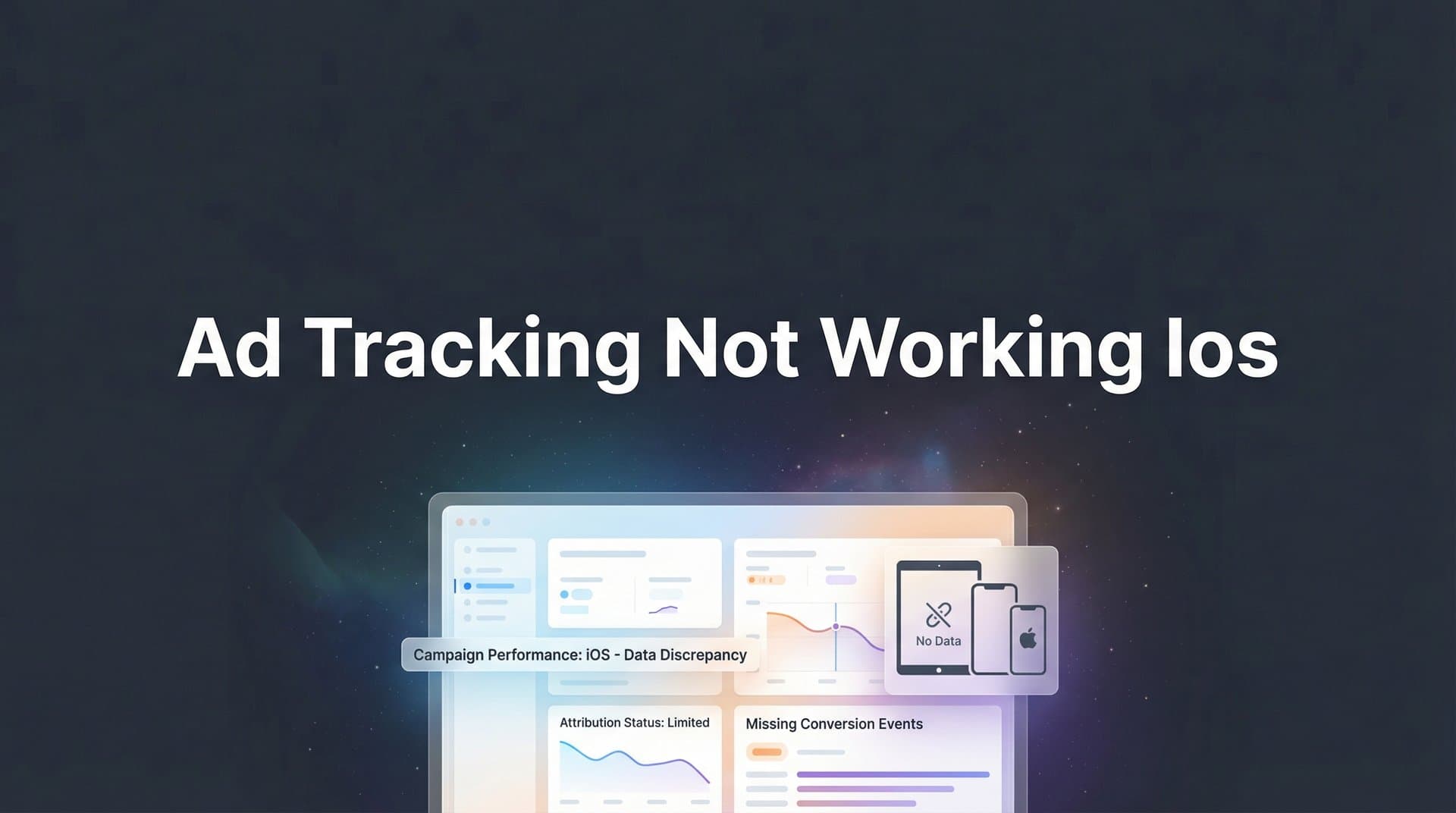
You're checking your ad dashboard and the numbers don't add up. Conversions are missing, attribution looks broken, and your iOS traffic seems to have vanished into thin air. If this sounds familiar, you're dealing with one of the most common challenges in digital marketing today: iOS ad tracking failures.
Since Apple's App Tracking Transparency (ATT) framework rolled out, marketers have watched their tracking accuracy plummet. What used to be straightforward campaign measurement has become a puzzle of missing data and incomplete customer journeys. The frustration is real: you're spending money on ads, but you can't definitively say which ones are working.
But here's the good news—broken iOS tracking isn't something you simply have to accept.
The marketers who are winning right now aren't the ones with the biggest budgets. They're the ones who've adapted their measurement infrastructure to work with iOS limitations rather than against them. They've moved beyond hoping their pixel captures everything and built systems that give them confidence in their data again.
This guide walks you through exactly how to diagnose what's going wrong and implement solutions that restore visibility into your iOS campaigns. We'll cover everything from identifying your specific tracking gaps to implementing server-side solutions that bypass browser limitations entirely. By the end, you'll have a clear action plan to recover lost attribution data and make confident decisions about your ad spend again.
Let's get your tracking back on track.
Step 1: Diagnose the Root Cause of Your Tracking Gap
Before you start implementing fixes, you need to understand exactly what's broken. Throwing solutions at undefined problems wastes time and rarely works. Start with data that tells you the real story.
Open your ad platform dashboards and segment your conversion data by device type. Compare iOS conversion rates against Android and desktop. If your iOS conversions are significantly lower despite similar traffic volumes, you've confirmed a tracking problem rather than an audience quality issue. Document these baseline numbers—you'll need them to measure whether your fixes are working.
Next, check your ATT opt-in rates if you're running mobile apps. Navigate to your mobile analytics platform or check the SKAdNetwork reports in your ad accounts. Industry averages show opt-in rates typically range from 15-40% depending on your app category and how you present the permission request. If you're seeing lower rates, that's a major contributor to your tracking gaps. Understanding the full iOS App Tracking Transparency impact on your campaigns helps you set realistic expectations for recovery.
Now identify whether your problem is pixel-based, SDK-related, or something deeper. Test a conversion on an iOS device yourself. Open Safari on your iPhone, click through one of your ads, and complete a conversion action. Then check if that conversion appears in your ad platform within a few minutes. If it doesn't show up, you likely have a pixel implementation issue.
For mobile apps, verify your SDK version. Outdated SDKs won't properly support SKAdNetwork, Apple's privacy-preserving attribution framework. Check your development environment or ask your technical team which version you're running. Compare it against the latest version available from your ad platform provider.
Document everything you discover in this diagnostic phase. Create a simple spreadsheet noting your iOS vs Android conversion rate gap, your ATT opt-in percentage, whether test conversions fire correctly, and your current SDK version. This baseline becomes your measuring stick for improvement.
The key insight here? Most tracking problems aren't singular issues—they're layered. You might have both an outdated SDK and a misconfigured pixel. Systematic diagnosis prevents you from fixing one thing while missing three others that still break your attribution.
Step 2: Verify Your Pixel and SDK Implementation
Now that you know where the gaps are, let's verify your fundamental tracking infrastructure is set up correctly. Even small configuration errors can completely break iOS attribution.
Start with Meta Events Manager if you're running Facebook or Instagram ads. Navigate to the Events Manager in your Business Manager account, select your pixel, and click the "Test Events" tab. Open your website on an actual iOS device—not a simulator or desktop browser—and trigger a conversion event. Watch the Events Manager in real time. Events should appear within seconds. If they don't, your tracking pixels aren't firing correctly on iOS.
For Google Ads, use Google Tag Assistant. Install the Chrome extension, then open your website and click through a conversion path. Tag Assistant will show you which tags fired and flag any errors. Pay special attention to whether your conversion tags are triggering on iOS Safari specifically, since that's where most issues surface.
Here's a critical point many marketers miss: domain verification. Meta requires domain verification for Aggregated Event Measurement to work properly on iOS. Go to Business Manager settings, click "Brand Safety," then "Domains." Add your domain and verify it using either DNS records, HTML file upload, or meta tag. Without this step, your iOS tracking will be severely limited regardless of how well your pixel is implemented.
Next, configure Aggregated Event Measurement. This is Meta's system for prioritizing which conversion events to track when iOS users opt out of tracking. You're limited to eight events per domain, so choose wisely. Prioritize your most valuable conversion events—typically purchases, leads, or high-intent actions. Rank them in order of business value because Meta will prioritize them in that sequence when attribution is limited.
For mobile apps, confirm your SDK is updated. Check your app's build settings or package dependencies. Meta's SDK should be version 13.0 or higher, Google's should be recent enough to support enhanced conversions. Outdated SDKs simply can't communicate with SKAdNetwork properly, which means you're missing conversion data by default.
Test everything on real devices. Simulators don't accurately replicate iOS tracking behavior, especially around ATT prompts and cookie handling. Borrow an iPhone, click your own ads, complete conversions, and verify they appear in your reporting. This real-world testing catches issues that diagnostic tools sometimes miss.
One more thing: check your conversion event parameters. Make sure you're passing value data with purchase events, and that custom parameters you rely on for optimization are actually being captured. Open your Events Manager or Google Analytics events report and inspect individual events to see what data is coming through.
Step 3: Implement Server-Side Tracking as Your Foundation
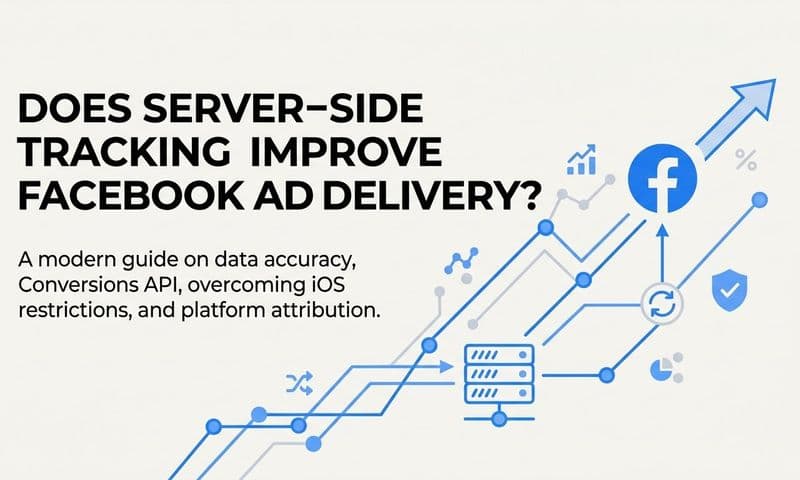
Here's where we shift from fixing what's broken to building something more resilient. Browser-based pixels are fundamentally limited on iOS, and no amount of tweaking will change that. Server-side tracking bypasses these limitations entirely.
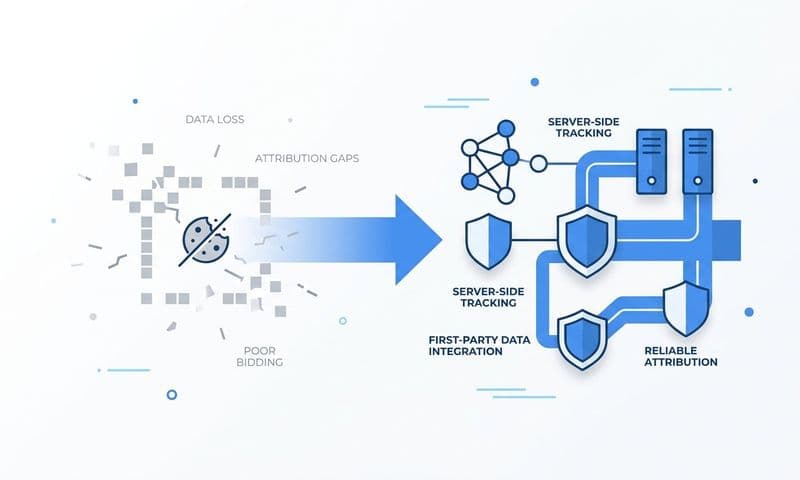
Let's talk about why this matters. Safari's Intelligent Tracking Prevention treats third-party cookies like temporary visitors—they're deleted after 24 hours. Even first-party cookies set via JavaScript only last seven days. When your pixel relies on these cookies to connect ad clicks to conversions, and those cookies disappear, your attribution breaks. This is why cookie tracking isn't working anymore for many marketers.
Server-side tracking solves this by sending conversion data directly from your server to ad platforms, completely independent of browser cookies. When someone converts on your site, your server captures that information and sends it to Meta's Conversions API, Google's enhanced conversions, or equivalent endpoints. No browser limitations, no cookie deletion, no iOS restrictions.
Start with Meta's Conversions API if you're running Facebook or Instagram ads. You'll need to generate an access token in Events Manager and set up your server to send conversion events to Meta's API endpoint. The basic flow: a user converts, your server captures the conversion details along with any available user identifiers (email, phone, IP address), then your server makes an API call to Meta with this data.
For Google Ads, implement enhanced conversions. This works similarly—your server sends conversion data including hashed customer information to Google. Google then matches this data to signed-in Google users, dramatically improving attribution accuracy even when cookies are blocked or deleted. For a deeper comparison, explore the differences between Google Analytics vs server-side tracking approaches.
The technical implementation varies based on your stack, but the concept is consistent: capture conversion data server-side, then transmit it to ad platforms via their APIs. If you're using Shopify, WordPress, or another popular platform, plugins and integrations can handle much of this automatically. For custom setups, you'll need developer support to build the server-side event transmission.
Critical consideration: event deduplication. If you're running both pixel-based and server-side tracking (which you should for maximum coverage), you need to prevent double-counting. Include an event_id parameter that's identical between your pixel event and your server event. Ad platforms use this ID to recognize they're the same conversion and count it only once.
Match rates matter significantly here. When your server sends conversion data to ad platforms, they try to match it to users they know. The more identifiers you include—hashed email, phone number, address components—the higher your match rate. Higher match rates mean more conversions get properly attributed and your campaign optimization improves.
Server-side tracking isn't just a workaround for iOS limitations. It's fundamentally more reliable than browser-based tracking across all devices. Ad blockers can't stop it, browser settings can't interfere with it, and you control the data flow completely. This is the foundation of modern attribution infrastructure.
Step 4: Configure First-Party Data Collection
Server-side tracking handles the transmission, but you need solid first-party data collection to feed it. This step is about capturing and storing customer information in your own systems, independent of ad platform pixels or third-party cookies.
Start with UTM parameter capture. When users click your ads, those URLs contain valuable attribution data in the UTM parameters—source, medium, campaign, content, term. Most websites capture these on the landing page but then lose them if the user navigates away before converting. Fix this by storing UTM parameters in first-party cookies or session storage immediately when users land on your site. If you're experiencing issues here, check whether your UTM parameters are working properly.
Implement a simple JavaScript snippet that reads UTM parameters from the URL and saves them to a first-party cookie with your domain. Set the cookie to last 90 days or longer. Now when that user returns directly to your site days later and converts, you can still attribute that conversion back to the original campaign because the UTM data persists in your cookie.
Build a customer data infrastructure that captures more than just clicks. When users submit forms, create accounts, or make purchases, store that information in your CRM or database along with any available attribution data. Connect the dots between anonymous sessions and known customers. A proper first-party data tracking setup creates a complete picture of the customer journey that doesn't disappear when cookies get deleted.
Email and phone number matching becomes crucial here. When someone converts and provides their email address, hash it using SHA-256 and send it with your server-side conversion events. Ad platforms can match this hashed email to their user database and properly attribute the conversion even if all cookies were blocked. The same applies to phone numbers—normalize the format, hash them, and include them in your server events.
Consider implementing a customer data platform or enhanced CRM that serves as your single source of truth. Tools like Segment, Rudderstack, or more advanced CRM systems can capture every customer interaction—website visits, email opens, purchase history—and make that data available for attribution analysis. This infrastructure outlasts any individual tracking method.
First-party cookies set server-side last significantly longer than JavaScript-set cookies on iOS. If you're technically capable, set your attribution cookies via server headers rather than JavaScript. This small change can extend cookie lifespan from seven days to much longer, improving your ability to connect ad clicks to eventual conversions.
The goal isn't just collecting data—it's creating a persistent customer identity that survives across sessions, devices, and tracking limitations. When you know that customer@email.com clicked your ad last week, browsed your site yesterday, and purchased today, you can attribute that revenue accurately regardless of what iOS does to your cookies.
Step 5: Optimize Your Attribution Model for iOS Reality
Even with perfect tracking infrastructure, last-click attribution will fail you in an iOS-limited world. It's time to adopt attribution models that reflect how customers actually behave rather than hoping for perfect click-to-conversion data.
Multi-touch attribution captures the reality that customers interact with your brand multiple times before converting. Someone might see your Instagram ad, click a Google search ad three days later, then return directly to purchase. Last-click gives all credit to the direct visit, ignoring the ads that introduced and nurtured that customer. Multi-touch models distribute credit across all touchpoints, giving you a more accurate picture of what's driving revenue. Explore different attribution tracking methods to find what works best for your business.
Implement time-decay or position-based attribution models as a starting point. Time-decay gives more credit to touchpoints closer to conversion, acknowledging that recent interactions matter more. Position-based (U-shaped) splits credit between first touch and last touch, recognizing both introduction and closing interactions. These models work better than last-click when iOS tracking gaps make some middle touchpoints invisible.
Probabilistic modeling helps estimate conversions from opted-out users. This statistical approach uses aggregate data patterns to infer likely conversion attribution even when individual-level tracking isn't possible. While you can't track every opted-out iOS user individually, you can analyze patterns in your opted-in user data and apply those patterns to estimate performance across your full audience.
Configure conversion value schemas for SKAdNetwork. Apple's framework lets you pass back limited conversion data, but you need to define what that data represents. Set up your schema to capture your most important business metrics—revenue ranges, product categories, customer lifetime value tiers. This gives you more granular iOS data than just "conversion happened" or "didn't happen."
Compare platform-reported data against your own first-party attribution regularly. Export conversion data from Meta, Google, and other platforms, then compare it to what your CRM or analytics platform shows. The gaps reveal where tracking is failing and help you understand how much you can trust each data source. This comparison also helps you create blended attribution models that combine multiple data sources for more complete insights.
Build incrementality testing into your measurement strategy. Run controlled experiments where you turn campaigns on and off for specific audience segments, then measure the lift in conversions. This approach doesn't rely on perfect click tracking—it measures actual business impact. When attribution data is uncertain, incrementality testing gives you ground truth about what's working.
Accept that perfect attribution is gone, but actionable attribution is absolutely achievable. The goal isn't tracking every single click—it's having enough signal to make confident optimization decisions. Multi-touch models combined with first-party data give you that signal even when iOS tracking is imperfect.
Step 6: Feed Better Data Back to Ad Platform Algorithms
Your improved tracking infrastructure isn't just for your own reporting—it's fuel for ad platform algorithms. The more accurate data you send back to Meta, Google, and other platforms, the better they can optimize your campaigns.
Conversion sync is the process of sending your enriched, first-party conversion data back to ad platforms to improve their targeting and bidding. When you send server-side conversion events that include additional customer information and accurate revenue values, ad platforms can better identify which audiences and placements drive real business results. This feedback loop makes their AI optimization significantly more effective.
Use offline conversion imports for sales that happen outside normal tracking windows. If you run lead generation campaigns where sales close days or weeks later, import those closed deals back to your ad platforms. Connect them to the original ad clicks using click IDs or customer matching. This tells the platform which leads actually became customers, dramatically improving lead quality over time. Learn more about lead generation attribution tracking to maximize your pipeline visibility.
Implement value-based bidding using your actual revenue data. Instead of optimizing for conversion counts, optimize for conversion value. Send real purchase amounts with your conversion events. When the platform knows that some conversions are worth $50 and others are worth $500, it can optimize to find more of the high-value customers. This shift alone often improves ROAS significantly.
Monitor match rates in each platform's reporting. Meta shows match rates in Events Manager under the "Match Quality" column. Google provides similar metrics in their conversion tracking reports. Match rates above 70% are good; above 80% is excellent. If your match rates are lower, you're missing attribution opportunities. Improve them by including more customer identifiers—email, phone, address—in your server-side events.
Check data quality scores and event parameter completeness. Ad platforms grade the quality of data you're sending them. Review these scores regularly and fix any flagged issues. Common problems include missing event parameters, incorrectly formatted customer information, or events firing at the wrong time in the customer journey. Using the right attribution tracking tools can automate much of this quality monitoring.
The platforms you advertise on have sophisticated machine learning systems, but they're only as good as the data they receive. When iOS tracking breaks, those algorithms start optimizing based on incomplete information, which leads to poor performance. By feeding them better data through server-side tracking and conversion sync, you restore their ability to find and convert your best customers.
Think of this step as closing the optimization loop. You've built infrastructure to capture accurate conversion data despite iOS limitations. Now you're using that data to make the ad platforms themselves work better for you. It's not just about reporting—it's about improving actual campaign performance through better algorithmic optimization.
Putting It All Together
Fixing iOS ad tracking isn't a one-time task—it's an ongoing process of adapting to platform changes while building a more resilient measurement infrastructure. The steps we've covered aren't just workarounds for Apple's privacy changes; they're fundamentals of modern marketing attribution that will serve you regardless of what tracking limitations emerge next.
Start by diagnosing your specific tracking gaps so you know exactly what needs fixing. Verify your pixel and SDK implementation to ensure the basics are working correctly. Then move beyond browser-based tracking by implementing server-side solutions that bypass iOS limitations entirely. Build first-party data collection that creates persistent customer identities across sessions and devices. Update your attribution model to reflect the reality of multi-touch customer journeys. Finally, sync your enriched data back to ad platforms to improve their optimization algorithms.
The marketers who thrive in this environment are those who take control of their own data rather than relying solely on ad platform pixels. They've accepted that perfect tracking is impossible and focused instead on building systems that provide enough signal to make confident decisions. They measure incrementality, compare multiple data sources, and continuously refine their attribution infrastructure.
Here's your quick implementation checklist: Quantify your iOS tracking gap by comparing device-level conversion rates. Verify pixel and SDK setup using platform debugging tools. Implement server-side tracking through Conversions API and enhanced conversions. Build first-party data collection with persistent UTM capture and customer matching. Update your attribution model to multi-touch approaches that survive tracking gaps. Sync enriched data back to ad platforms to improve algorithmic optimization.
Ready to see exactly which ads drive revenue, even with iOS tracking challenges? Cometly's server-side tracking and multi-touch attribution can help you capture every touchpoint and make confident scaling decisions. From ad clicks to CRM events, the platform tracks the complete customer journey and feeds enriched conversion data back to your ad platforms for better targeting and optimization.
Ready to elevate your marketing game with precision and confidence? Discover how Cometly's AI-driven recommendations can transform your ad strategy—Get your free demo today and start capturing every touchpoint to maximize your conversions.