Here is a scenario that plays out in B2B SaaS revenue teams every quarter: a deal closes, the CRM credits the last sales call, and the team celebrates. Meanwhile, the cold email that sparked the prospect's curiosity, the LinkedIn message that got a reply two weeks later, the retargeting ad that kept the brand top of mind, and the event follow-up that finally booked the meeting all go unrecognized. The pipeline existed because of a sequence, not a single moment. But the data tells a different story.
This is not a strategy problem. Most outbound teams are running sophisticated, multi-channel sequences with real discipline. The problem is a measurement gap. When your attribution model only credits one touchpoint, you are making budget and channel decisions based on an incomplete picture of what actually drove the outcome.
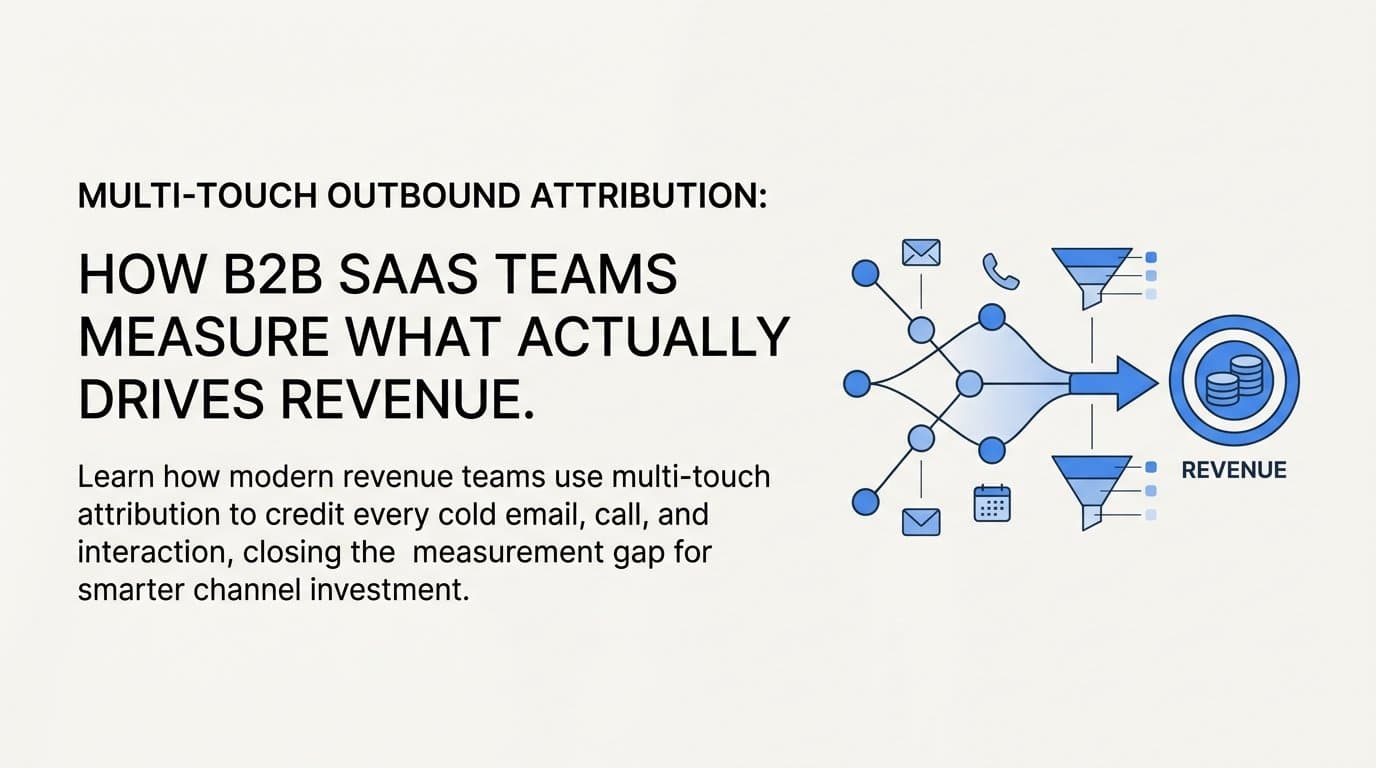
Multi-touch outbound attribution is the framework that closes this gap. It distributes credit across every outbound interaction in the buyer journey, from the first cold email to the meeting-booking call, giving revenue teams a complete view of which channels and sequences are genuinely moving deals forward. This guide walks through the concept, the models that work best for outbound selling, and the practical steps to build a system that scales with your go-to-market motion.
Why Single-Touch Attribution Breaks Down in Outbound Selling
B2B SaaS deals rarely close because of one interaction. A prospect might receive a cold email on Monday, ignore it, see a LinkedIn connection request on Wednesday, click a retargeting ad the following week, and finally respond to a phone call three weeks after the first touch. That is at least five distinct outbound touchpoints before a conversation even begins. Assigning all credit to either the first email or the final call misrepresents the entire sequence that made the deal possible.
First-touch attribution tells you where the journey started, which has some value for understanding top-of-funnel awareness. But it systematically undervalues every channel that did the heavy lifting in the middle of the sequence. Last-touch attribution has the opposite problem: it overvalues the closing interaction and makes it look like the final touchpoint did all the work, when in reality it was just the last step in a carefully orchestrated sequence.
The downstream effect is predictable. Teams start cutting the channels that do not get last-touch credit, even though those channels were warming prospects and building the familiarity that made the final touch convert. Cold email gets defunded because the CRM shows the deal came from a phone call. LinkedIn outreach looks like a vanity channel because clicks are hard to track back to closed revenue. Over time, the sequence degrades because the supporting layers were quietly eliminated based on misleading data.
Outbound selling adds another layer of complexity that inbound attribution models were never designed to handle. In inbound, the prospect initiates contact by clicking an ad, filling out a form, or visiting a pricing page. Every action generates a trackable digital event. In outbound, your team initiates contact. Many of those touches, a phone call, a LinkedIn direct message, a direct mail piece, do not produce a clickable event that a pixel can capture. The attribution model must account for proactive sequences that span weeks or months, not just reactive clicks that happen within a single session.
This is why single-touch attribution is not just imprecise in outbound contexts. It is structurally misaligned with how outbound selling actually works. The measurement framework has to match the motion, and for outbound B2B SaaS teams, that means distributing credit across the full sequence.
What Multi-Touch Outbound Attribution Actually Measures
Multi-touch outbound attribution is a methodology that assigns fractional credit to every outbound touchpoint that contributed to a conversion outcome. Rather than picking a winner, it distributes credit across the entire sequence based on a defined model or statistical analysis. The result is a more accurate picture of which channels, messages, and sequence patterns are driving pipeline and revenue.
In practice, the touchpoints being measured span a wide range of outbound channels. Cold emails and follow-up sequences from sales engagement platforms are the most common starting point. LinkedIn outreach, including connection requests, direct messages, and InMail, represents another layer that modern outbound teams rely on heavily. Phone calls and voicemails, while harder to tie to digital events, are captured through CRM activity logs and sales engagement platform records. Paid ads, particularly retargeting campaigns that run alongside outbound sequences, add another dimension. Some teams also include event interactions, direct mail, and gifting campaigns as trackable touchpoints when the infrastructure supports it.
The data inputs required to make multi-touch outbound attribution work are more demanding than what most teams have in place by default. You need touchpoint timestamps that tell you when each interaction occurred relative to the conversion event. You need channel identifiers that distinguish a LinkedIn message from a cold email from a phone call. You need prospect identifiers, typically email addresses or CRM contact IDs, that allow you to stitch all of these touches together into a single customer journey. And you need outcome events: a booked meeting, a qualified opportunity created, a pipeline stage reached, or a closed-won deal.
The distinction between outbound and inbound attribution challenges is important here. Inbound attribution largely relies on cookie-based tracking and UTM parameters that fire when a prospect clicks a link and lands on your website. That infrastructure does not exist for a phone call or a LinkedIn message. Outbound attribution requires pulling activity data directly from the tools where those interactions happen, then merging that data with CRM records and, where applicable, ad platform impression data.
This is also why outbound attribution tends to be more organizationally complex than inbound. The data lives in more places: your sales engagement platform, your CRM, your ad accounts, and potentially your LinkedIn Sales Navigator activity logs. Unifying these sources into a coherent customer journey is the foundational challenge that every multi-touch outbound attribution system has to solve before any modeling can begin.
The Attribution Models That Work Best for Outbound Sequences
Choosing the right attribution model for outbound selling is not about finding the most sophisticated option. It is about finding the model that best reflects the reality of your sales cycle and gives your team actionable signal. Here is how the main models map to outbound contexts.
Linear attribution spreads credit evenly across every touchpoint in the journey. If a prospect received six outbound touches before booking a meeting, each touch gets one-sixth of the credit. This model works well for teams with long, multi-touch sequences where every interaction genuinely contributes to moving the prospect forward. It avoids the bias of over-weighting any single channel and gives a clear view of which channels appear most frequently in successful journeys. The limitation is that it treats every touch as equally valuable, which is rarely true in practice.
Time-decay attribution gives progressively more credit to touchpoints that occurred closer to the conversion event. A touch that happened one day before a meeting was booked receives more credit than a touch that happened three weeks earlier. This model suits shorter sales cycles where recency is a meaningful signal of influence. For outbound teams running tight sequences against high-intent prospects, time-decay can surface which closing touches are most effective. The risk is that it undervalues top-of-funnel touches that created the initial awareness, which matters a lot in longer enterprise cycles.
Position-based attribution, often called U-shaped or W-shaped depending on the number of positions weighted, gives extra credit to specific touchpoints in the journey. U-shaped models typically weight the first touch and the conversion touch most heavily, with remaining credit distributed across the middle. W-shaped models add a third weighted position, usually the opportunity-creation event, which maps naturally to outbound workflows where the meeting-booking moment is a distinct and meaningful milestone. For many B2B SaaS outbound teams, position-based attribution offers the best balance between recognizing the sequence and acknowledging that the first touch and the meeting-booking touch carry outsized strategic importance.
Data-driven attribution is the most advanced option. Rather than applying a fixed rule, an algorithm analyzes your actual conversion path data to determine the statistical contribution of each touchpoint to conversion outcomes. Touchpoints that consistently appear in journeys that convert receive more credit than those that appear in journeys that stall. This model removes the human assumption from credit assignment and reflects what the data actually shows. The requirement is volume: you need enough conversion events and enough variation in your touchpoint paths for the algorithm to identify meaningful patterns. Early-stage teams or those with small outbound volumes may not yet have enough data to support a reliable data-driven model.
The right starting point depends on three factors. First, your sales cycle length: longer cycles with many touches favor linear or position-based models. Shorter, higher-velocity cycles lean toward time-decay. Second, your outbound channel mix: if you are running tightly integrated sequences across email, phone, and LinkedIn, a model that distributes credit across channels is more informative than one that concentrates it. Third, your data maturity: if your tracking is incomplete or inconsistent, a simpler model applied to clean data will outperform a sophisticated model applied to unreliable data. Start with what your data can support, and evolve the model as your tracking infrastructure matures.
Connecting Outbound Touchpoints to Pipeline and Revenue
The most common attribution mistake B2B SaaS teams make is stopping at the lead level. A booked meeting or a form fill is a useful signal, but it is not the outcome that drives business decisions. Pipeline created and closed-won revenue are the metrics that matter, and multi-touch outbound attribution only delivers its full value when it is connected all the way to those downstream outcomes.
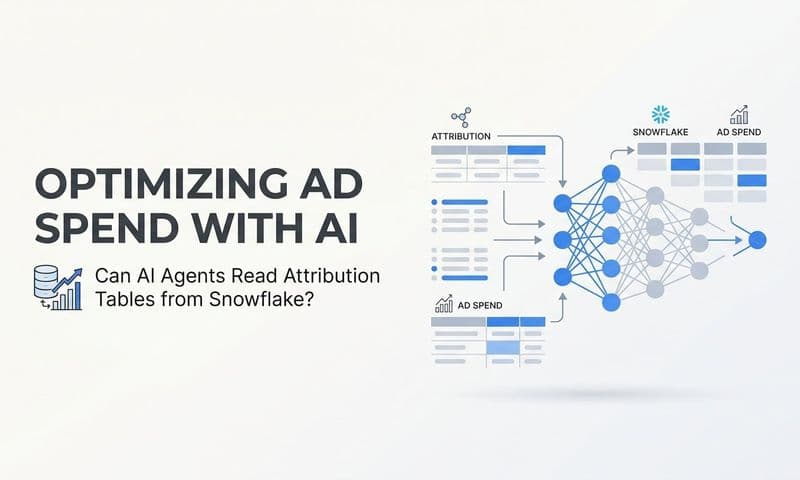
Stitching together outbound activity data into a unified customer journey requires pulling from multiple sources. Your sales engagement platform, whether that is Outreach, Salesloft, Apollo, or a similar tool, holds the record of every email sent, every call logged, and every LinkedIn step executed. Your CRM holds the pipeline and revenue data: opportunity stages, deal values, close dates, and contact associations. Your ad platforms hold impression and click data for any paid channels running alongside your outbound sequences. Bringing these sources together into a single view of the customer journey is the infrastructure problem that precedes any meaningful attribution analysis.
Server-side tracking plays an important role here, particularly for capturing conversion signals that browser-based pixels miss. When a prospect books a meeting through a scheduling link, or when a CRM stage changes as a result of an outbound sequence, those events need to be captured and tied back to the touchpoints that preceded them. Pixel-based tracking is unreliable for this purpose: it depends on cookies, browser permissions, and the prospect actually visiting your website, none of which are guaranteed in an outbound context. Server-side event tracking captures these signals directly from your systems, not from the prospect's browser, which makes it far more reliable for outbound attribution.
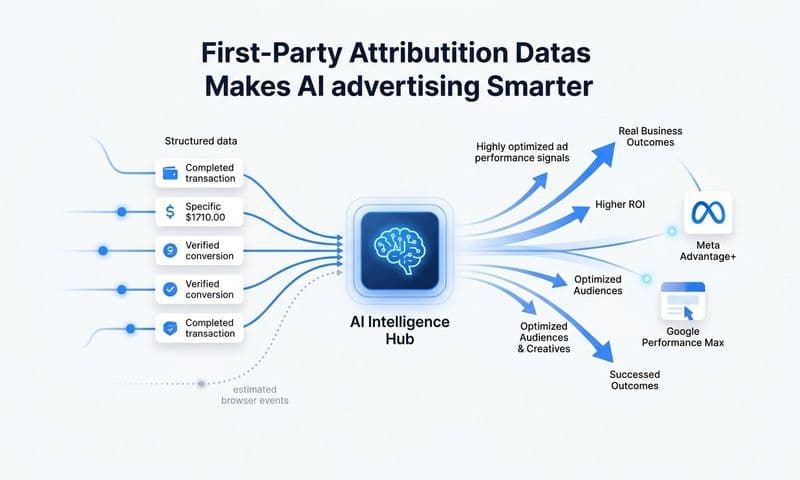
First-party data is the foundation of this entire system. As third-party cookies have become less reliable and browser privacy settings have tightened, teams that built their attribution on third-party tracking have seen their data degrade. First-party data, collected directly from your own systems and tied to known contact identifiers, is not subject to these constraints. For outbound teams, this means using CRM contact IDs and email addresses as the stitching layer that connects touchpoints across channels and over time.
Once the data is unified, the analysis shifts from cost-per-lead to cost-per-pipeline and cost-per-revenue by channel and sequence. This is where the strategic value becomes concrete. Instead of knowing that cold email generated 200 leads, you can see that cold email sequences that included a LinkedIn touch in step three generated twice the pipeline value per contact compared to email-only sequences. That is the kind of insight that changes how you build and invest in your outbound motion.
Using Attribution Data to Optimize Outbound Channels and Sequences
Attribution data becomes a strategic asset when it moves from reporting to decision-making. Once you can see which touchpoint combinations and sequence patterns appear most frequently in the journeys of prospects who convert to pipeline and revenue, you can make deliberate choices about where to invest more and where to pull back.
The most immediate application is sequence optimization. If your attribution data consistently shows that prospects who received a LinkedIn touch between the second and third email step converted at a higher rate than those who did not, that is a signal to make that LinkedIn step a standard part of your sequence rather than an optional add-on. If paid retargeting impressions appear in the journeys of nearly every enterprise deal but rarely in the journeys of smaller deals that stall, that tells you where to concentrate your retargeting budget. These are not guesses. They are patterns surfaced by data from your own customer journeys.
At scale, manual analysis of these patterns becomes impractical. When you are running dozens of sequences across hundreds of prospects, comparing touchpoint combinations and identifying statistically meaningful patterns requires more than a spreadsheet. This is where AI-driven analysis adds real leverage. AI can surface high-performing touchpoint patterns across large datasets, flagging which channel combinations and sequence orders correlate with conversion outcomes and which ones do not. It removes the manual guesswork and lets your team act on insights that would otherwise be invisible.
There is also a feedback loop opportunity with paid ad platforms. When you have attribution-informed conversion data tied to real pipeline and revenue outcomes, you can send that enriched signal back to platforms like Meta and Google through their Conversion APIs. Instead of optimizing your paid campaigns toward form fills or clicks, you can optimize toward the conversion events that actually matter: booked meetings with high-value prospects, opportunities created above a certain deal size, or closed-won revenue. This improves the quality of the audience signals the platform uses for targeting and lookalike modeling, which in turn improves the efficiency of your paid outbound-assisted campaigns.
Building a Multi-Touch Outbound Attribution System That Scales
A scalable multi-touch outbound attribution system is not a single tool. It is a connected stack where data flows cleanly from activity capture to analysis to optimization. Getting the architecture right from the start prevents the data quality problems that undermine attribution at higher volumes.
The practical stack has four layers. First, a sales engagement platform that captures every outbound activity: emails sent, calls logged, LinkedIn steps completed, and the timestamps associated with each. Second, a CRM that holds pipeline and revenue data at the contact and opportunity level, with clean associations between contacts, activities, and deal outcomes. Third, an attribution platform that pulls data from both of those sources, along with ad platform data, and applies the modeling logic to produce a unified view of the customer journey with credit assigned across touchpoints. Fourth, ad platform integrations that close the feedback loop by sending enriched conversion signals back to Meta, Google, and other paid channels.
The operational discipline required to keep this system accurate is often underestimated. Consistent UTM tagging on any links included in outbound emails or paid ads ensures that clicks are attributed to the right source and campaign. Contact-level tracking, using email addresses or CRM IDs as persistent identifiers, ensures that touchpoints from different channels are stitched to the right prospect rather than creating duplicate or fragmented journeys. Deduplication logic prevents the same touchpoint from being counted multiple times when data from different sources overlaps, which is a common problem when CRM activity logs and sales engagement platform records both capture the same interaction.
This is where Cometly fits into the outbound attribution stack. Cometly connects your ad platforms, CRM events, and website behavior into a single source of truth, giving outbound teams a real-time view of which channels and sequences are driving pipeline and revenue. Its server-side tracking captures the conversion signals that pixel-based tracking misses, its AI surfaces high-performing touchpoint patterns at scale, and its Conversion API integrations send enriched data back to Meta and Google to improve paid campaign performance. For B2B SaaS teams running multi-channel outbound motions, Cometly provides the attribution layer that ties the entire system together without requiring a custom data engineering build.
Putting It All Together
The shift from single-touch attribution to multi-touch outbound attribution is not a reporting upgrade. It is a strategic advantage. When you can see every touchpoint that contributed to a closed deal, you stop making budget decisions based on which channel got the last click and start making them based on which channels and sequences actually move revenue.
Outbound selling is inherently multi-touch. The teams that measure it that way will consistently outperform those that do not, because they are optimizing based on reality rather than a simplified version of it. They know which sequence patterns to scale, which channels to invest in, and which combinations drive the highest-value deals. That clarity compounds over time.
The infrastructure to support this kind of attribution is more accessible than it has ever been. Sales engagement platforms, modern CRMs, and server-side tracking tools have made it possible for growth teams to capture and unify the data that multi-touch attribution requires. The remaining challenge is connecting those sources into a coherent system with the right modeling layer on top.
If you are ready to move beyond single-touch guesswork and see the full picture of what is driving your pipeline and revenue, start with the attribution layer. Get your free demo of Cometly today and discover which outbound touchpoints are actually converting your best customers.