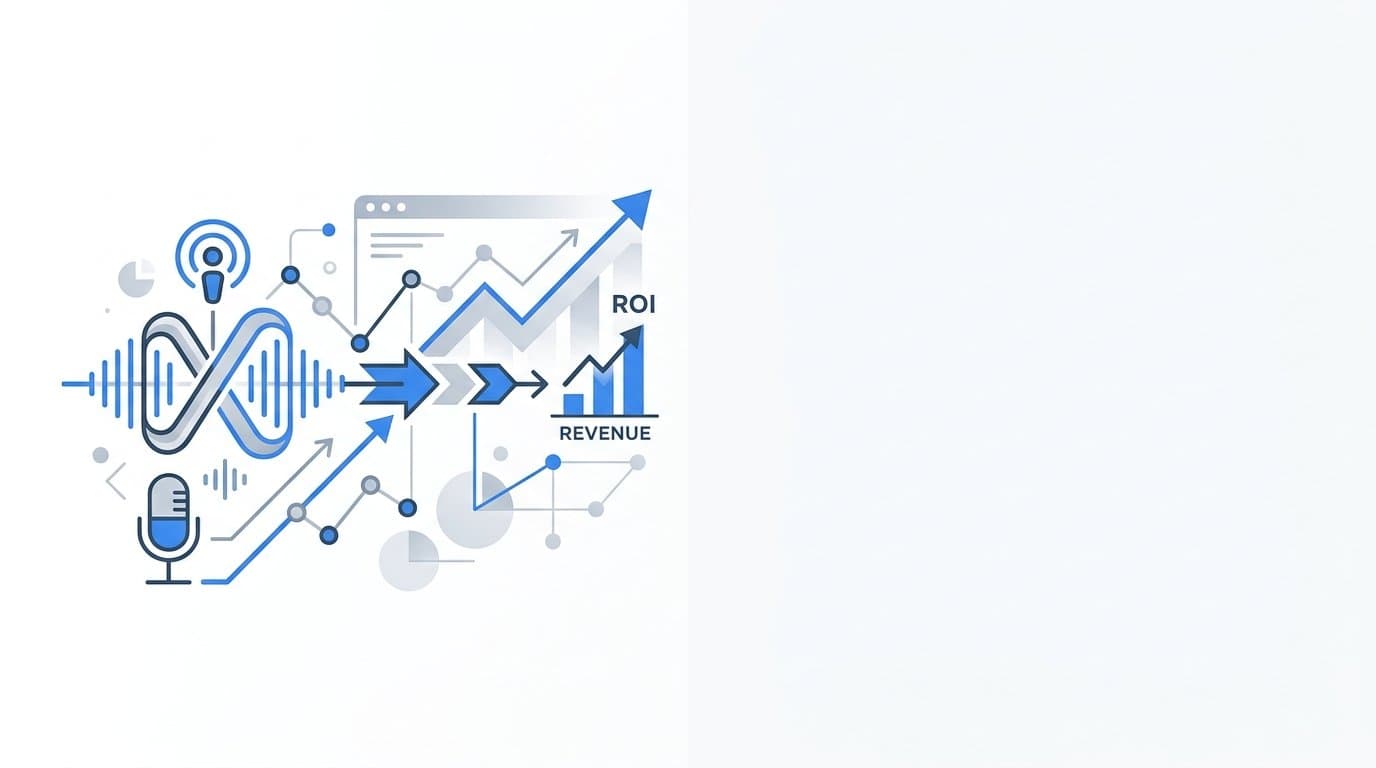
Podcasts have become one of the most effective channels for reaching B2B decision-makers. Executives, practitioners, and buyers consume them during commutes, workouts, and downtime, which means your brand can show up in moments that display ads and LinkedIn posts simply cannot reach. The problem is that most B2B marketing teams have no reliable way to connect that exposure to pipeline or revenue.
If you have ever sponsored a podcast episode or invested in building a branded show, you know the frustration. Downloads look solid. The host reads your ad with genuine enthusiasm. But when you go back to your CRM or your attribution dashboard, there is nothing there. No source tag. No lead. No thread connecting the listener who heard your ad on Tuesday morning to the demo they booked the following Friday.
That gap is not a podcast problem. It is an attribution infrastructure problem. Podcast attribution for B2B is genuinely difficult, but it is not unsolvable. The teams that figure it out stop treating podcasts as a brand experiment and start treating them as a measurable channel with real pipeline impact. This guide breaks down exactly how to do that: why podcasts create attribution blind spots, which methods actually work, how to set up trackable campaigns, and how to build podcast data into a complete cross-channel attribution picture.
Why Podcasts Are a Blind Spot in Most B2B Attribution Stacks
Most attribution systems are built around a simple assumption: the touchpoint that drives a conversion happens close in time to the conversion itself. A prospect clicks an ad, lands on a page, fills out a form. The click is logged, the session is tagged, and the lead is attributed. Clean, fast, traceable.
Podcasts break that assumption immediately.
Listeners consume audio content passively and asynchronously. They hear your ad while driving to a meeting, exercising, or cooking dinner. They may find it genuinely interesting. They may even think, "I should look into that." But they are not going to pull out their phone and click anything right now. The gap between hearing an ad and taking action can span days or even weeks. By the time that prospect searches for your brand, visits your site, or books a demo, the podcast touchpoint has long since vanished from any session-level tracking window.
This is fundamentally different from paid search or paid social, where a trackable click happens at the moment of exposure. When a prospect clicks a Google ad or a LinkedIn sponsored post, that click creates a data event that flows through your pixel, your UTM parameters, and ultimately your CRM. The attribution chain is intact. With podcasts, there is no click. There is no data event at the moment of exposure. The listener simply heard something, and your attribution stack has no record of it.
For B2B specifically, this problem compounds because of how buying decisions actually happen. B2B purchases involve multiple stakeholders, extended evaluation periods, and complex journeys that span weeks or months. A podcast episode might plant the initial seed of awareness for a buying committee member who then mentions your product in a team meeting. That same person might later search for your brand, visit your pricing page, get retargeted on LinkedIn, and eventually book a demo. In a last-click attribution model, LinkedIn gets full credit for the conversion. In a first-touch model, branded organic search gets the credit. The podcast, which arguably initiated the entire journey, is invisible in both scenarios.
The result is a systematic undervaluation of podcast investment. Marketing teams see no attribution data, conclude the channel is not performing, and pull budget. Meanwhile, the channel may be doing meaningful work in the upper funnel that other channels are converting downstream. Without the right attribution approach, you will never know the difference.
The Core Methods Used to Attribute Podcast Listeners
Because there is no native click-tracking mechanism in audio, podcast attribution relies on indirect signals and behavioral inference. Each method has real strengths and real limitations. Understanding both helps you choose the right combination for your program.
Vanity URLs and Custom Landing Pages: The most widely used approach is directing listeners to a unique URL that is easy to remember and type. The host says something like "go to yourbrand.com/podcast" or "visit yourbrand.com/show-name," and the listener types it in later. When they land on that page, the UTM parameters or redirect logic tags the session as podcast-sourced. This method is simple, low-cost, and gives you a direct signal when it works. The limitation is that it only captures listeners who remember the URL and type it manually. Many listeners who were genuinely influenced will search for your brand directly instead, and those visits will look like organic or direct traffic in your analytics.
Unique Promo Codes: Promo codes serve a similar function but are better suited to e-commerce than to B2B SaaS. If there is no immediate purchase or discount to apply, listeners have less reason to use the code. Some B2B teams use codes to trigger a free trial extension or a bonus resource, which can improve redemption rates, but the overall signal is still limited to the subset of listeners who both remember the code and choose to use it.
IP-Based Listener Matching: Some podcast hosting and analytics platforms offer IP-matching capabilities that attempt to connect listener data to website visitor data. The idea is that if a device with a known IP address streamed your episode and later visited your site, you can infer a connection. This approach has accuracy challenges in general, and those challenges are amplified in B2B contexts. Office IP addresses may represent dozens of employees, making it impossible to identify which individual listened. Remote workers on VPNs add further noise. The signal exists, but you should treat it as directional rather than definitive.
Post-Demo and Post-Purchase Surveys: For high-ACV B2B deals, self-reported attribution surveys remain one of the most reliable qualitative signals available. When a prospect books a demo or becomes a customer, asking "how did you first hear about us?" captures intent and recall that no pixel can match. Podcast-driven awareness often surfaces in these surveys precisely because the experience is memorable. Someone who heard a thoughtful 30-minute conversation about a problem they are actively trying to solve is more likely to remember that than a banner ad they scrolled past. The limitation is that surveys depend on respondent recall and honest answers, and they do not integrate automatically into your attribution data without a deliberate process to log responses in your CRM.
In practice, the most effective B2B podcast attribution programs combine several of these methods. No single approach gives you the full picture, but together they triangulate a meaningful signal.
Multi-Touch Attribution and Where Podcasts Fit in the B2B Funnel
Here is the core insight that changes how you think about podcast measurement: podcasts are almost never the last touchpoint before a conversion. They are awareness drivers. They create the initial recognition, curiosity, or trust that makes every subsequent touchpoint more effective. To measure them accurately, you need an attribution model that gives credit to touchpoints across the entire buyer journey, not just the one that happened right before the form submission.
In a multi-touch attribution model, podcasts typically function as upper-funnel touchpoints that initiate or accelerate a buyer journey that later converts through search, direct, or paid channels. A prospect hears your podcast ad, searches for your brand a week later, visits your site through organic results, gets retargeted on LinkedIn, and then books a demo. A linear multi-touch model would distribute credit across all four touchpoints. A time-decay model would give more weight to the LinkedIn retargeting and the demo booking while still acknowledging the podcast's role. Either approach is more accurate than last-click, which would hand all the credit to LinkedIn and leave the podcast invisible.
Without multi-touch visibility, teams make systematically wrong budget decisions. They scale channels that appear to convert well in last-click models while starving the upper-funnel channels that are actually feeding those conversions. The retargeting ad looks like a revenue driver. The podcast looks like a cost center. In reality, without the podcast creating initial awareness, the retargeting ad would have had no one to retarget.
The more sophisticated analysis is to map podcast touchpoints against CRM pipeline data and look for behavioral differences in podcast-exposed prospects. Do leads who came in through a podcast-specific URL have shorter sales cycles than average? Do they close at higher rates? Do they represent larger deal sizes? These comparisons do not require perfect attribution. They require connecting your podcast source data to your CRM pipeline data and running the comparison. If podcast-sourced leads consistently show better downstream outcomes, that is meaningful evidence of channel quality even if you cannot attribute every influenced deal with precision.
This kind of analysis is exactly what separates teams that make confident podcast investment decisions from teams that are perpetually uncertain. The goal is not perfect attribution. It is directional clarity that supports smarter budget allocation.
Setting Up Trackable Podcast Campaigns That Feed Your Attribution System
Good intentions do not create attribution data. You need deliberate technical setup before a podcast placement goes live. Here is how to build the infrastructure that makes podcast attribution actionable.
Create Dedicated UTM-Tagged Landing Pages: For every podcast placement, build a dedicated landing page with a clean, memorable URL and tag it with UTM parameters that identify the source, medium, campaign, and specific show or episode. When a listener visits that page after hearing the ad, their session is tagged correctly in your analytics platform and that tag should pass through to your CRM when they convert. Do not send podcast traffic to your homepage. A dedicated page lets you control the experience, track the visit accurately, and test messaging that speaks directly to what the host said in the ad read.
Use Server-Side Conversion Tracking: Browser-based pixels are increasingly unreliable. Ad blockers, privacy-focused browsers, and iOS tracking restrictions all degrade the signal you get from client-side JavaScript. This matters especially for B2B podcast audiences, which tend to skew toward technical and executive buyers who are more likely to use privacy tools. Server-side conversion tracking captures form submissions, demo requests, and trial sign-ups at the server level, bypassing browser restrictions entirely. The result is higher-fidelity conversion data that gives you a more accurate count of podcast-sourced leads and passes cleaner data back to your ad platforms and attribution system.
Connect Podcast Leads Through the Entire Revenue Journey: A click count or a lead count is not enough. You need to know what happened to those leads after they entered your funnel. Connect your analytics and CRM so that leads originating from podcast-specific URLs carry their source tag through every subsequent stage: from first visit to MQL, from MQL to opportunity, from opportunity to closed-won. This is what transforms podcast attribution from a curiosity into a revenue-level measurement. When you can see that a cohort of podcast-sourced leads generated a specific amount of pipeline and closed at a certain rate, you have the data you need to make a real ROI argument for the channel.
The technical setup is not complicated, but it does require intentionality. Build these systems before the campaign launches, not after, so that every lead that comes in is tracked from the start.
Metrics That Actually Tell You If Your Podcast Investment Is Working
Downloads are not a business metric. Listener counts tell you about audience size, not about whether your investment is generating pipeline. If you are evaluating podcast performance using the same metrics a consumer brand would use, you are measuring the wrong things for B2B.
The metrics that matter for podcast attribution in B2B are pipeline-level outcomes. Start with leads generated from podcast-specific URLs as your primary volume signal. Then track how those leads progress: demos booked, opportunities created, and revenue influenced by podcast-sourced contacts. These numbers connect your podcast investment directly to business outcomes and make it possible to compare podcast performance against other channels in your mix.
Branded Search Lift: One of the most useful indirect signals for podcast effectiveness is branded search volume. When a podcast placement reaches a meaningful audience, it often produces a measurable increase in searches for your brand name in the days and weeks following an episode release. You can observe this in Google Search Console or in your paid brand campaign impression data. It is not a direct attribution signal, but it is a leading indicator that the podcast is creating awareness and driving people to look you up. Correlating episode release dates with branded search volume trends gives you a way to measure awareness impact even when listeners do not use the vanity URL.
Cost Per Pipeline Dollar: Calculate the return on your podcast investment the same way you would for paid search or paid social. Take the total cost of the placement or your show production, divide it by the pipeline value generated by podcast-sourced leads, and compare that ratio to your other channels. If podcast-sourced leads are converting at higher rates or closing at larger deal sizes than average, the cost per pipeline dollar may be lower than it looks on the surface. This is the analysis that makes the business case for continuing or scaling podcast investment, and it is only possible if you have the source-to-revenue tracking in place.
Treat these metrics as a system, not as individual data points. The combination of lead volume, pipeline progression, branded search lift, and cost efficiency gives you a multi-dimensional view of what the channel is actually doing for your business.
Building a Complete Attribution Picture Across Every Channel
Podcast attribution does not work in isolation. A podcast touchpoint only makes sense when you can see it alongside every other touchpoint in the buyer's journey. If your attribution data lives in silos, with ad platform data in one place, CRM data in another, and website analytics in a third, you will never be able to see how podcasts interact with the rest of your marketing mix.
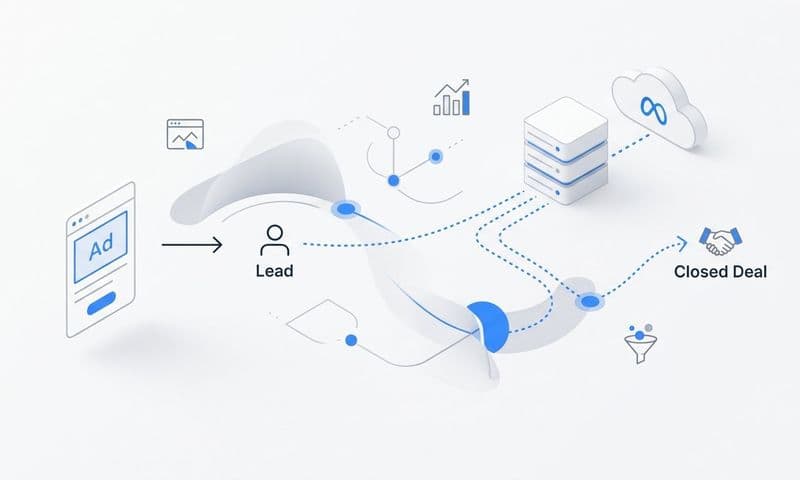
The goal is a single source of truth that connects all your channels to revenue in one place. When a prospect hears your podcast ad, visits your landing page, gets retargeted on Meta, clicks a paid search ad, and books a demo, you need to see that entire journey as a connected sequence, not as four separate events in four separate systems. That connected view is what lets you understand the true contribution of each touchpoint and make confident decisions about where to invest.
Cometly is built to provide exactly that infrastructure for B2B marketing teams. It connects your ad platforms, CRM, and website behavior to give you a unified view of every customer journey in real time. Podcast-sourced leads are tracked alongside paid search, paid social, organic, and email touchpoints from first visit through to closed-won revenue. You can see which channel combinations produce the highest-value pipeline, whether that is podcast plus retargeting, podcast plus branded search, or podcast plus outbound sequences.
The AI-driven attribution layer in Cometly goes further by identifying which channel combinations consistently produce the best outcomes, so you are not just looking at historical data but getting actionable recommendations for where to allocate budget next. If podcast plus LinkedIn retargeting is producing a lower cost per pipeline dollar than any other combination in your mix, Cometly surfaces that insight so you can act on it with confidence rather than intuition.
For B2B teams investing in podcasts, this kind of cross-channel visibility is what separates a channel that looks like a cost center from one that is clearly driving measurable pipeline. The data was always there. The right infrastructure just makes it visible.
Putting It All Together
Podcast attribution for B2B is a solvable problem. It requires more deliberate infrastructure than click-based channels, and it demands a multi-touch attribution model that gives credit to touchpoints across the full buyer journey rather than just the last one before conversion. But the teams that build that infrastructure stop guessing about whether podcasts are working and start making confident, data-driven decisions about where to invest.
The core shift is treating podcasts as a measurable channel rather than a brand experiment. That means dedicated landing pages with UTM tracking, server-side conversion capture, CRM integration that carries source data through to closed-won, and pipeline-level metrics that let you compare podcast ROI against every other channel in your mix.
When podcast data sits inside a complete attribution system alongside your paid ads, organic, and CRM events, you can finally see the full picture: which prospects were influenced by a podcast touchpoint, how those prospects move through your funnel, and what revenue they ultimately generate. That is the clarity that makes budget decisions easy and channel strategy defensible.
Ready to elevate your marketing game with precision and confidence? Discover how Cometly's AI-driven recommendations can transform your ad strategy. Get your free demo today and start capturing every touchpoint to maximize your conversions.