If you're a Shopify app developer running paid ads, you've likely hit the same wall: Shopify's app store doesn't give you native install attribution. You can see installs. You can see ad spend. But connecting the two? That's where things break down.
Standard pixel-based tracking works well for ecommerce, but it falls short when the conversion happens inside Shopify's ecosystem rather than on your own landing page. The result is a frustrating attribution gap where you're spending real budget with no clear way to know which campaigns are actually driving installs.
This guide covers the best tools and workarounds available in 2026 for tracking which paid ads are driving app installs. Whether you're running campaigns on Meta, Google, or TikTok, these solutions help you close that gap, understand your true cost per install, and make smarter budget decisions. We've ranked them based on attribution depth, ease of implementation, and how well they handle the unique challenges of the Shopify app install funnel.
1. Cometly
Best for: Multi-platform attribution with server-side tracking and AI-powered install analysis
Cometly is an AI-powered marketing attribution platform that connects paid ad clicks to Shopify app install events across the full customer journey using server-side tracking and Conversion Sync.
 9 Best Marketing Attribution Platforms to Compare in 2026
Where This Tool Shines
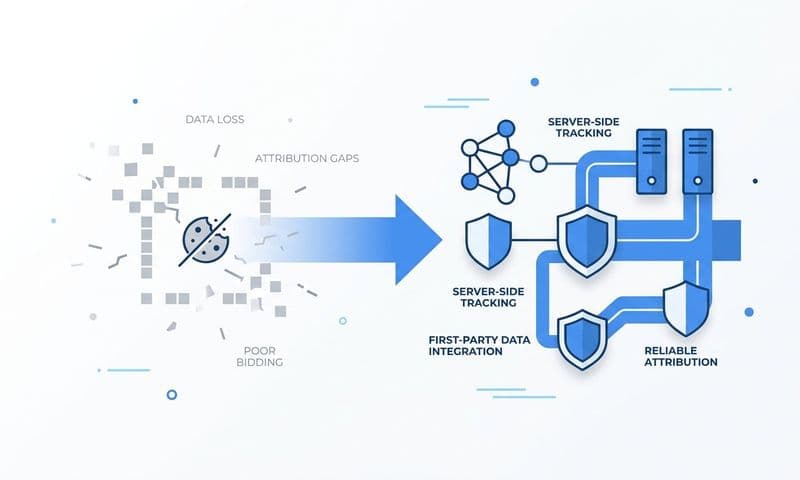
The core problem with tracking Shopify app installs is that browser pixels can't reliably fire inside Shopify's native interface. Cometly's server-side tracking approach sidesteps this entirely by capturing install events at the backend level, which means you're not dependent on a pixel loading in a browser you don't control.
What makes Cometly particularly useful for app developers is its Conversion Sync feature, which feeds accurate install event data back to Meta and Google ad algorithms. When your ad platform has better data, its optimization engine works harder for you, improving targeting and reducing wasted spend over time.
Key Features
Server-Side Tracking: Captures install events that browser pixels miss, making it more reliable for the Shopify app install funnel.
Multi-Touch Attribution: Maps every touchpoint a user interacted with before installing, giving you a complete picture of the path to conversion.
Conversion Sync: Sends enriched, conversion-ready install events back to Meta and Google to improve ad algorithm performance.
AI Ads Manager: Surfaces which campaigns, ad sets, and creatives are actually driving real installs so you can scale what works.
AI Chat: Lets you query your attribution data conversationally without pulling manual reports, making it faster to get answers from your data.
Best For
Shopify app developers running paid campaigns across multiple platforms who need accurate, server-side attribution and want their ad platforms to receive better conversion data. Particularly valuable for teams who want AI-driven insights without building a custom data pipeline.
Pricing
Paid plans available. Visit cometly.com for current pricing details and to book a demo.
2. AppsFlyer
Best for: Web-to-app attribution with built-in fraud protection across major ad networks
AppsFlyer is a purpose-built app attribution platform with web-to-app tracking, deep linking, and fraud protection used widely across mobile and web app ecosystems.
 9 Best Tools for Shopify App Developers to Track Paid Ad Installs in 2026
Where This Tool Shines
AppsFlyer was built specifically for the app attribution problem, which gives it a natural edge over tools originally designed for ecommerce tracking. Its web-to-app attribution connects a paid ad click on the web to an app install event, which is exactly the journey Shopify app developers need to track.
The fraud detection layer is worth highlighting. Invalid installs from bot traffic or incentivized clicks can distort your cost-per-install data significantly. AppsFlyer's integrated fraud protection filters these out before they pollute your reporting.
Key Features
Web-to-App Attribution: Links paid ad clicks on the web directly to app install events with accurate source mapping.
Deep Linking: Supports seamless user journeys from ad click through to post-install onboarding flows.
Fraud Detection: Filters invalid and fraudulent installs to keep your attribution data clean and reliable.
Granular Reporting: Breaks down performance at the campaign, ad set, and creative level across all connected channels.
Ad Network Integrations: Native connections to Meta, Google, TikTok, and other major ad platforms.
Best For
App developers who need a dedicated attribution solution with strong fraud protection and are comfortable with a platform built primarily for the mobile app ecosystem. Works well for teams already familiar with mobile measurement partners.
Pricing
Free tier available for low-volume tracking. Paid plans scale with usage. Contact AppsFlyer for current pricing based on your install volume.
3. Adjust
Best for: Fraud prevention, cohort analysis, and install quality measurement over time
Adjust is an app attribution and analytics platform known for its fraud prevention suite and cohort analysis tools, supporting web attribution alongside traditional mobile app tracking.
 9 Best Attribution Software with API Access in 2026
Where This Tool Shines
Where Adjust stands out is in measuring the quality of installs, not just the quantity. Cohort analysis lets you group installs by acquisition source and track how those users behave over time. This is critical for app developers because a campaign that drives cheap installs but low activation rates is actually burning budget.
For a deeper dive, see our guide to AI ad generator for ecommerce.
Adjust's Fraud Shield is one of the more robust solutions in the market for filtering out low-quality traffic. If you're running broad paid campaigns at scale, having that filter in place protects the integrity of your attribution data.
We cover this in more depth in our guide to AI ad generator for Shopify.
Key Features
Fraud Shield: Filters low-quality and fraudulent installs before they affect your attribution and reporting.
Cohort Analysis: Measures install quality over time by grouping users based on their acquisition source and behavior.
Web Attribution: Tracks installs originating from web-based ad clicks, relevant for the Shopify app install journey.
Audience Segmentation: Segments users by install source and downstream behavior for more targeted analysis.
Ad Platform Integrations: Connects with major ad networks and analytics tools for centralized reporting.
Best For
Developers who want to go beyond raw install counts and understand the downstream quality of users acquired from each paid channel. Strong fit for teams running high-volume campaigns where fraud protection is a priority.
Pricing
Custom pricing based on usage volume. Contact Adjust directly for a quote tailored to your install scale.
4. Triple Whale
Best for: Shopify-native attribution with a blended ROAS dashboard and creative analytics
Triple Whale is a Shopify-native attribution platform with pixel and server-side tracking options built specifically for the Shopify ecosystem.
 9 Best Tools for Shopify App Developers to Track Paid Ad Installs in 2026
Where This Tool Shines
Triple Whale's biggest advantage is how deeply it integrates with Shopify. For app developers who also operate within the Shopify ecosystem, the native data connections reduce setup friction and get you to accurate reporting faster than tools that require custom integrations.
The creative analytics layer is genuinely useful for paid ad management. Rather than just knowing which campaign is performing, you can see which specific ad creatives are driving installs, which helps you iterate your ad content with data rather than guesswork.
We compare the leading options in our AI ad creative generator roundup.
Key Features
Native Shopify Integration: Connects directly to Shopify data for faster setup and more accurate event matching.
Pixel and Server-Side Tracking: Offers both tracking methods, giving you flexibility based on your technical setup.
Multi-Touch Attribution: Maps paid social and search touchpoints across the full customer journey before conversion.
Creative Analytics: Identifies which ad creatives are driving the most installs and engagement.
Summary Dashboard: Provides blended ROAS and channel-level performance data in a single view.
Best For
Shopify app developers who want a platform built for the Shopify environment and value creative-level attribution insights alongside standard campaign reporting.
Pricing
Tiered plans available, with pricing based on store revenue. Visit Triple Whale's website for current plan details.
5. Northbeam
Best for: Statistical attribution modeling when direct pixel tracking is limited or unreliable
Northbeam is a multi-touch attribution platform that uses first-party data and statistical modeling to attribute conversions across paid channels, even when direct pixel tracking is constrained.
 9 Best Incrementality Testing Software Tools for Marketers in 2026
Where This Tool Shines
The Shopify app install funnel is a scenario where direct pixel tracking often breaks down. Northbeam's statistical modeling approach fills those gaps by using first-party data signals and probabilistic logic to attribute installs even when you can't fire a pixel at the exact moment of conversion.
Being able to compare multiple attribution models side by side in a single view is particularly valuable here. Different models tell different stories about which channels deserve credit, and having that comparison helps you make more nuanced budget decisions rather than over-indexing on last-click data.
Key Features
Statistical Modeling: Fills attribution gaps when pixel data is incomplete or unavailable at the conversion point.
Multi-Model Comparison: Displays multiple attribution models in a single view for more informed budget decisions.
First-Party Data Focus: Built around privacy-resilient tracking using your own data rather than third-party cookies.
Cross-Channel Visibility: Consolidates spend and performance data across all paid channels in one place.
Predictive LTV Modeling: Estimates lifetime value by acquisition source to help you identify your most valuable install channels.
Best For
Developers running campaigns across multiple paid channels who need attribution to hold up even when pixel-based tracking is unreliable. Well-suited for teams that want to move beyond last-click attribution and model the full funnel.
Pricing
Custom pricing. Contact Northbeam for a demo and quote based on your ad spend and data volume.
6. UTM.io
Best for: Building a consistent UTM parameter foundation for URL-based install tracking
UTM.io is a UTM parameter management platform that helps teams build, govern, and track consistent campaign URLs, forming the foundation of any URL-based install attribution workaround.
 9 Best Tools for Shopify App Developers to Track Paid Ad Installs in 2026
Where This Tool Shines
UTM parameters are often the starting point for Shopify app install attribution. Shopify allows custom partner referral links with parameter support, which means you can pass UTM data through to a post-install redirect page or onboarding flow where a conversion event can fire. UTM.io makes sure those parameters are consistent and correctly formatted across every campaign.
Inconsistent UTM naming is one of the most common reasons attribution data breaks down in analytics tools. UTM.io's governance features, including templates and shared libraries, keep your whole team aligned on naming conventions so your data stays clean.
Key Features
Centralized UTM Builder: Creates and manages campaign URLs from a single platform with team-wide visibility.
Campaign URL Templates: Enforces consistent naming conventions across all campaigns to prevent data fragmentation.
Link Click Tracking: Monitors link performance and click data directly within the platform.
Analytics Integrations: Connects with Google Analytics and other platforms to flow UTM data into your existing reporting.
Shareable UTM Libraries: Gives cross-functional teams access to approved URL structures for consistency at scale.
Best For
Developers using UTM parameters as the primary layer of their install attribution strategy. Also useful as a complementary tool alongside more advanced attribution platforms to ensure campaign URL hygiene.
Pricing
Free plan available for individuals. Paid plans start at a low monthly fee for teams needing collaboration features.
7. Segment
Best for: Technical teams who want full control over install event routing via a custom data pipeline
Segment is a Customer Data Platform that routes install events from Shopify Partner API webhooks to any ad platform or analytics destination, giving technical teams complete control over their attribution data pipeline.
 8 Best Attribution-Focused Platforms vs Segment: Which Approach Fits Your Marketing Stack in 2026
Where This Tool Shines
Shopify's Partner API provides install webhooks, meaning you can receive a server-side notification the moment your app is installed. Segment lets you receive that webhook event and route it to any downstream destination, whether that's Meta's Conversions API, Google Ads, a data warehouse, or an analytics tool. This gives you maximum flexibility without building custom integrations for each platform.
The trade-off is that Segment requires meaningful technical setup. It's not a plug-and-play solution, but for development teams comfortable with APIs and event schemas, it offers a level of control that no off-the-shelf attribution tool can match.
Key Features
Webhook Event Ingestion: Receives Shopify Partner API install webhook events as server-side data sources.
Multi-Destination Routing: Sends install events to Meta CAPI, Google Ads, analytics tools, and data warehouses simultaneously.
Custom Event Schema: Allows flexible event structures to match your specific install tracking logic and data model.
Broad Integrations: Connects to hundreds of marketing, analytics, and data tools through a single configuration layer.
Audience Builder: Creates retargeting and suppression audiences based on install status and user behavior.
Best For
Engineering-led teams or developers with strong technical resources who want complete ownership of their attribution data pipeline. Ideal when you need to send install events to multiple destinations without building separate integrations for each.
Pricing
Free tier available for low-volume event tracking. Paid plans scale with monthly tracked users. Visit Segment's website for current plan details.
8. Hyros
Best for: Email-based attribution stitching for funnels that include an onboarding or lead capture step
Hyros is an ad tracking platform that uses email-based tracking as a complement to pixel data, helping developers attribute installs when their funnel includes an email capture or onboarding step.
Where This Tool Shines
Here's where Hyros takes a genuinely different approach. Rather than relying solely on pixel or server-side event tracking, it uses email addresses as persistent identifiers to stitch a user's install back to their original ad click. If your install funnel includes a signup form, trial activation, or onboarding email flow, Hyros can use that email touchpoint to close the attribution loop.
This approach is particularly useful when the install happens days or weeks after the initial ad click, a scenario where cookie-based attribution typically fails. Hyros's longer attribution windows help capture delayed installs that other tools might miss entirely.
Key Features
Email-Based Tracking: Uses email addresses to connect installs back to original ad clicks, even across long attribution windows.
AI Attribution Modeling: Applies AI-based modeling to cross-channel journeys for more accurate credit distribution.
Long Attribution Windows: Captures delayed installs that fall outside the standard 7-day or 28-day click windows.
Ad Platform Integrations: Connects directly with Meta, Google, and YouTube for streamlined reporting.
Revenue Tracking: Links installs to downstream subscription revenue to show the full value of each acquisition channel.
Best For
Shopify app developers whose install funnel includes an email capture or onboarding step, and who are running high-spend campaigns where delayed attribution and revenue tracking are important.
Pricing
Custom pricing based on ad spend. Contact Hyros directly for a quote.
9. Google Tag Manager + Custom Events
Best for: Developers who want a no-cost tracking workaround using a post-install redirect or onboarding page
Google Tag Manager is a free tag management platform that, when combined with a post-install redirect or onboarding page, enables developers to fire custom conversion events without a paid attribution tool.
Where This Tool Shines
The key insight here is that you don't need a pixel to fire inside Shopify's interface if you redirect users to a page you control after install. Many developers build a post-install onboarding page or a "welcome to the app" landing page on their own domain. GTM can fire conversion events on that page, which then flow into Google Ads and GA4 as custom conversions.
This is the most accessible workaround available because it costs nothing. The limitation is that it requires a post-install redirect to a developer-controlled page, which adds a step to the user journey. But for developers who are budget-conscious or just getting started with install tracking, it's a legitimate starting point.
Key Features
Free to Use: No cost and no volume limits on tag firing, making it accessible for developers at any stage.
Custom Event Triggers: Fires conversion events tied to post-install page loads, button clicks, or other user interactions.
Native Google Integration: Connects directly to Google Ads and GA4 for conversion reporting without additional configuration.
Flexible Tag Templates: Supports Meta Pixel, LinkedIn Insight Tag, TikTok Pixel, and other third-party tags through built-in templates.
Version Control and Preview Mode: Allows safe tag deployment with rollback capability and a live preview environment for testing.
Best For
Developers who are comfortable with a DIY setup and can implement a post-install redirect or onboarding page on their own domain. An excellent starting point before investing in a dedicated attribution platform.
Pricing
Free with no usage limits.
Which Tool Is Right for Your Situation
The right choice depends on where you are technically and how much attribution depth you actually need.
If you're just getting started and want a no-cost baseline, Google Tag Manager combined with a post-install redirect page is the most accessible entry point. Pair it with UTM.io to keep your campaign URLs consistent, and you have a functional tracking foundation without spending anything.
If you need a dedicated attribution solution with fraud protection and web-to-app tracking out of the box, AppsFlyer and Adjust are the most established options in the app attribution space. Both handle the web-to-app journey well and integrate with major ad networks.
For teams who want statistical modeling to fill attribution gaps when pixels can't fire reliably, Northbeam is worth evaluating. And if your funnel includes an email capture step, Hyros offers a genuinely different approach that can stitch delayed installs back to the original ad click.
For developers who want maximum control over their data pipeline and have engineering resources to support it, Segment is the most flexible option for routing Shopify install webhook events to any destination.
For multi-platform attribution with server-side tracking, AI-powered insights, and the ability to feed accurate install data back to Meta and Google's ad algorithms, Cometly is the most comprehensive option on this list. Its combination of server-side tracking, Conversion Sync, and AI Ads Manager addresses the core challenges of Shopify app install attribution directly, without requiring you to build a custom data pipeline from scratch.
Ready to close the attribution gap and know exactly which ads are driving your app installs? Get your free demo and see how Cometly connects every touchpoint to help you scale with confidence.