
You've spent months optimizing campaigns, testing audiences, and refining your targeting. Your dashboards show clicks, impressions, and conversions. Then one morning, you notice something unsettling: your attribution data has gaps. Conversions that should be tracked aren't showing up. Your Facebook Ads Manager reports half the purchases your Shopify dashboard confirms. Google Analytics shows traffic, but can't connect it to revenue.
This isn't a technical glitch. It's the new reality of digital marketing.
Third-party cookies—the invisible trackers that powered advertising measurement for two decades—are disappearing. Safari blocks them by default. Firefox follows suit. Chrome keeps delaying its deprecation timeline, but the direction is clear: the cookie-based tracking era is ending. For marketers, this shift creates a fundamental challenge: how do you measure campaign performance, optimize ad spend, and prove ROI when your primary tracking mechanism no longer works?
The answer lies in cookieless tracking technology. These are methods that capture customer journeys, attribute conversions, and feed optimization data to ad platforms without relying on third-party cookies. Forward-thinking marketers are already making this transition—not because they have to, but because cookieless approaches often deliver more accurate data than cookies ever did.
This guide breaks down exactly what cookieless tracking technology is, why it matters for your campaigns, and how to implement it without losing the attribution accuracy you depend on. By the end, you'll understand the practical steps to maintain—and even improve—your marketing measurement in a privacy-first world.
Why Third-Party Cookies Are Going Away (And Why It Matters for Your Campaigns)
Third-party cookies are small text files that websites place in your browser to track you across the internet. When you visit a site, advertisers and analytics platforms drop these cookies to follow your activity—what you browse, what you click, what you buy. This cross-site tracking enabled the entire digital advertising ecosystem: retargeting campaigns, attribution models, audience building, and conversion tracking all relied on cookies connecting user behavior across different domains.
But that foundation is crumbling fast.
Apple fired the first major shot in 2017 with Intelligent Tracking Prevention (ITP) in Safari, which began blocking third-party cookies by default. Firefox followed with Enhanced Tracking Protection. Then came the earthquake: Apple's iOS 14.5 update in 2021 introduced App Tracking Transparency, requiring apps to ask permission before tracking users. Most users said no. Overnight, advertisers lost visibility into a massive portion of their mobile audience.
Google announced plans to deprecate third-party cookies in Chrome—the browser that still commands over 60% market share. Despite multiple delays pushing the timeline into 2024 and beyond, the intent remains clear. When Chrome finally flips the switch, third-party cookie tracking will be effectively dead across all major browsers.
Privacy regulations are accelerating this shift. GDPR in Europe and CCPA in California established strict rules around user consent and data collection. More regions are following with similar legislation. Consent-based tracking is now mandatory in many markets, and users increasingly opt out when given the choice. Even when cookies are technically allowed, real-world consent rates mean they're blocked for a significant portion of your audience.
Here's why this matters for your campaigns: attribution becomes incomplete. When you can't track users across sites, you lose visibility into which touchpoints actually drive conversions. Did that Facebook ad lead to a purchase, or did the customer come through organic search? Without cookies, you often can't tell. This creates attribution gaps that make your best-performing campaigns look mediocre and your actual customer journey invisible. Understanding why you're losing tracking data from cookies is the first step toward solving this problem.
The impact cascades into ad platform performance. Facebook's algorithm, Google's Smart Bidding, TikTok's optimization—they all rely on conversion data to improve targeting and bidding. When cookies fail to report conversions accurately, these algorithms receive incomplete signals. They can't identify which audiences convert, which creatives work, or how to allocate budget effectively. Your CPAs inflate. Your ROAS drops. Not because your campaigns got worse, but because the measurement system broke.
Some marketers hope this is temporary—that browsers will find a compromise or that regulations will ease. They won't. Privacy protection is only getting stronger. The marketers who adapt now, who build measurement systems independent of third-party cookies, will have cleaner data and better campaign performance while their competitors scramble to catch up.
How Cookieless Tracking Technology Actually Works
Cookieless tracking technology shifts where and how you collect data about user behavior. Instead of relying on browser-based cookies that can be blocked or deleted, these methods use server-side infrastructure, first-party relationships, and privacy-preserving techniques to maintain visibility into customer journeys.
The most powerful approach is server-side tracking. Traditional client-side tracking happens in the user's browser: JavaScript tags fire, cookies are set, and data gets sent to analytics platforms. But browsers can block this entire process. Server-side tracking moves data collection to your server. When a user takes an action on your site—views a page, adds to cart, completes a purchase—your server captures that event and sends it directly to ad platforms and analytics tools. The browser never gets involved. For a deeper comparison, explore the differences between Google Analytics vs server-side tracking.
This matters because servers are under your control. Browser restrictions don't apply. Ad blockers can't interfere. Users can't clear server-side data the way they clear cookies. The result is more complete, reliable tracking that captures events even when client-side methods fail.
First-party data strategies form the second pillar. These leverage information users provide directly to you: email addresses, account logins, CRM records, purchase history. When someone creates an account or makes a purchase, you have a deterministic identifier—a real, known person rather than an anonymous cookie. You can connect their website activity to their CRM profile, track their journey across devices, and attribute revenue to specific marketing touchpoints with certainty. Understanding what first-party data tracking is helps you build this foundation correctly.
The key is building systems that capture and connect this first-party data across your marketing stack. When someone clicks a Facebook ad, visits your site, and later converts, you need infrastructure that links those events to the same customer record—even if they switch devices or clear their cookies. This requires integrating your ad platforms, website tracking, and CRM into a unified system that maintains identity across touchpoints.
Cookieless tracking also uses two distinct methodologies: deterministic and probabilistic. Deterministic tracking relies on exact identifiers—email addresses, user IDs, phone numbers. When you can match a person across systems using these identifiers, you know with certainty it's the same individual. This is the gold standard for accuracy but requires users to provide identifying information.
Probabilistic methods use statistical modeling when deterministic data isn't available. They analyze patterns—device type, browser, IP address, timing, behavior—to estimate that two interactions likely came from the same person. While less precise than deterministic tracking, probabilistic approaches can fill gaps and provide directional insights when exact identification isn't possible.
The most effective cookieless strategies combine these methods. Use server-side tracking for reliability. Leverage first-party data for deterministic accuracy when available. Apply probabilistic modeling to connect anonymous sessions. Layer in privacy-preserving techniques like aggregated reporting and consent management to stay compliant while maintaining measurement capability.
This isn't about finding a single replacement for cookies. It's about building a more robust, multi-layered tracking infrastructure that works regardless of browser restrictions, privacy regulations, or user preferences. The marketers who understand this shift—who move from cookie dependence to cookieless resilience—will have better data and clearer attribution than they ever had with cookies alone.
Five Cookieless Tracking Methods Marketers Should Know
Understanding cookieless tracking in theory is one thing. Implementing it requires knowing which specific methods to deploy and how they work in practice. These five approaches form the foundation of modern, privacy-compliant marketing measurement.
Server-Side Tagging and Conversion APIs: This is the most critical cookieless method for maintaining ad platform performance. Conversion APIs—offered by Meta, Google, TikTok, Snapchat, and most major platforms—allow you to send conversion events directly from your server to their systems. Instead of relying on browser pixels that can be blocked, your server captures purchase data, lead submissions, or other conversions and transmits them via API.
The practical benefit is immediate: you recover lost conversions that browser-based tracking missed. When someone uses Safari with ITP active, your Facebook pixel might fail to fire. But your server still captures the purchase in your database and sends it to Meta's Conversions API. Facebook's algorithm receives the conversion signal, attributes it to the correct ad, and uses that data to optimize future delivery. Your cookieless attribution tracking becomes more complete, your reported ROAS increases, and your campaigns optimize on better data.
Implementation requires technical setup—configuring your server to capture events, formatting them according to each platform's API specifications, and ensuring proper event matching using email addresses or phone numbers. But the accuracy gains make this effort worthwhile for any serious advertiser.
First-Party Cookies and Authenticated Tracking: Not all cookies are dying—just third-party ones. First-party cookies, set by your own domain, remain functional and privacy-compliant. These cookies can track user sessions on your site, remember preferences, and maintain state across visits. The key difference is they only work on your domain, not across the entire web.
Authenticated tracking takes this further by connecting cookie data to known user identities. When someone logs into your site or provides their email, you can link their browsing behavior to their customer record. This creates persistent, cross-device attribution tracking: if they visit on mobile, add to cart on desktop, and purchase on tablet, you can connect all three sessions to the same person because they're logged in.
This approach requires building systems that encourage authentication—login walls for premium content, account creation incentives, email capture at key touchpoints. The more users you can identify, the more complete your attribution becomes. Many e-commerce brands now prioritize account creation specifically to improve tracking accuracy in the cookieless era.
Contextual Targeting and Cohort-Based Approaches: These methods shift focus from individual tracking to group-level patterns. Contextual targeting places ads based on the content someone is currently viewing rather than their historical behavior. If someone reads an article about running shoes, they see ads for athletic gear—no cookies required, just content analysis.
Cohort-based approaches, like Google's Privacy Sandbox initiatives, group users with similar interests or behaviors into cohorts. Instead of tracking "John Smith visited these specific sites," the system reports "this cohort of users interested in fitness equipment." Advertisers can target cohorts without accessing individual user data, preserving privacy while maintaining some targeting capability.
While these methods sacrifice some precision compared to individual tracking, they offer privacy-safe alternatives that work without consent requirements or browser restrictions. They're particularly valuable for prospecting and awareness campaigns where exact attribution matters less than reaching relevant audiences.
CRM and Email-Based Tracking: Your customer database is one of the most valuable assets for cookieless tracking. When you capture email addresses through newsletter signups, purchases, or lead forms, you create deterministic identifiers that persist across devices and sessions. You can then use email matching to connect ad exposure to conversions.
Most ad platforms support customer list matching: you upload hashed email addresses, they match them to user accounts, and you can track which list members saw ads and converted. This works even when cookies fail because the matching happens on the platform side using authenticated user data. For B2B marketers especially, CRM-based tracking often provides more accurate attribution than cookies ever did.
The strategy here is aggressive email capture and CRM integration. Every touchpoint should attempt to collect an email address. Every conversion should be logged in your CRM with source attribution. Then sync that CRM data back to your ad platforms to close the attribution loop. This creates a closed-loop system where you know exactly which campaigns drive which customers, regardless of browser restrictions. A proper first-party data tracking setup makes this integration seamless.
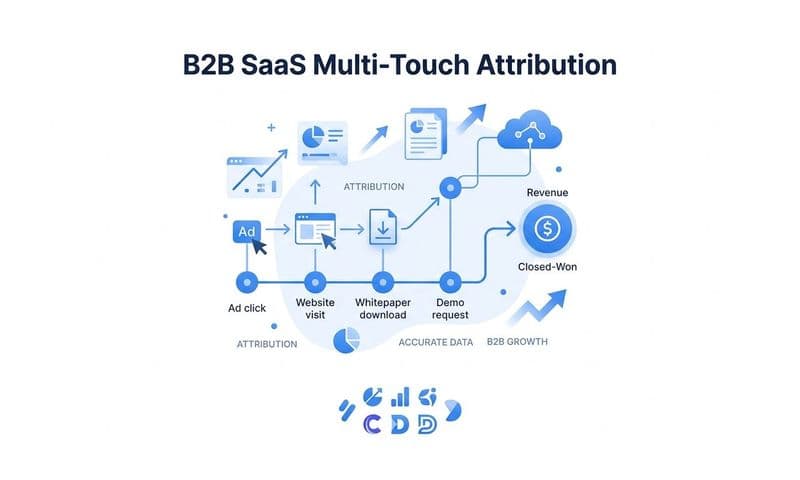
Multi-Touch Attribution Platforms with Server-Side Infrastructure: Individual cookieless methods are powerful, but the real magic happens when you combine them into a unified attribution system. Modern attribution tracking tools use server-side tracking to capture every touchpoint—ad clicks, website visits, email interactions, CRM events—and connect them into complete customer journeys.
These platforms sit between your marketing channels and your data warehouse, collecting events from all sources and attributing revenue using multiple models. Because they operate server-side and integrate with your first-party data, they work regardless of cookie availability. They can track a customer who clicks a Facebook ad on mobile, visits via Google search on desktop, and converts after an email campaign—connecting all three touchpoints to the same person using email matching and session stitching.
This comprehensive approach provides the clearest view of marketing performance in the cookieless era. You're not guessing which channels work—you're seeing the entire journey with deterministic accuracy. And because these platforms often include conversion sync capabilities, they can feed that enriched data back to ad platforms to improve algorithmic optimization.
Implementing Cookieless Tracking: A Practical Roadmap
Understanding cookieless methods is valuable. Actually implementing them requires a structured approach. This roadmap breaks down the transition into manageable steps that won't disrupt your current campaigns while you build more resilient measurement. For a comprehensive walkthrough, reference our cookieless tracking implementation guide.
Audit Your Current Tracking Setup: Start by identifying exactly what you're measuring and how. List every conversion event you track: purchases, leads, signups, downloads. For each one, document whether it relies on client-side pixels, third-party cookies, or server-side infrastructure. Check your Facebook pixel implementation, Google Analytics configuration, and any other tracking tags. Run tests in Safari and Firefox with strict privacy settings to see which events still fire and which fail.
This audit reveals your vulnerability. If 80% of your conversion tracking depends on client-side pixels and third-party cookies, you're already losing significant data. The events that fail in Safari are the ones you need to migrate to cookieless methods first. Prioritize high-value conversions—purchases and qualified leads—over lower-priority events like page views or video plays.
Also audit your data sources. Do you have a CRM that captures customer information? Does your e-commerce platform log purchases with customer details? Can you access server logs or database records of user actions? These first-party data sources become the foundation of your cookieless infrastructure. If gaps exist—no CRM integration, limited customer data capture—address them before implementing new tracking.
Connect Your Data Sources: Cookieless tracking requires integrating systems that may have operated independently before. Your ad platforms need to talk to your website. Your website needs to sync with your CRM. Your CRM needs to feed data back to your ad platforms. This creates a closed loop where customer data flows between systems, enabling accurate attribution even without cookies.
Start with server-side tag management. Tools like Google Tag Manager Server-Side or dedicated server-side tracking solutions let you deploy tracking infrastructure on your own server. This captures events that client-side methods miss and gives you control over data flow. Configure your server to receive events from your website, then forward them to ad platforms via Conversion APIs.
Next, integrate your CRM with your marketing stack. When someone fills out a lead form or makes a purchase, that data should flow into your CRM with source attribution intact. Then sync CRM conversions back to ad platforms using customer list matching or offline conversion imports. This ensures every conversion gets attributed, even if browser tracking failed at the point of conversion.
Email capture becomes critical in this connected ecosystem. Implement email collection at every reasonable touchpoint—newsletter signups, account creation, checkout. The more email addresses you capture, the more deterministic your tracking becomes. Use these emails for cross-device matching and to connect anonymous sessions to known customer records.
Test and Validate Accuracy: Before fully transitioning to cookieless tracking, run parallel implementations to verify data quality. Keep your existing pixel-based tracking active while you deploy server-side methods. Compare the results: are you capturing more conversions with the new approach? Do the attribution patterns match or differ significantly? Following best practices for tracking conversions accurately ensures your data remains reliable throughout this transition.
Some discrepancies are expected and actually positive—server-side tracking should capture conversions that pixels missed. But major inconsistencies might indicate implementation errors. If your server-side setup reports 50% more conversions than your pixel, verify that you're not double-counting or capturing test events. If it reports fewer conversions, check for missing event triggers or integration gaps.
Test across different browsers and devices. Verify that Safari users, who face the strictest tracking restrictions, are now being captured accurately. Check mobile app conversions if applicable. Validate that your attribution models produce sensible results—if every conversion suddenly attributes to direct traffic, something is wrong with your source tracking.
This validation phase takes time but prevents costly mistakes. You're building a new measurement foundation. Ensuring accuracy now means you can trust your data when making budget decisions, campaign optimizations, and strategic choices. Once you're confident in your cookieless implementation, you can gradually reduce reliance on pixel-based tracking and fully transition to the new infrastructure.
The roadmap isn't instantaneous. Depending on your technical resources and marketing complexity, full implementation might take weeks or months. But each step improves your measurement resilience. Start with the highest-value conversions, expand to additional events, and continuously refine your setup as you learn what works best for your specific business model and customer journey.
Feeding Better Data Back to Ad Platforms
Accurate attribution matters for your reporting, but it also directly impacts campaign performance. Ad platform algorithms—Facebook's machine learning, Google's Smart Bidding, TikTok's optimization—rely on conversion data to improve targeting and bidding. When they receive incomplete or delayed signals, they can't identify which audiences convert or how to allocate budget effectively. Cookieless tracking isn't just about measuring results; it's about feeding better data back to these algorithms so they deliver better results.
Here's why data quality matters for ad platforms: every conversion you report teaches the algorithm something. When someone clicks your ad and purchases, the platform learns that this type of person, seeing this creative, at this time of day, is likely to convert. It uses that signal to find more similar users and optimize future delivery. But if your tracking only captures 60% of conversions because cookies are blocked, the algorithm is learning from incomplete data. It might think certain audiences don't convert when they actually do—they just weren't tracked.
Server-side tracking and Conversion APIs solve this by ensuring platforms receive complete conversion data. When you implement Meta's Conversions API alongside your pixel, Facebook gets two data streams: browser-based events when they work, and server-sent events as backup when they don't. The platform deduplicates these signals and ends up with more complete conversion reporting than either method alone would provide.
The impact on campaign performance can be substantial. Many marketers report that after implementing Conversion APIs, their reported ROAS increases 20-40%—not because campaigns improved, but because previously missed conversions are now being captured and attributed. More importantly, the algorithm receives these signals and begins optimizing on more complete data. Over time, this leads to better audience targeting, more efficient bidding, and genuinely improved campaign performance beyond just measurement accuracy. Understanding conversion tracking analytics helps you measure these improvements effectively.
Conversion sync strategies take this further by enriching the data you send to platforms. Instead of just reporting "purchase occurred," you can include purchase value, product categories, customer lifetime value predictions, or custom event parameters. This additional context helps algorithms optimize more precisely. Facebook can prioritize high-value customers. Google can bid more aggressively for purchases likely to lead to repeat business. The richer your conversion data, the smarter the algorithmic optimization becomes.
Implementation requires configuring your server to send properly formatted conversion events to each platform's API. Most platforms provide detailed documentation and testing tools. The key technical requirement is event matching: you need to include identifiers like email addresses, phone numbers, or platform-specific user IDs so the platform can attribute the conversion to the correct ad interaction. Hashing these identifiers for privacy compliance is standard practice.
Timing also matters. Server-side conversions should be sent as close to real-time as possible. Delayed reporting—sending conversions hours or days after they occur—reduces algorithmic effectiveness because platforms optimize based on recent performance. If you're batch-uploading conversions once daily, you're not giving algorithms the immediate feedback they need to adjust bidding and targeting dynamically. Implementing real-time data tracking ensures your platforms receive signals when they matter most.
Measuring the impact of improved data quality involves tracking key performance indicators before and after implementation. Monitor your reported conversion volume—you should see an increase as previously missed events get captured. Track your cost per acquisition and return on ad spend over a 30-60 day period as algorithms learn from better data. Many marketers find that CPA decreases and ROAS improves not just from better measurement, but from genuinely better algorithmic performance as platforms optimize on complete signals.
The feedback loop between measurement and optimization is what makes cookieless tracking technology so powerful. You're not just recovering lost attribution data for reporting purposes. You're feeding ad platform algorithms the clean, complete conversion signals they need to find better audiences, optimize bids more effectively, and deliver stronger campaign results. In a privacy-first world, the marketers with the best data infrastructure will consistently outperform those still relying on degraded cookie-based tracking.
Building Your Cookieless Future
The disappearance of third-party cookies isn't just a compliance challenge—it's an opportunity to build marketing measurement that's more accurate, reliable, and privacy-respecting than what came before. Cookies were always imperfect: users cleared them, browsers blocked them, and they never worked across devices or apps. The cookieless tracking solutions for marketers replacing them—server-side infrastructure, first-party data strategies, Conversion APIs—actually provide clearer visibility into customer journeys when implemented correctly.
The marketers who thrive in this new landscape will be those who act now rather than wait for the last cookie to crumble. Your action items are clear: audit your current tracking to identify cookie dependencies, implement server-side tracking for your highest-value conversions, connect your data sources into a unified attribution system, and feed enriched conversion data back to ad platforms to improve algorithmic performance.
This transition takes effort, but the payoff is substantial. You'll recover conversions that browser restrictions currently hide. Your attribution will become more accurate as you track complete customer journeys across devices and touchpoints. Your ad campaigns will perform better as platforms optimize on complete data rather than fragmented signals. And you'll build measurement infrastructure that works regardless of future privacy changes, browser updates, or regulatory shifts.
The cookieless future is already here for marketers using Safari, Firefox, and iOS devices with tracking restrictions enabled. Chrome's eventual deprecation will simply extend these limitations to the remaining browsers. The question isn't whether to adopt cookieless tracking technology—it's whether you'll implement it proactively while you still have time to test and refine, or reactively when browser changes force your hand and you're scrambling to recover lost data.
Forward-thinking marketers are choosing the first path. They're building server-side tracking infrastructure, capturing first-party data aggressively, and creating closed-loop attribution systems that connect every touchpoint to revenue. They're feeding better data to ad platforms and seeing their campaign performance improve as a result. They're gaining competitive advantage while others are still hoping cookies will somehow survive.
Ready to elevate your marketing game with precision and confidence? Discover how Cometly's AI-driven recommendations can transform your ad strategy—Get your free demo today and start capturing every touchpoint to maximize your conversions.