You ran a webinar. Registrants signed up, attendees showed up, and your post-webinar survey results looked promising. But when your VP of Revenue asks which deals the webinar actually influenced, you're left searching through disconnected spreadsheets, webinar platform exports, and CRM records that don't quite line up. Sound familiar?
This is the attribution blind spot that plagues B2B SaaS marketing teams running webinar programs. Webinars are genuinely powerful demand generation tools. They educate prospects, build trust, and accelerate buying decisions. But because they typically sit in the middle of a long, multi-touch buyer journey, the credit they deserve rarely shows up in standard attribution reports.
The result is a frustrating paradox: your webinar team works hard to produce quality content, registrant numbers look healthy, and sales anecdotally credits webinars for warming up deals, but you cannot prove the ROI in a way that justifies budget or informs scaling decisions. That gap between effort and measurable impact is exactly what webinar attribution tracking is designed to close.
This guide walks through everything B2B SaaS marketing teams need to understand about webinar attribution tracking, from why the blind spot exists in the first place to the technical setup, attribution models, and revenue-connected metrics that turn webinar data into genuine growth intelligence.
Why Webinars Create an Attribution Blind Spot
Most attribution systems are built around a relatively simple mental model: a prospect sees something, clicks something, and converts. First-touch and last-touch attribution both assume that one moment in the journey deserves the credit. That logic breaks down fast when you introduce webinars.
Webinars almost never sit at the very beginning or the very end of a B2B SaaS buying journey. They live in the middle, often serving as the moment a prospect shifts from passively aware to actively engaged. A buyer might first discover your product through a paid search ad, spend weeks consuming blog content, then attend a webinar that finally convinces them to book a demo. Under last-touch attribution, the demo request page gets the credit. Under first-touch, the paid search ad does. The webinar, which arguably did the heaviest lifting, gets nothing.
The structural problem goes deeper than just model choice. Webinar interactions involve multiple distinct conversion events, each of which most teams track in isolation. Seeing a paid ad promoting the webinar is one event. Clicking through to the registration page is another. Completing registration is a third. Actually attending the live session is a fourth. Watching the replay later is a fifth. Taking a post-webinar action like requesting a demo or starting a trial is a sixth.
Most marketing teams track registrant counts in their webinar platform, attendance rates in a separate dashboard, and post-webinar conversions somewhere in their CRM, if at all. These data streams rarely connect to each other, and almost never connect back to the original ad spend that drove registration in the first place. You end up with activity metrics that look meaningful but cannot be tied to pipeline or revenue.
There is also a subtler problem worth naming. Without proper tracking, you cannot distinguish between two very different scenarios. In the first, a webinar genuinely converted a cold prospect who had no prior relationship with your brand. In the second, the webinar simply touched someone who was already deep in a sales cycle driven by a direct outbound sequence or a competitor comparison search. Both scenarios show up as "webinar attendee" in your platform, but they have completely different implications for how you should invest in future webinar programs.
This is the core tension that makes webinar attribution tracking both difficult and essential. The channel is high-value, but the measurement infrastructure most teams have in place was not designed to capture how webinars actually function in a modern B2B SaaS go-to-market motion.
The Core Components of Webinar Attribution Tracking
Getting webinar attribution right requires thinking carefully about what you are actually trying to track and where the data gaps tend to appear. There are four foundational touchpoints every team should capture: the ad or channel that drove registration, the registration event itself, attendance or no-show status, and any post-webinar actions like demo requests or trial signups.
Each of these touchpoints needs to be connected in a chain, not tracked in isolation. The goal is to be able to answer a question like: "This closed deal came from a prospect who first clicked our LinkedIn ad, registered for our product webinar, attended live, and then requested a demo three days later." That chain of events is only visible if you have the tracking infrastructure to connect them.
UTM Parameter Strategy: The foundation of accurate source attribution for webinar campaigns is consistent UTM taxonomy. Every ad or promotional asset driving traffic to your webinar registration page needs properly structured UTM parameters covering source, medium, campaign, content, and term. The critical failure point many teams encounter is that UTM parameters are captured at the click level but never passed through to the webinar platform or CRM. When a prospect clicks your ad and lands on a registration form, those parameters need to be preserved and associated with the registrant record. If your webinar platform does not natively support UTM passthrough, hidden form fields or custom integrations are required to capture and forward this data.
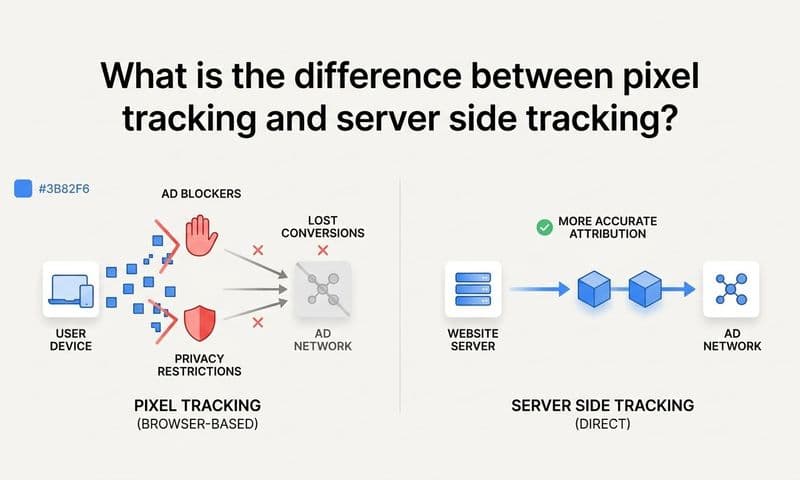
First-Party Data and Server-Side Event Tracking: This is where many teams hit a wall they did not expect. Popular webinar platforms frequently load in iframes or use redirect flows that break standard pixel-based tracking. When a browser navigates through a redirect sequence or loads content inside an iframe, the tracking pixel often fires in a context where it cannot access the original referral data or the cookies that tie the session back to a known user.
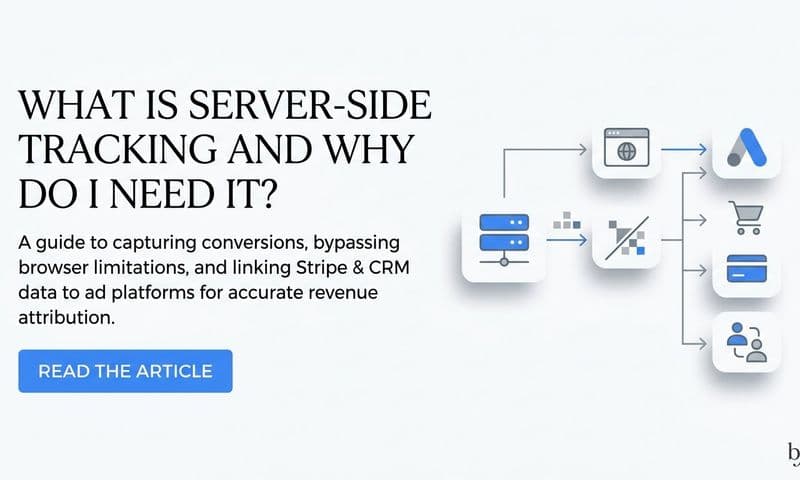
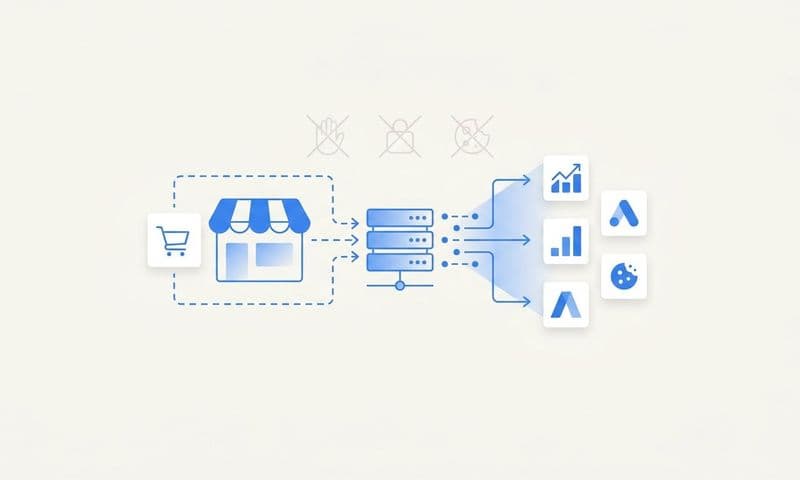
Server-side tracking solves this by moving event capture away from the browser entirely. Instead of relying on a pixel firing in the user's browser, server-side tracking sends conversion events directly from your server to the ad platform or analytics system. This approach is significantly more reliable, especially as browser-level privacy restrictions continue to limit cookie-based measurement across Safari, Firefox, and increasingly Chrome.
Conversion API integrations, which both Meta and Google support, allow you to send webinar registration and attendance events back to ad platforms with high accuracy. This matters not just for attribution reporting but also for ad platform optimization. When ad algorithms receive reliable conversion signals, they can more effectively target users who resemble your best webinar registrants.
The combination of disciplined UTM management, first-party data capture at registration, and server-side event tracking creates the technical foundation that makes everything downstream in webinar attribution possible. Without it, you are building attribution models on incomplete data, which produces misleading conclusions regardless of how sophisticated your model is.
Choosing the Right Attribution Model for Webinar-Driven Pipelines
Attribution model selection is not a purely technical decision. It reflects a philosophical stance on how your team believes credit should be distributed across a buyer's journey. For B2B SaaS companies running webinar-heavy go-to-market motions, that choice has significant practical consequences.
Last-click attribution is the default in many analytics tools, and it is systematically wrong for webinar evaluation. In B2B SaaS, the final touchpoint before a purchase decision is almost always a direct action like a demo call, a pricing page visit, or a sales email response. These bottom-of-funnel actions get flooded with credit under last-click, while the webinar that educated the prospect and advanced their thinking weeks earlier goes unrecognized. Teams relying on last-click data will consistently underinvest in webinars because the data tells them webinars do not drive conversions, when in reality the model simply cannot see them.
First-touch attribution has the opposite problem. It assigns all credit to the very first interaction, which is often a top-of-funnel ad or organic search click. This model is useful for understanding awareness channel performance, but it completely ignores the mid-funnel role that webinars play in moving prospects from awareness to consideration.
Linear Attribution: Linear models distribute credit equally across every touchpoint in the buyer's journey. If a deal involved a paid ad, a webinar, an email sequence, and a demo call, each touchpoint receives an equal share of the credit. This is a more honest reflection of reality than single-touch models, and it ensures webinars appear in attribution reporting. The limitation is that it treats a five-second ad impression the same as a 60-minute webinar attendance, which may not reflect the actual influence each touchpoint had.
Time-Decay Attribution: Time-decay models assign more credit to touchpoints that occurred closer to the conversion event. This makes intuitive sense for short sales cycles, but in B2B SaaS where sales cycles often span weeks or months, it can still undervalue early and mid-funnel webinar touchpoints that happened to occur well before the final close.
Multi-Touch Attribution: For webinar-heavy B2B SaaS go-to-market motions, multi-touch attribution is generally the most accurate framework. It acknowledges that a single deal may involve a paid ad that drove initial awareness, a webinar that built product understanding, an email nurture sequence that maintained engagement, and a demo call that closed the deal. Each touchpoint contributed, and multi-touch models are designed to reflect that distributed influence.
The specific multi-touch model you choose, whether linear, time-decay, U-shaped, W-shaped, or data-driven, should reflect how your team wants to weight early-funnel versus late-funnel interactions. The most important thing is moving away from single-touch models entirely when evaluating webinar performance.
How to Connect Webinar Data to Ad Spend and Revenue
Understanding attribution models is one thing. Actually connecting your webinar platform data to your ad spend and closed revenue is an operational challenge that requires deliberate integration work. Here is how the technical path typically looks.
The first integration point is between your webinar platform and your CRM. When a prospect registers for a webinar, that registration event needs to create or update a contact record in your CRM with the source data attached. This means the UTM parameters captured at registration, the webinar name, the registration date, and eventually the attendance status all need to flow into CRM fields that your sales team and marketing analytics can access.
Many webinar platforms offer native CRM integrations, but they often pass only basic contact information without source attribution data. A more reliable approach involves using your own registration landing page to capture UTM parameters via hidden form fields, then passing the complete enriched record to your CRM through a direct integration or middleware tool. This ensures the source intelligence survives the handoff from marketing to sales.
Once attendance data is available after the webinar, that information should also update the CRM record. Knowing whether a prospect attended live, watched a replay, or never showed up is meaningful context for sales follow-up and for attribution analysis. An attendee who stayed for the full session and asked questions in the chat represents a very different intent signal than someone who registered but never logged in.
Conversion API and Server-Side Tracking: The second critical integration is sending webinar conversion events back to your ad platforms. Using Meta's Conversion API or Google's enhanced conversions, you can fire server-side events when a prospect registers for or attends a webinar. This accomplishes two things simultaneously. First, it gives your ad platform algorithms a reliable conversion signal to optimize toward, improving the quality of future registrant audiences. Second, it feeds your attribution reporting with accurate event data that is not degraded by browser privacy restrictions or iframe tracking failures.
This is particularly important for paid social campaigns promoting webinars. Without server-side event data, ad platforms are working with incomplete conversion signals, which leads to suboptimal audience targeting and inaccurate in-platform ROAS reporting. Sending enriched webinar events back through the Conversion API closes that loop.
Connecting to Revenue: The most valuable integration is connecting webinar-sourced leads all the way through to closed-won revenue. This requires a unified attribution layer that can ingest data from your ad platforms, your webinar platform, your CRM, and your billing or revenue system. When all of these data streams flow into a single attribution platform, you can answer the question that actually matters: for every dollar spent promoting webinars, how much closed revenue did those webinars contribute to, either as the source of the lead or as an influence touchpoint in the deal?
Platforms like Cometly are built specifically to create this unified view, connecting ad spend data, multi-touch customer journey events, CRM pipeline records, and revenue outcomes into a single source of truth for B2B SaaS marketing teams.
Key Metrics That Actually Measure Webinar Attribution Impact
Registrant count and attendance rate are the metrics most webinar teams default to reporting. They are easy to pull from your webinar platform, they look good in a slide deck, and they provide a rough sense of audience interest. But they tell you almost nothing about whether your webinar program is actually driving pipeline and revenue.
Here are the metrics that connect webinar activity to business outcomes.
Pipeline Influenced Per Webinar: This measures the total pipeline value of deals where the webinar appeared as a touchpoint in the buyer's journey, regardless of whether it was the first or last touch. It is one of the most direct signals of whether a webinar is reaching the right audience at the right stage of the funnel.
Cost Per Pipeline Opportunity from Webinar-Sourced Leads: Divide the total cost of producing and promoting a webinar, including ad spend, platform fees, and production time, by the number of pipeline opportunities that originated from webinar registrants. This gives you a comparable cost efficiency metric that you can benchmark against other demand generation channels like paid search, content, or outbound.
Revenue Attributed to Webinar Touchpoints: Using your multi-touch attribution model, calculate the revenue credit assigned to webinar touchpoints across all deals in a given period. This is the number that justifies webinar investment at the executive level, because it connects content production and promotion spend directly to closed revenue.
Webinar-Sourced vs. Webinar-Influenced Attribution: This distinction is important for making the right budget and content decisions. Webinar-sourced attribution means the webinar was the first meaningful touchpoint that brought a new lead into your funnel. Webinar-influenced attribution means the webinar touched a lead who was already in the funnel through another channel. Both matter, but they inform different decisions. Sourced attribution tells you whether your webinar promotion is reaching net-new audiences. Influenced attribution tells you whether your webinar content is effective at advancing existing pipeline.
Attendee-to-Opportunity Conversion Rate: Of the prospects who attended a webinar, what percentage converted to a sales opportunity within a defined window, typically 30 to 90 days? This metric is a direct signal of webinar content quality and audience fit. If your attendee-to-opportunity rate is low, it may indicate that your webinar topic is attracting the wrong audience, that your post-webinar follow-up is weak, or that the content is not aligned with the buying stage of your target prospects.
Tracking these metrics consistently across your webinar program builds a performance baseline that makes future investment decisions far more defensible.
Turning Webinar Attribution Data Into Smarter Marketing Decisions
Accurate webinar attribution data is not just a reporting exercise. It is the input that drives better budget allocation, content strategy, and channel optimization across your entire demand generation program.
The most immediate application is budget reallocation. When you can see which paid channels are driving the highest-quality webinar registrants, defined not just by registration volume but by attendee-to-opportunity conversion rate and downstream revenue, you can shift spend toward those channels with confidence. A LinkedIn campaign targeting a specific job title might generate fewer registrants than a broad Facebook campaign, but if the LinkedIn registrants convert to pipeline at a significantly higher rate, the attribution data makes that case clearly and quantitatively.
This is the kind of decision that gets made on gut instinct when attribution data is missing, and on evidence when it is in place. The difference compounds over time as budget flows toward what actually works.
AI-Driven Pattern Recognition: With enough webinar attribution data flowing into a unified platform, AI-driven analysis can surface patterns that manual reporting would miss. Which webinar topics consistently produce the strongest downstream pipeline? Which audience segments have the highest attendee-to-opportunity conversion rates? Which promotional channels drive registrants who show up live versus those who only watch replays, and does that behavioral difference correlate with conversion rates?
These are questions that require analyzing patterns across many webinars and many deals simultaneously. AI attribution tools can identify these correlations at scale and surface them as actionable recommendations, moving your team from reactive reporting to proactive optimization. Instead of reviewing last quarter's webinar performance and wondering what to do differently, you are getting forward-looking guidance on which topics to prioritize, which audiences to target, and which channels to invest in for your next webinar series.
The Unified Attribution Platform as Operational Backbone: The teams that get the most value from webinar attribution data are those that have connected all of their data streams into a single operational view. Ad performance data, webinar registration and attendance events, CRM pipeline records, and closed revenue outcomes all need to live in the same place and speak the same language for attribution analysis to be actionable.
When that unified view exists, growth teams can answer questions that were previously impossible: What is the true ROI of our webinar program compared to our content syndication investment? Which webinar topics are accelerating deal velocity for prospects already in the pipeline? How much of our closed revenue this quarter was touched by a webinar at some point in the journey?
Cometly is built to be exactly this kind of operational backbone for B2B SaaS marketing teams, connecting ad spend, webinar touchpoints, CRM signals, and revenue data into a single, real-time attribution layer that makes these questions answerable every day, not just at the end of a quarter.