The tracking landscape has fundamentally shifted. With third-party cookies being phased out across major browsers, iOS privacy updates limiting data collection, and privacy regulations tightening globally, marketers are facing a critical challenge: how do you accurately attribute conversions and optimize campaigns when traditional tracking methods no longer work?
The good news is that cookie tracking alternatives exist—and many of them actually provide more accurate, reliable data than cookies ever did.
This guide breaks down the most effective strategies for maintaining attribution accuracy in a privacy-first world, with practical implementation steps you can start using today. These aren't theoretical workarounds—they're proven approaches that modern marketers are using right now to track performance, optimize campaigns, and scale profitably despite browser restrictions and privacy regulations.
Let's dive into the seven most effective cookie tracking alternatives that are reshaping how smart marketers measure and optimize their campaigns.
1. Server-Side Tracking
The Challenge It Solves
Browser-based tracking has become increasingly unreliable. Ad blockers, browser privacy features, and iOS restrictions can block or limit traditional pixel tracking. When your tracking pixel fires in the browser, it depends on JavaScript execution, browser settings, and network conditions—all of which can fail or be blocked.
This means you're losing visibility into conversions that actually happened. Your ad platforms receive incomplete data, which undermines their optimization algorithms and makes your campaigns less effective over time. Understanding how cookie blocking affecting tracking impacts your campaigns is essential for developing effective countermeasures.
The Strategy Explained
Server-side tracking moves data collection from the user's browser to your server. Instead of relying on a pixel that fires in the browser, your server sends conversion data directly to ad platforms through secure API connections.
Here's what makes it powerful: the data transmission happens server-to-server, completely bypassing browser limitations. Ad blockers can't interfere, iOS restrictions don't apply, and you maintain complete control over what data gets sent and when.
This approach captures conversion events that browser-based tracking would miss entirely. When a user completes a purchase, your server immediately sends that conversion data to Meta, Google, and other platforms—ensuring they receive accurate signals for optimization.
Implementation Steps
1. Set up a server-side tag manager or tracking infrastructure that can receive conversion events from your website or app backend.
2. Configure your server to capture key conversion events (purchases, signups, form submissions) and structure the data according to each ad platform's API requirements.
3. Establish secure API connections to your ad platforms, implementing proper authentication and testing data transmission to verify accuracy.
4. Implement event deduplication logic to prevent double-counting when both browser and server tracking fire for the same conversion.
Pro Tips
Start with your highest-value conversion events first—purchases and qualified leads. These have the biggest impact on campaign optimization. Also, maintain browser-based tracking alongside server-side for redundancy and comparison. For a detailed comparison of approaches, explore our guide on Google Analytics vs server-side tracking to understand which method works best for your needs.
2. First-Party Data Collection
The Challenge It Solves
Third-party cookies allowed marketers to track users across the web, but that era is ending. Without those cross-site identifiers, you lose the ability to recognize returning visitors, understand their journey across touchpoints, and build comprehensive user profiles.
The challenge isn't just tracking—it's identity resolution. How do you know that the person who clicked your ad last week is the same person who just converted on your site?
The Strategy Explained
First-party data collection focuses on building direct relationships with your audience through owned touchpoints. Every time someone fills out a form, creates an account, makes a purchase, or engages with your content, you're collecting data directly from them—no third-party intermediaries required.
This data is more reliable, more complete, and entirely under your control. You know exactly who your customers are because they've chosen to share that information with you. You can track their behavior across your properties, enrich their profiles over time, and use that data to personalize experiences and measure attribution.
The key is creating valuable exchanges. Offer content, tools, or benefits that make users willing to identify themselves. Then use that identity to connect their journey across channels and devices. Implementing a robust first-party data tracking strategy is foundational to success in the cookieless era.
Implementation Steps
1. Audit all customer touchpoints where you can collect identifiable information—newsletter signups, account creation, checkout processes, content downloads, and preference centers.
2. Implement a customer data platform or unified database that consolidates first-party data from all sources into unified customer profiles.
3. Create compelling value exchanges that encourage users to identify themselves early in their journey, such as personalized recommendations, exclusive content, or account-based features.
4. Build progressive profiling systems that gradually enrich customer data over time without creating friction at any single touchpoint.
Pro Tips
Focus on collecting email addresses early—they're the most versatile identifier for connecting customer journeys. Use them to match ad platform data, CRM records, and website behavior. For step-by-step guidance, our first-party data tracking setup resource walks you through the entire implementation process.
3. Conversion APIs
The Challenge It Solves
Ad platforms need conversion data to optimize campaigns effectively. Their algorithms learn which audiences, creatives, and placements drive results by analyzing conversion signals. When browser-based tracking fails to capture these signals, the algorithms work with incomplete information—leading to poor optimization and wasted spend.
The problem compounds over time. As platforms receive fewer conversion signals, their targeting becomes less precise, and your campaigns become less efficient.
The Strategy Explained
Conversion APIs allow you to send conversion data directly from your server to ad platforms through dedicated API endpoints. Meta's Conversions API (CAPI) and Google's Enhanced Conversions are the most widely adopted examples, but most major ad platforms now offer similar solutions.
These APIs accept structured conversion data—including customer information, purchase details, and event parameters—and feed it directly into the platform's optimization systems. Because the data comes from your server rather than the browser, it's more complete, more accurate, and arrives with better attribution information.
The platforms can then match this server-side data with their own user data to attribute conversions to specific campaigns and optimize accordingly. This matching happens probabilistically when direct identifiers aren't available, but it's still far more accurate than relying on limited browser-based signals alone.
Implementation Steps
1. Choose your priority platforms and review their Conversion API documentation to understand required parameters and data structure requirements.
2. Implement server-side code that captures conversion events and formats them according to each platform's API specifications, including hashed customer information for matching.
3. Set up API authentication and test data transmission with small event volumes before scaling to full implementation.
4. Monitor event matching rates in each platform's dashboard and optimize data quality by including more customer parameters when matching rates are low.
Pro Tips
Include as many customer parameters as possible—email, phone, name, address—to improve matching rates. Hash personally identifiable information before transmission to maintain privacy. Also, send events as quickly as possible after they occur. Real-time or near-real-time transmission gives ad platforms fresher signals for optimization. Explore conversion tracking analytics to understand how to measure and optimize your API implementation.
4. Statistical Attribution Models
The Challenge It Solves
When deterministic tracking becomes impossible—when you can't definitively connect a specific user across touchpoints—you lose the ability to attribute conversions to specific marketing activities. This makes it difficult to understand which channels are working, how to allocate budget, and where to optimize.
Traditional multi-touch attribution relied on cookies to track the entire customer journey. Without that tracking capability, you need a different approach to understand marketing effectiveness.
The Strategy Explained
Statistical attribution uses mathematical models and experimental design to estimate marketing impact when direct tracking isn't available. These approaches analyze patterns across large data sets, test incrementality through controlled experiments, and use statistical inference to attribute results to marketing activities.
Media mix modeling analyzes historical performance data to understand how different marketing channels contribute to overall results. Incrementality testing uses holdout groups to measure the true lift generated by specific campaigns. Probabilistic matching connects user journeys based on behavioral patterns and contextual signals rather than persistent identifiers.
While these methods don't provide the user-level precision of cookie-based tracking, they often reveal more accurate insights about true marketing effectiveness. Understanding various attribution tracking methods helps you select the right approach for your specific business needs.
Implementation Steps
1. Aggregate historical performance data across all marketing channels, including spend, impressions, and conversion metrics at the daily or weekly level.
2. Implement geo-based or audience-based holdout testing for key campaigns to measure incremental lift and validate attribution model assumptions.
3. Build or adopt media mix models that analyze the relationship between marketing inputs and business outcomes, accounting for seasonality and external factors.
4. Combine statistical models with available deterministic data to create hybrid attribution approaches that leverage the strengths of each method.
Pro Tips
Start with incrementality tests on your largest campaigns. The insights will validate or challenge your existing attribution assumptions and inform budget allocation decisions. Also, update your models regularly as market conditions change. A model built on pre-iOS 14 data won't accurately reflect current marketing dynamics.
5. Contextual Targeting
The Challenge It Solves
Behavioral targeting relies on tracking user activity across sites to build interest profiles. When tracking becomes limited, behavioral targeting loses effectiveness. You can't build robust audience profiles, retarget effectively, or personalize based on browsing history.
This creates a fundamental challenge: how do you reach relevant audiences without tracking their behavior across the web?
The Strategy Explained
Contextual targeting focuses on the content users are consuming right now rather than their past behavior. Instead of targeting "people who visited travel websites last month," you target "people reading articles about European vacations today."
This approach eliminates the need for personal data or cross-site tracking. You're making relevance decisions based on the context of the page, not the identity of the user. Modern contextual targeting uses natural language processing and semantic analysis to understand page content at a sophisticated level, going far beyond simple keyword matching.
The strategy works because intent is often clearest in the moment. Someone reading a detailed comparison of project management software is probably more in-market than someone who visited a SaaS website three weeks ago. Contextual targeting captures that immediate intent without requiring any personal data. This represents one of the most effective privacy-compliant tracking alternatives available today.
Implementation Steps
1. Identify the topics, keywords, and content themes that align with your target audience's interests and purchase intent.
2. Use contextual targeting options in your ad platforms to place ads on relevant pages, publications, and content categories that match your audience profile.
3. Test different contextual segments to find which content environments drive the best performance, analyzing both immediate response and downstream conversion quality.
4. Combine contextual targeting with first-party audiences where available to create layered targeting strategies that don't rely solely on third-party cookies.
Pro Tips
Don't just target obvious keywords. Think about the broader content ecosystem your audience engages with. Someone interested in marketing automation might also read content about business growth, team management, and productivity—all valid contextual targets. Also, test negative contextual targeting to exclude irrelevant placements and improve campaign efficiency.
6. Universal ID Solutions
The Challenge It Solves
The death of third-party cookies creates an identity fragmentation problem. Without a common identifier that works across sites and platforms, you can't recognize users across touchpoints, measure cross-channel journeys, or coordinate marketing across your stack.
Each platform becomes its own silo. You know what happens in Google's ecosystem and what happens in Meta's ecosystem, but connecting those experiences becomes nearly impossible. This is why many marketers are actively exploring ad tracking without third-party cookies to maintain measurement capabilities.
The Strategy Explained
Universal ID solutions aim to create privacy-compliant identity frameworks that work across the open web. These systems—like Unified ID 2.0, ID5, and others—provide persistent identifiers that users consent to, enabling cross-site recognition while respecting privacy choices.
The key difference from third-party cookies is consent and transparency. Users explicitly opt into these identity frameworks, understanding how their data will be used. The identifiers are often encrypted and designed to give users control over their participation.
For marketers, universal IDs enable many of the capabilities that third-party cookies provided: frequency capping across sites, cross-publisher attribution, audience targeting, and measurement. The trade-off is reduced scale—only users who opt in are identifiable—but the quality and compliance of that data is higher.
Implementation Steps
1. Research available universal ID solutions to understand which frameworks have adoption among your key publishers, ad platforms, and measurement partners.
2. Implement the chosen ID solution on your owned properties, ensuring proper consent collection and user communication about how the ID will be used.
3. Integrate universal IDs with your ad platforms, measurement tools, and customer data systems to enable cross-platform recognition and attribution.
4. Monitor opt-in rates and addressability metrics to understand what percentage of your audience is identifiable through universal ID frameworks.
Pro Tips
Universal ID adoption is still evolving, so don't rely on it as your only solution. Use it as one component of a multi-layered tracking strategy. Also, prioritize solutions with strong publisher and platform adoption. An ID framework is only valuable if it's recognized across the sites and tools you use. For comprehensive guidance, review our cookieless tracking implementation guide.
7. Dedicated Attribution Platforms
The Challenge It Solves
Ad platforms provide attribution data, but it's limited to their own ecosystem. Google tells you what happened in Google. Meta tells you what happened in Meta. Your CRM tracks customer data, but doesn't connect it to ad performance. Your analytics shows website behavior, but can't attribute it to specific campaigns across platforms.
You end up with fragmented data, conflicting attribution claims, and no clear picture of what's actually driving results. Making optimization decisions becomes guesswork. These attribution tracking challenges are common across organizations of all sizes.
The Strategy Explained
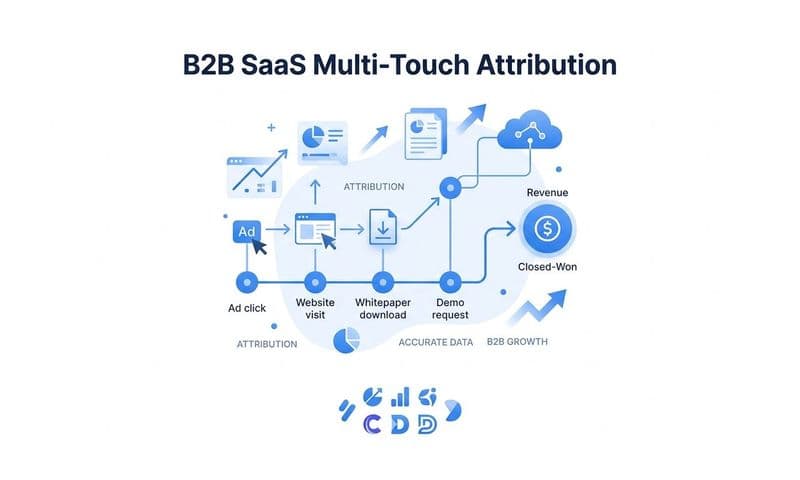
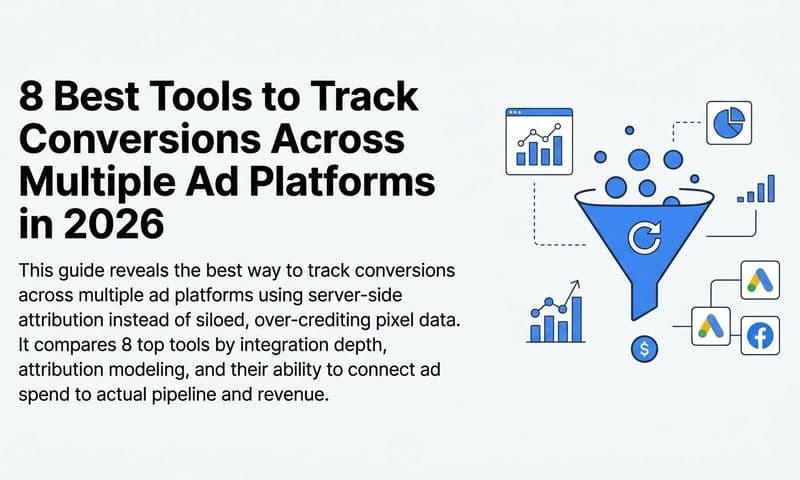
Dedicated attribution platforms solve this by connecting all your marketing touchpoints—ad platforms, CRM, website, analytics—into a unified tracking and attribution system. They implement server-side tracking, capture first-party data, integrate with Conversion APIs, and apply sophisticated attribution logic to show the complete customer journey.
These platforms are purpose-built for the post-cookie landscape. They use multiple tracking methods simultaneously, combine deterministic and probabilistic matching, and provide attribution models that work even when individual user journeys can't be fully tracked.
The result is accurate, cross-platform attribution that shows which marketing activities actually drive revenue. You can compare channels fairly, understand true customer acquisition costs, and optimize based on complete data rather than platform-specific reporting. Implementing cross-platform attribution tracking is essential for getting a unified view of performance.
Cometly exemplifies this approach by tracking every touchpoint from ad clicks to CRM events, providing AI-driven recommendations based on complete customer journey data, and feeding enriched conversion signals back to ad platforms to improve their optimization.
Implementation Steps
1. Evaluate attribution platforms based on their tracking capabilities, platform integrations, attribution models, and ability to handle your specific marketing stack.
2. Implement the platform's tracking across your website, connecting it to your ad accounts, CRM, and other marketing tools to enable comprehensive data collection.
3. Configure attribution settings to match your business model, including conversion windows, attribution models, and how different touchpoints should be weighted.
4. Use the platform's insights to identify undervalued channels, optimize budget allocation, and make data-driven scaling decisions based on true attribution data.
Pro Tips
Look for platforms that offer both tracking accuracy and actionable insights. Raw attribution data is valuable, but AI-powered recommendations that tell you what to do with that data are even better. Explore the full range of attribution tracking tools available to find the right fit for your organization.
Your Implementation Roadmap
The end of cookie-based tracking isn't a crisis—it's an opportunity to build more accurate, privacy-compliant measurement systems. The strategies outlined here represent the future of marketing attribution, and early adopters are already seeing better results than they achieved with cookies.
Start with the approaches that address your biggest tracking gaps. If you're losing conversion visibility due to iOS restrictions, prioritize server-side tracking and Conversion APIs. If you're struggling with cross-platform attribution, implement a dedicated attribution platform that connects your entire marketing stack.
The key is moving quickly. As browsers continue tightening restrictions and privacy regulations expand, the gap between marketers using modern tracking methods and those relying on outdated approaches will only widen.
Build your tracking infrastructure on first-party data and server-side methods. These foundations are future-proof and will continue working regardless of how browser policies or privacy regulations evolve. Layer on additional strategies like contextual targeting and universal IDs to enhance capabilities without creating dependencies on any single approach.
Ready to elevate your marketing game with precision and confidence? Discover how Cometly's AI-driven recommendations can transform your ad strategy—Get your free demo today and start capturing every touchpoint to maximize your conversions.